

Introduction
For defense industrial base (DIB) companies, achieving CMMC compliance presents significant challenges amid increasing regulatory scrutiny. Here are five essential checklist steps organizations can take to enhance their cybersecurity posture and ensure they meet CMMC requirements:
- Conduct a thorough risk assessment.
- Implement necessary security controls.
- Train employees on cybersecurity best practices.
- Regularly review and update policies and procedures.
- Engage with a CMMC consultant for guidance.
With the stakes so high-from potential contract losses to hefty penalties-how can companies align their practices with the stringent CMMC standards?
Understand CMMC Levels and Requirements
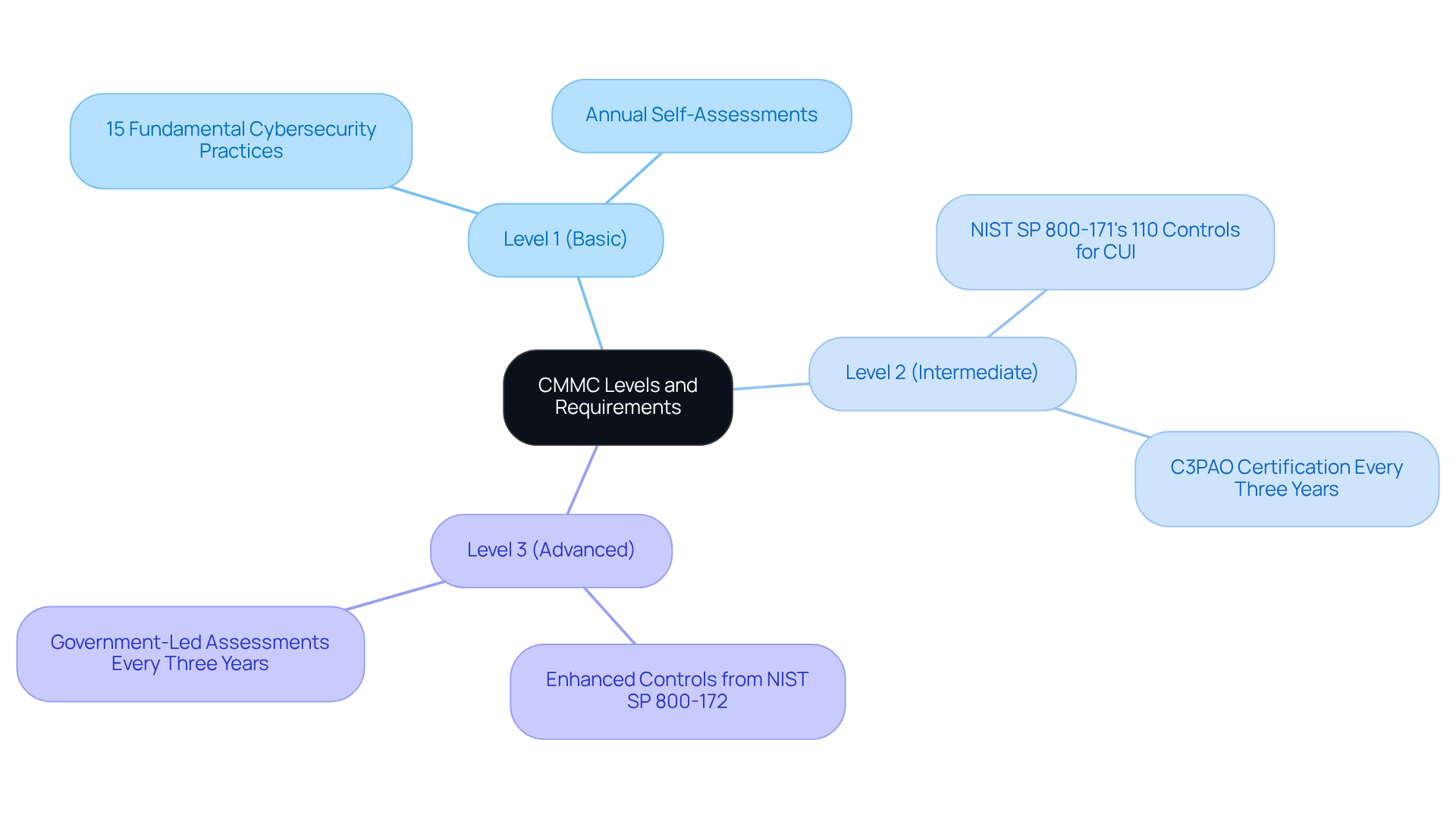
Understanding the three CMMC levels - Level 1 (Basic), Level 2 (Intermediate), and Level 3 (Advanced) - is crucial for organizations seeking CMMC compliance for DIB companies to enhance their cybersecurity posture. The Regulatory Database from Technologies provides a comprehensive catalogue of current and upcoming regulations, helping you navigate your compliance journey with effective filtering options.
Examine the specific criteria for each level:
- Level 1 mandates 15 fundamental cybersecurity practices.
- Level 2 requires full implementation of NIST SP 800-171's 110 controls for Controlled Unclassified Information (CUI).
These controls are vital for protecting sensitive information. With Technologies' efficient management solutions, you can automate regulatory processes, reducing costs and enhancing operational efficiency.
Identify the type of information your organization manages, such as Federal Contract Information (FCI) or CUI, to determine the relevant certification level and ensure CMMC compliance for DIB companies by adhering to the associated standards. Utilizing Koop Technologies' platform can assist in monitoring counterparty compliance status and managing evidence validation, simplifying the process to meet these criteria.
Refer to the official CMMC documentation for detailed explanations of each level's criteria, including the requirement for annual self-assessments for Level 1 and triennial C3PAO certifications for Levels 2 and 3. Non-compliance can lead to scoring penalties and potential loss of contracts, underscoring the importance of adhering to these requirements. With notifications for regulatory changes from Koop Technologies, you can stay informed and proactive in your compliance efforts.
Participating in training sessions or webinars on CMMC is essential for enhancing your understanding and ensuring compliance, as continuous education is critical for upholding regulations and adapting to evolving standards. Additionally, small enterprises can access support programs through Procurement Technical Assistance Centers (PTACs) and the Manufacturing Extension Partnership (MEP) to help manage regulatory challenges. Employing a staged remediation strategy, supported by the AI-driven platform, allows your organization to focus on high-impact controls initially, effectively addressing significant gaps and managing regulatory expenses over time.
Define Your Compliance Program Scope
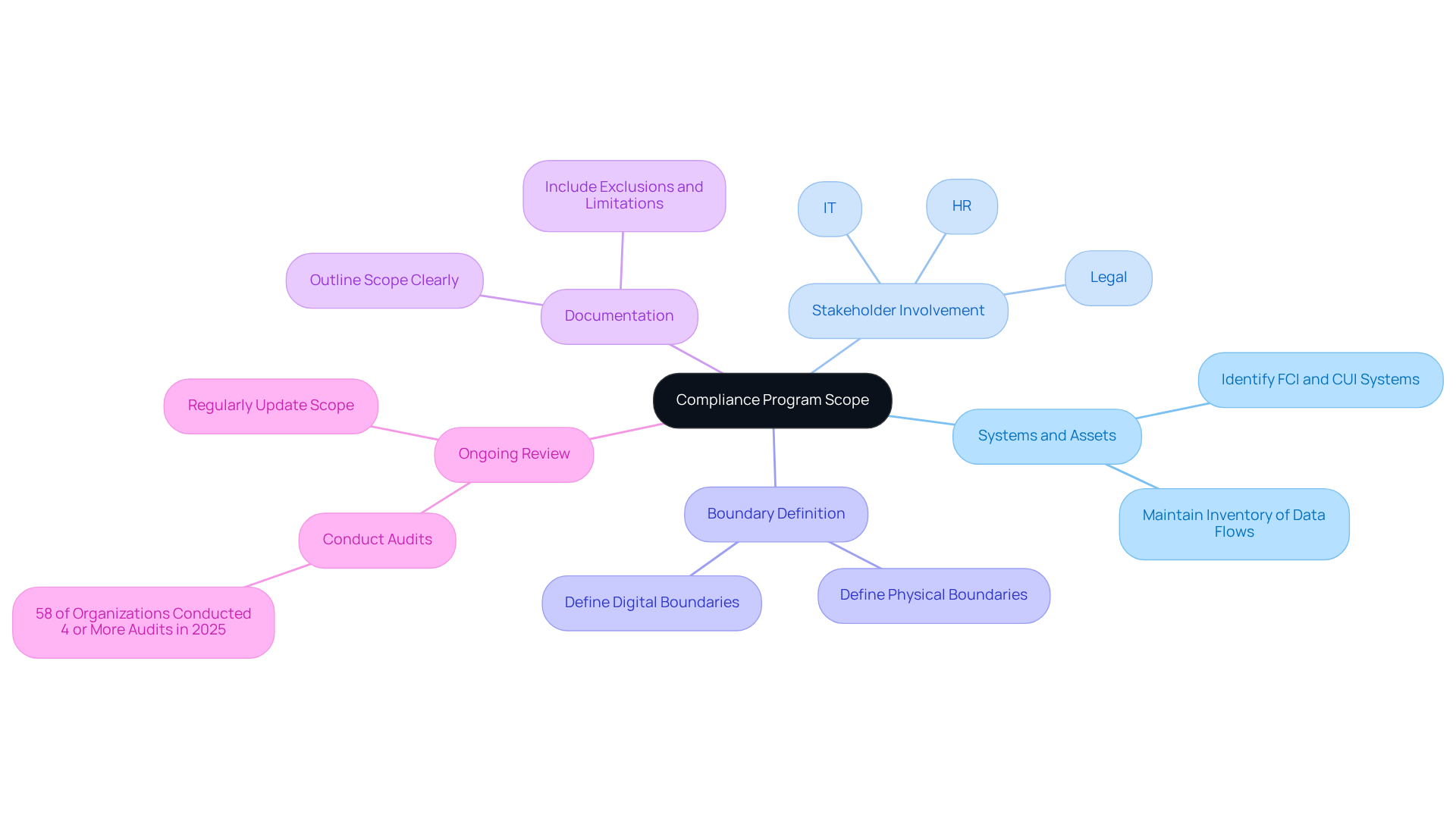
Identifying all systems and assets that handle Federal Contract Information (FCI) or Controlled Unclassified Information (CUI) is essential for establishing a robust regulatory framework. Utilizing Koop Technologies' Trust Center can streamline this process, facilitating compliance with government procurement requirements.
Determine the boundaries of your adherence program, encompassing both physical and digital environments. Precise boundary definition is crucial for effective risk management and regulatory oversight. Involve stakeholders from different divisions, such as IT, HR, and Legal, to guarantee thorough coverage of regulatory obligations. Collaboration across functions is vital, as many organizations struggle with the complexity of regulations, which can hinder compliance efforts.
Document the scope clearly, including any exclusions or limitations. A clearly outlined scope aids in reducing risks linked to regulatory gaps and ensures all pertinent areas are covered. Regularly review and update the scope as your organization evolves or as regulations change. Ongoing observation is essential, as 58% of organizations performed four or more audits in 2025, emphasizing the changing nature of regulatory standards. By utilizing Koop's AI-powered platform, which automates up to 95% of regulatory tasks, organizations can significantly reduce manual effort and expenses, enhancing their readiness for regulations. This proactive approach not only mitigates risks but also positions organizations for success in an evolving regulatory landscape.
Evaluate Your Current Cybersecurity Posture
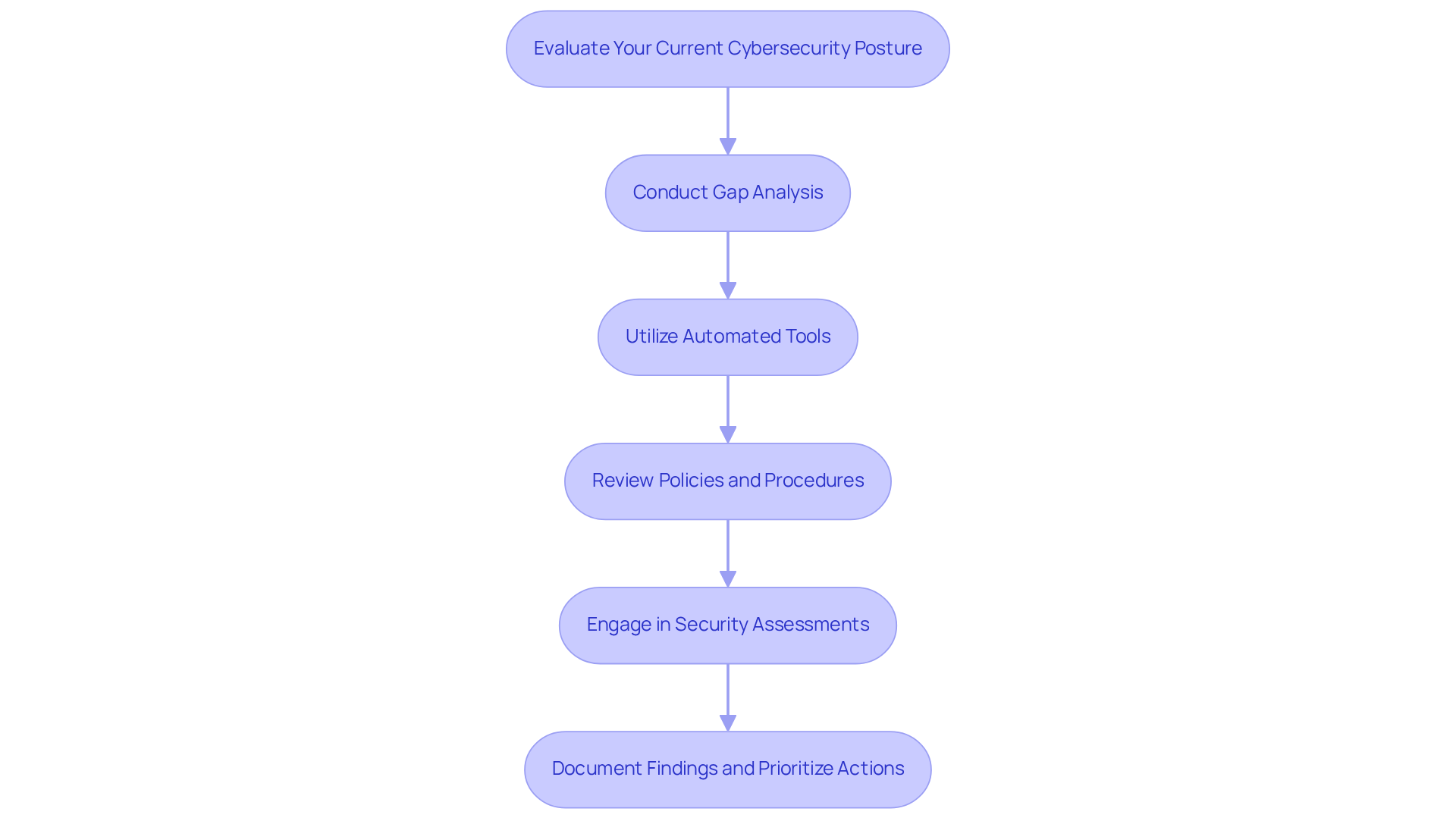
Many small defense contractors struggle to understand CMMC compliance for DIB companies, which can jeopardize their compliance efforts. Conduct a thorough gap analysis to compare your current practices against CMMC requirements. This analysis is essential for identifying regulatory gaps and ensuring CMMC compliance for DIB companies in preparation for upcoming evaluations.
Utilize automated tools designed for cybersecurity posture evaluations to assess vulnerabilities and adherence levels effectively. Startups and mid-sized firms can reduce regulatory costs and streamline their processes by using the company's AI-driven platform. These tools can provide a clear maturity rating, helping organizations prioritize their remediation efforts.
Take a close look at your existing policies, procedures, and controls to spot any weaknesses. Documentation of evidence is crucial for CMMC compliance for DIB companies, as many delays in achieving compliance arise from a lack of proper documentation rather than the implementation of controls. Working with the technology company ensures comprehensive documentation and compliance.
Engage in regular security assessments and penetration testing to uncover potential risks. A cybersecurity posture assessment should be conducted at least annually, with quarterly reviews of critical controls, especially for organizations in regulated industries. Koop Technologies' solutions can facilitate these assessments, ensuring that compliance is maintained throughout the year.
Document findings from your evaluations and create a prioritized list of remediation actions. This organized method not only tackles urgent vulnerabilities but also highlights the significance of confirming readiness early and performing gap evaluations before compliance standards become obligatory. Failure to identify these gaps can lead to significant penalties and operational disruptions.
Align Cybersecurity Practices with CMMC Requirements
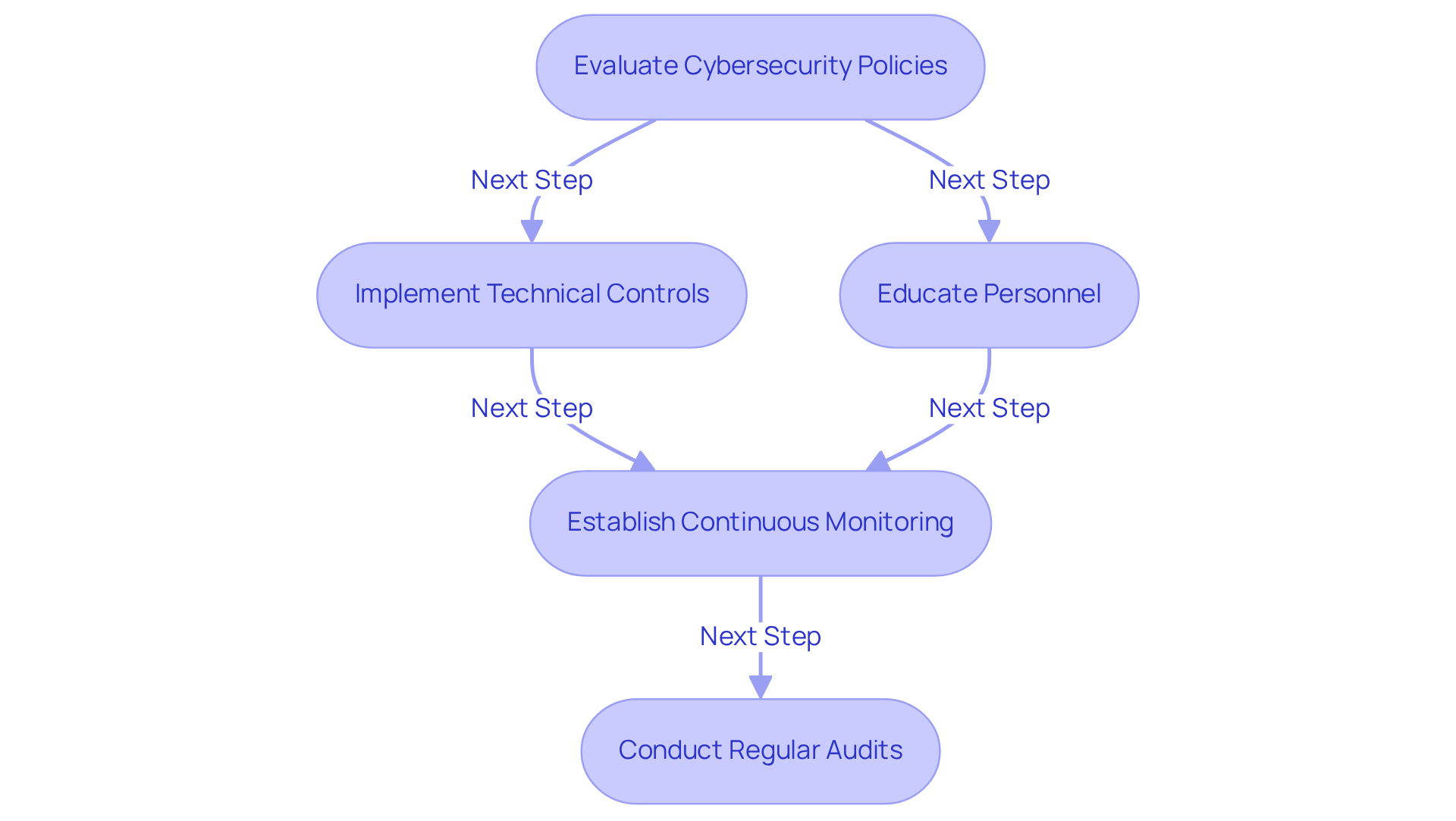
To ensure CMMC compliance for DIB companies, organizations must rigorously evaluate their cybersecurity policies to meet the stringent 110 security criteria outlined in Level 2, aligned with NIST SP 800-171 standards. Proactively aligning policies typically results in lower remediation costs and reduced risks of non-compliance.
Implement necessary technical controls, including robust access management systems and incident response protocols, to safeguard Controlled Unclassified Information (CUI). Efficient access control is fundamental at Level 1 and essential for maintaining adherence at elevated levels.
Educate personnel on cybersecurity maturity model requirements and clarify their responsibilities in upholding standards. Ongoing training helps employees understand the importance of cybersecurity measures and their direct effect on the organization’s regulatory stance.
Establish continuous monitoring practices to ensure ongoing alignment with compliance standards. This includes regular evaluations and updates to security measures, which are crucial as the DoD intensifies oversight on contractor adherence and third-party risks.
To maintain CMMC compliance for DIB companies, it is essential to conduct regular audits and assessments of cybersecurity practices in response to evolving requirements. Organizations that perform comprehensive audits and keep records, such as System Security Plans (SSPs) and Plans of Action and Milestones (POA&Ms), are better equipped to demonstrate adherence during evaluations and prevent expensive remediation efforts. Failure to adapt to these evolving standards could lead to significant compliance risks and financial repercussions.
Maintain Documentation and Records
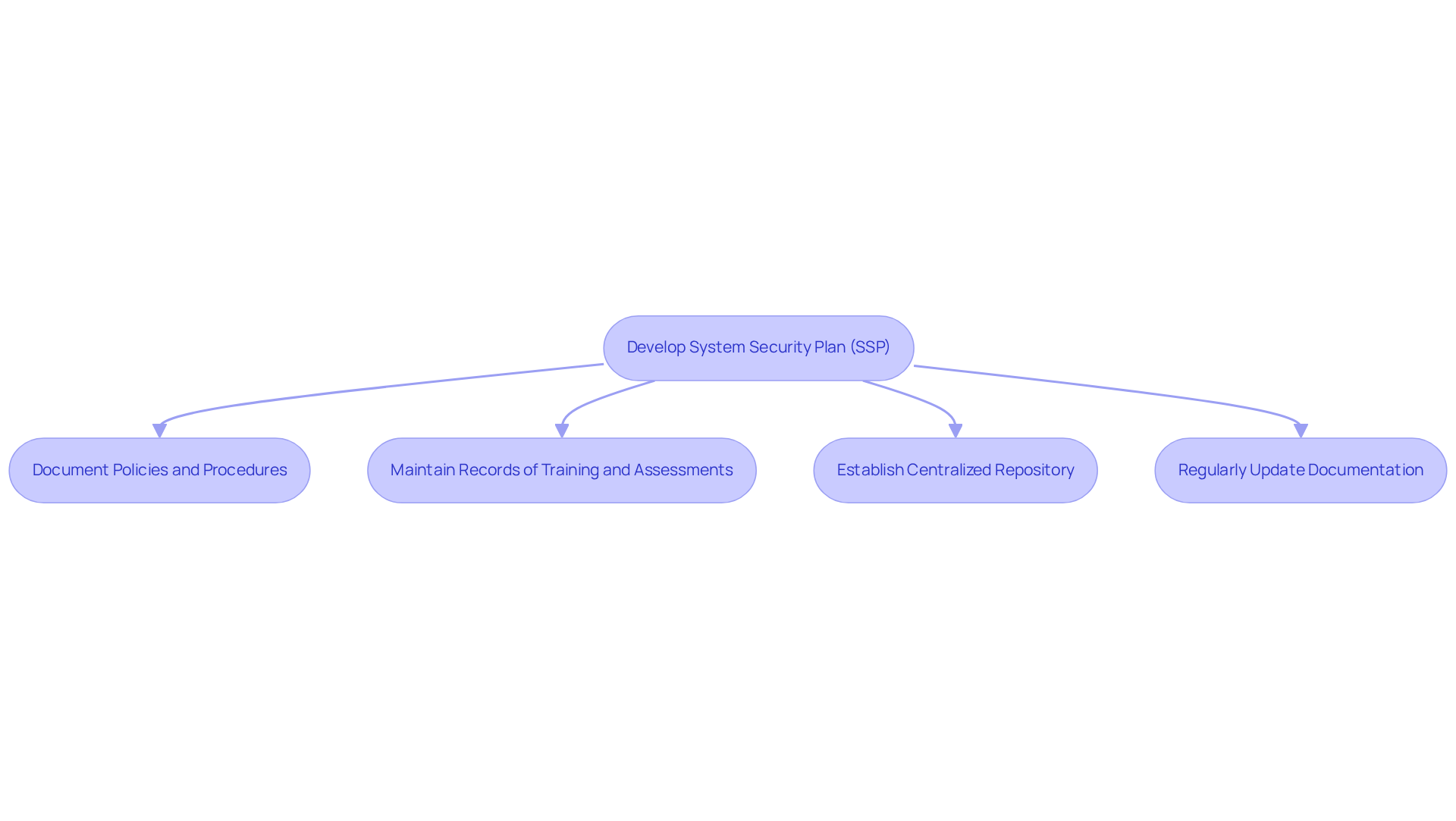
A comprehensive System Security Plan (SSP) is essential for demonstrating adherence to regulatory standards. Develop and uphold a thorough SSP that clearly details your adherence strategy and the specific controls implemented. This document serves as a key foundation for demonstrating adherence. By utilizing Koop Technologies' AI-driven platform, startups and mid-market firms can simplify the development and upkeep of their SSP, significantly reducing costs associated with regulatory management.
Meticulously document all policies, procedures, and practices related to CMMC compliance for DIB companies. Precise documentation is crucial for confirming adherence during evaluations and audits. Koop Technologies offers pre-built templates that streamline this process, ensuring that organizations can uphold comprehensive and compliant documentation without the strain of excessive resources.
Maintain detailed records of training sessions, assessments, and remediation efforts. These records offer proof of your organization's dedication to regulations and assist in monitoring progress over time. With this platform, organizations can automate record-keeping, simplifying the management and retrieval of necessary documentation.
Consider establishing a centralized repository for all compliance-related documentation. This ensures that all team members have easy access to necessary documents, facilitating collaboration and efficiency. Koop Technologies' solutions enable seamless access to regulatory documents, enhancing team productivity and ensuring everyone is aligned with regulatory goals.
Consistently examine and revise documentation to represent any alterations in processes, regulations, or adherence requirements. Regular updates are essential, as CMMC compliance for DIB companies is a continuous process, not a one-off accomplishment. Organizations that fail to maintain accurate documentation risk disqualification from bidding on defense contracts, as only 1% of contractors are fully prepared for CMMC compliance for DIB companies. By utilizing Koop Technologies' AI-driven compliance management tools, companies can stay ahead of regulatory changes and ensure their documentation is always up to date. Without diligent documentation practices, organizations risk losing competitive advantages in securing defense contracts.
Conclusion
Achieving CMMC compliance is crucial for defense industrial base companies seeking to enhance their cybersecurity and secure government contracts. By following the outlined checklist steps, organizations can effectively navigate the complexities of compliance, ensuring they meet the necessary standards to protect sensitive information.
The article emphasizes the importance of:
- Understanding CMMC levels and requirements
- Defining a clear compliance program scope
- Evaluating current cybersecurity practices
- Aligning those practices with CMMC standards
- Maintaining thorough documentation
These steps are essential for achieving compliance and promoting a culture of cybersecurity awareness within the organization.
Ultimately, achieving CMMC compliance involves establishing a strong cybersecurity framework that protects sensitive data and improves operational resilience. Organizations are encouraged to take proactive measures, leverage available technologies, and continuously educate their teams to stay ahead of evolving compliance demands. By prioritizing cybersecurity, organizations not only protect their data but also strengthen the integrity of the defense sector as a whole.
Frequently Asked Questions
What are the three levels of CMMC and their significance?
The three CMMC levels are Level 1 (Basic), Level 2 (Intermediate), and Level 3 (Advanced). Understanding these levels is crucial for organizations seeking CMMC compliance to enhance their cybersecurity posture, especially for Defense Industrial Base (DIB) companies.
What are the requirements for each CMMC level?
Level 1 requires 15 fundamental cybersecurity practices. Level 2 mandates the full implementation of NIST SP 800-171's 110 controls for Controlled Unclassified Information (CUI).
How can organizations determine their relevant CMMC certification level?
Organizations should identify the type of information they manage, such as Federal Contract Information (FCI) or CUI, to determine the appropriate certification level and ensure compliance with associated standards.
What are the consequences of non-compliance with CMMC requirements?
Non-compliance can lead to scoring penalties and potential loss of contracts, highlighting the importance of adhering to CMMC requirements.
How often do organizations need to conduct assessments for CMMC compliance?
Organizations must perform annual self-assessments for Level 1 and triennial C3PAO certifications for Levels 2 and 3.
What resources are available to assist organizations with CMMC compliance?
Organizations can utilize platforms like Koop Technologies for monitoring compliance status, managing evidence validation, and receiving notifications for regulatory changes. Additionally, training sessions and webinars on CMMC are essential for enhancing understanding and ensuring compliance.
How should organizations define the scope of their compliance program?
Organizations should identify all systems and assets handling FCI or CUI, define the boundaries of their adherence program, and involve stakeholders from various divisions to ensure comprehensive coverage of regulatory obligations.
Why is it important to document the compliance program scope?
A clearly outlined scope helps reduce risks associated with regulatory gaps and ensures that all pertinent areas are covered. Regular reviews and updates are necessary as organizations evolve or regulations change.
What role does technology play in managing regulatory compliance?
Utilizing AI-powered platforms, such as those offered by Koop Technologies, can automate up to 95% of regulatory tasks, significantly reducing manual effort and expenses while enhancing readiness for regulations.
What support is available for small enterprises facing regulatory challenges?
Small enterprises can access support programs through Procurement Technical Assistance Centers (PTACs) and the Manufacturing Extension Partnership (MEP) to help manage regulatory challenges.

