

Introduction
AI companies face significant challenges in meeting CMMC requirements to protect sensitive data and ensure compliance. As AI solutions become more popular, organizations need to grasp the specific CMMC levels and the security measures for handling Controlled Unclassified Information (CUI). AI firms often struggle to keep pace with changing regulations and the complexities of security controls.
How can they ensure compliance while enhancing operational efficiency? Failure to comply can lead to significant penalties and loss of trust from clients.
Understand CMMC Levels and Requirements for AI Companies
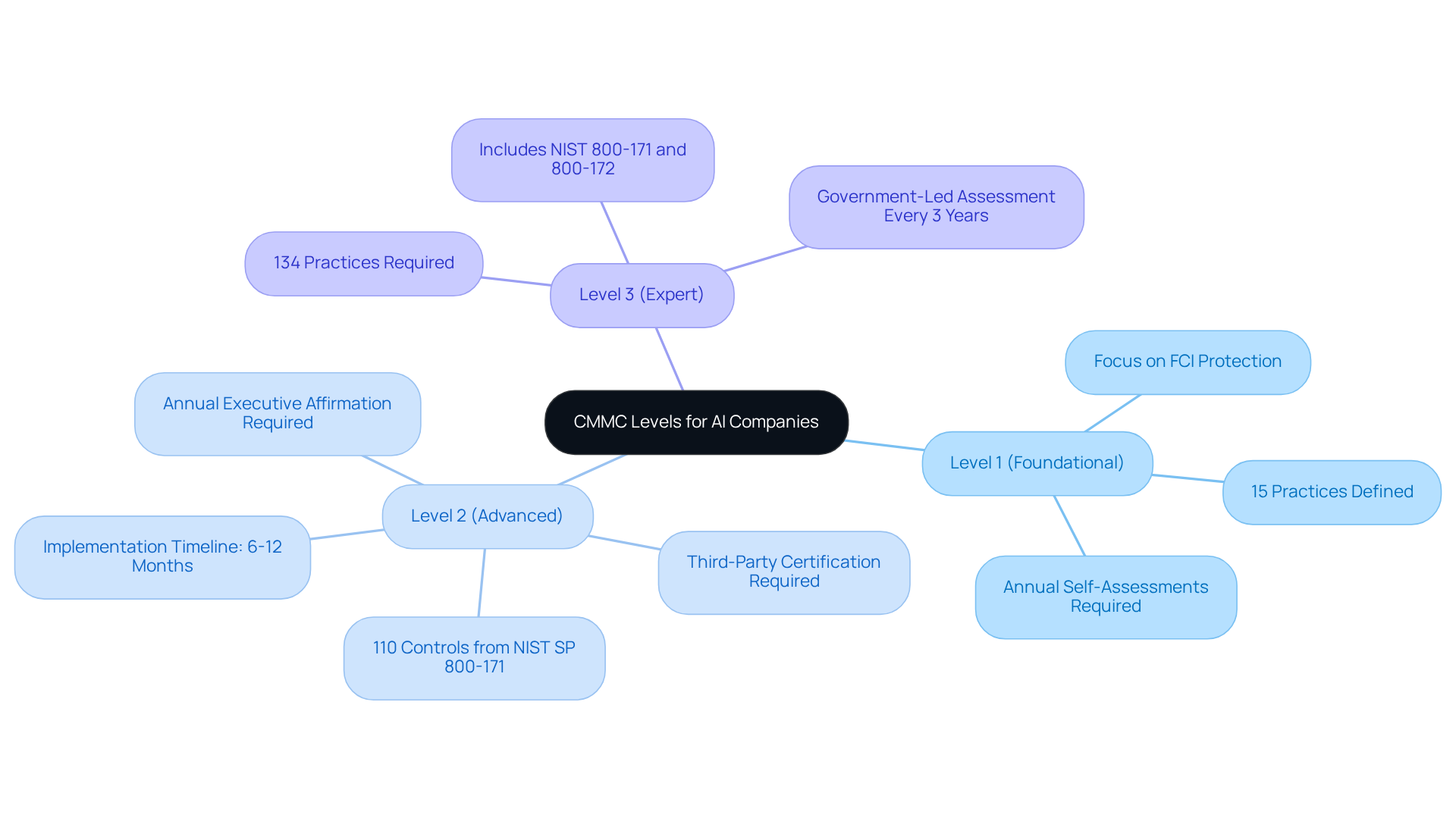
Organizations face challenges in navigating the complexities of CMMC levels, which are crucial for data security compliance. Familiarize yourself with the three CMMC levels:
- Level 1 (Foundational)
- Level 2 (Advanced)
- Level 3 (Expert)
Determine the applicable level for your organization based on the type of data you handle, specifically Controlled Unclassified Information (CUI) or Federal Contract Information (FCI). Examine the particular security measures required for each tier, concentrating on the 110 controls from NIST SP 800-171 vital for Level 2 adherence.
It is essential for AI solutions to meet the CMMC requirements for AI companies, especially when handling Controlled Unclassified Information (CUI). Organizations must remain vigilant about the CMMC requirements for AI companies, especially regarding AI-focused controls, to ensure compliance and sustain a competitive advantage.
Leveraging Koop Technologies' Regulatory Database can streamline compliance processes, lower costs, and enhance third-party risk management.
Document and Classify Controlled Unclassified Information (CUI)
Identifying and categorizing Controlled Unclassified Information (CUI) is essential for effective data management and compliance. Begin by identifying all types of CUI your organization handles and categorize them according to the CUI Registry, which includes 18 organizational categories and seven subcategories for effective classification.
Establish a uniform marking system for CUI documents. This ensures that all staff understand the classification levels, which helps prevent unauthorized access and maintain regulatory compliance.
Maintain a centralized repository for CUI documentation. This approach positions organizations to manage regulations effectively and provides easy access to critical information.
It's crucial to train employees on CUI classification and handling procedures. Experts agree that proper training can significantly reduce the risk of data breaches and improve overall security.
Regularly review and update CUI documentation to reflect any changes in data handling practices or regulatory requirements, ensuring that your organization remains compliant with evolving standards and minimizes non-compliance risks.
Furthermore, perform regular internal audits to evaluate adherence measures and pinpoint areas for enhancement, as proactive steps are crucial for upholding CUI requirements.
Ensuring compliance with CUI requirements not only protects sensitive information but also strengthens your organization’s overall security framework.

Implement Security Controls and Risk Management for AI Systems
Identifying vulnerabilities in AI systems is critical to prevent exposure of sensitive information. Conduct a thorough risk assessment to identify vulnerabilities in your AI systems that could expose Controlled Unclassified Information (CUI) in accordance with CMMC requirements for AI companies. This assessment should encompass evaluating the protective stance of AI tools and their integration within your operational framework.
To comply with the CMMC requirements for AI companies, implement protective measures as outlined in NIST SP 800-171, which include:
- Access controls
- Incident response protocols
- System integrity measures
These controls are essential for safeguarding sensitive data and ensuring compliance with the CMMC requirements for AI companies.
Employ AI tools to automate monitoring and incident response for real-time protection against emerging threats. Automation can enhance detection and response to incidents, reducing the potential impact of breaches.
Consistently assess and evaluate the effectiveness of protective measures through penetration testing and vulnerability assessments. Continuous testing is crucial to identify weaknesses and ensure that your defenses remain robust against evolving threats.
Document all protective measures and risk management processes meticulously. This documentation is essential for demonstrating adherence during audits and ensuring that all stakeholders are aware of the security protocols in place. Neglecting these measures could lead to significant risks and compliance failures.

Establish Continuous Monitoring and Improvement Processes
To effectively navigate compliance challenges, companies must adopt a continuous monitoring strategy that leverages automated tools. These tools gather and assess regulatory data, ensuring prompt detection of potential issues. This approach streamlines the monitoring process. It also significantly reduces manual effort and costs, allowing startups and mid-market companies to maintain compliance efficiently.
Regular assessments of protection policies and procedures are essential to ensure they remain effective and aligned with the CMMC requirements for AI companies, employing an expert-in-the-loop model for guidance. New users can start by contacting a company representative to discuss their specific needs and explore various options.
Encourage continuous improvement by soliciting staff input on adherence practices and protective measures, supported by an AI-driven platform that automates up to 95% of regulatory tasks. Furthermore, prepare for regular audits by maintaining comprehensive documentation of compliance efforts and security incidents. This is facilitated by the seamless integration of compliance, security, and insurance services that Koop offers across diverse industries, including Aerospace, Healthcare, Manufacturing, and more.
Without these strategies, companies may face serious compliance risks and operational inefficiencies.

Conclusion
AI companies must confront the intricate landscape of CMMC requirements to safeguard sensitive data and ensure compliance. Grasping the various CMMC levels and their specific requirements is vital for organizations managing Controlled Unclassified Information (CUI). Implementing essential security controls and risk management strategies enables AI firms to meet compliance standards while enhancing their security posture.
Documenting and classifying CUI, establishing robust security measures, and adopting continuous monitoring are critical steps for compliance. Regular audits, employee training, and automated tools are essential for effective compliance efforts. These practices not only protect sensitive information but also prepare organizations to respond effectively to evolving regulatory demands.
The importance of adhering to CMMC requirements is clear and pressing. With growing scrutiny on data security, proactive compliance measures mitigate risks and build trust with clients and stakeholders. Adopting these best practices positions organizations to thrive in a rapidly evolving landscape.
Frequently Asked Questions
What is CMMC and why is it important for AI companies?
CMMC stands for Cybersecurity Maturity Model Certification, which is crucial for data security compliance, especially for organizations handling Controlled Unclassified Information (CUI) or Federal Contract Information (FCI).
What are the three levels of CMMC?
The three levels of CMMC are Level 1 (Foundational), Level 2 (Advanced), and Level 3 (Expert).
How do I determine the applicable CMMC level for my organization?
The applicable CMMC level for your organization is determined by the type of data you handle, specifically whether it involves Controlled Unclassified Information (CUI) or Federal Contract Information (FCI).
What are the key security measures required for CMMC Level 2?
CMMC Level 2 requires adherence to 110 controls from NIST SP 800-171, which are essential for ensuring data security.
Why is it essential for AI solutions to meet CMMC requirements?
It is essential for AI solutions to meet CMMC requirements to ensure compliance when handling Controlled Unclassified Information (CUI) and to maintain a competitive advantage.
How can organizations streamline their compliance processes for CMMC?
Organizations can streamline their compliance processes by leveraging tools like Koop Technologies' Regulatory Database, which can lower costs and enhance third-party risk management.

