

Introduction
For defense contractors, achieving compliance with the Cybersecurity Maturity Model Certification (CMMC) is critical yet challenging. This article offers a straightforward checklist of six key steps to help you prepare for CMMC compliance, providing the necessary tools to secure your future. Many contractors struggle to understand the requirements of CMMC, leading to potential non-compliance.
What specific actions must organizations take to meet these stringent requirements? Understanding these actions is essential, as failure to comply with CMMC can result in loss of contracts and reputational damage.
Identify Required CMMC Level
Understanding the required cybersecurity maturity model level is crucial for maintaining eligibility for DoD contracts. Each level corresponds to specific compliance standards that must be met. Refer to DoD guidelines to grasp the implications of each cybersecurity maturity model level. Level 1 requires basic protection of Federal Contract Information (FCI) through an annual self-assessment, while Level 2 involves safeguarding Controlled Unclassified Information (CUI) and can be achieved through self-assessment or third-party assessment.
Evaluate the sensitivity of the Controlled Unclassified Information (CUI) your organization manages to determine the appropriate CMMC level. Grasping the nature of the information handled is essential for establishing regulatory requirements.
Thoroughly document your findings to enhance clarity and accountability in compliance efforts. Proper documentation is essential for audits and demonstrates compliance with standards.
Utilize automated tools to effectively compare your current security posture against compliance standards. Automation can streamline the regulatory process, making it easier to identify gaps and implement necessary controls.

Conduct Readiness Assessment
A thorough gap analysis is essential to evaluate current security measures against compliance requirements, especially given the alarming statistic that only 1% of contractors are prepared for CMMC audits. This stark statistic reveals a critical gap in compliance readiness among contractors, particularly for startups and mid-market firms facing rising regulatory costs due to limited professional resources.
Document vulnerabilities, focusing on common issues such as insufficient multi-factor authentication and unclear asset scoping, which can hinder adherence efforts. Half of evaluators report that readiness gaps lead to significant delays, underscoring the need to address these weaknesses to improve compliance processes.
Consider leveraging automation tools, like those from Koop Technologies, to reduce costs and expedite your evaluation process, facilitating the efficient collection of necessary evidence and documentation. As Mike Crandall, CEO of Digital Beachhead, noted, "We’re witnessing a surge of entities pursuing formal certification before November, and our schedule is rapidly filling for October and November evaluations."
Involve essential stakeholders across all operational sectors to ensure a comprehensive understanding of regulatory requirements and to effectively address potential gaps.
Compile a detailed report summarizing findings, including identified vulnerabilities and actionable recommendations for remediation, to guide the organization toward achieving regulatory standards. Achieving compliance is not just a regulatory requirement; it is a strategic imperative for contractors aiming to secure future contracts with the Department of Defense.

Develop Remediation Plan
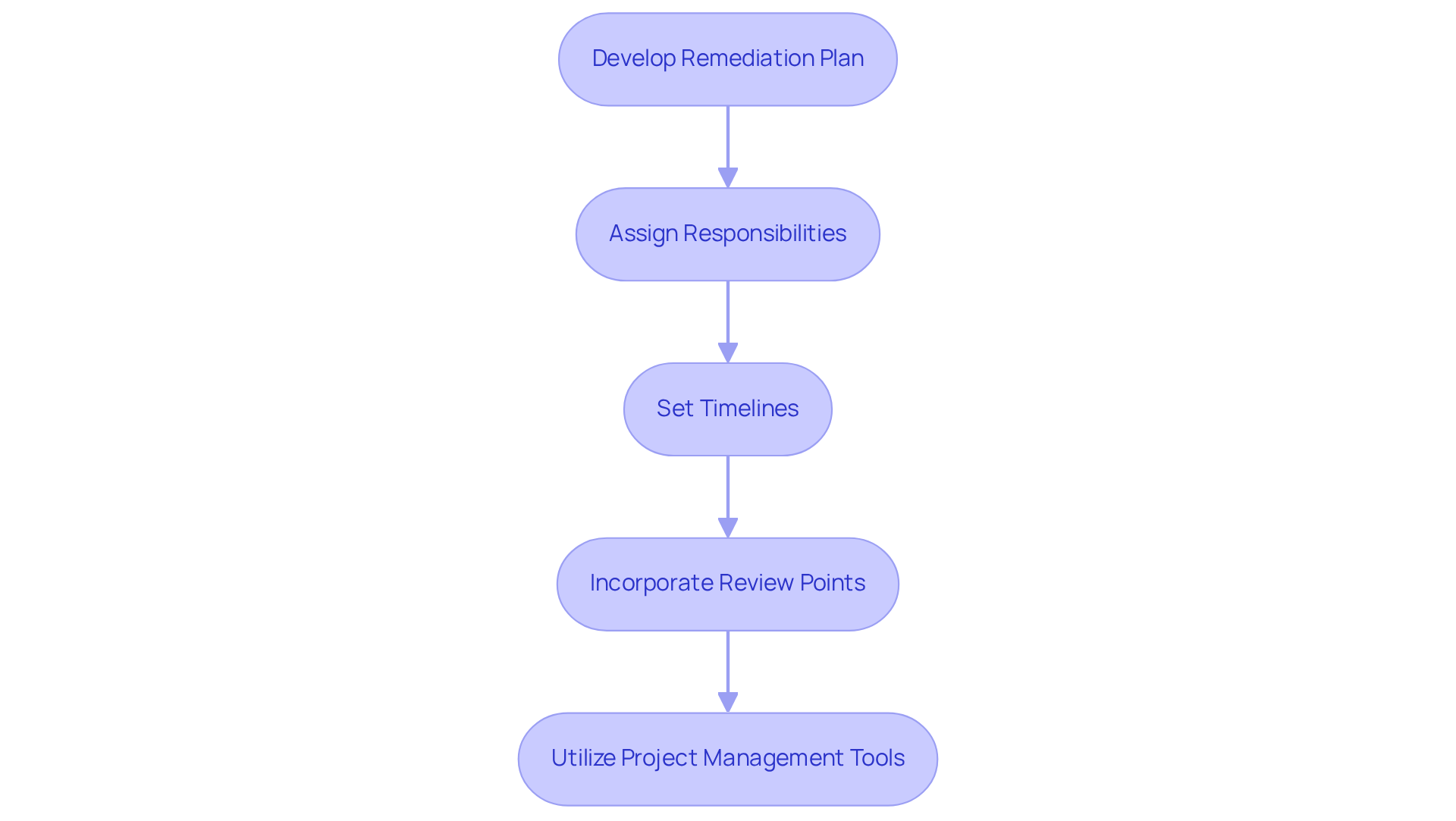
Addressing security gaps is not just a regulatory requirement; it is essential for safeguarding organizational integrity. To effectively tackle each identified gap in adherence to security standards, specific corrective measures must be outlined. These measures should include detailed steps tailored to the unique challenges faced by your entity.
- Assign clear responsibilities to team members for each action item, ensuring accountability throughout the remediation process. This method encourages team members to take ownership and engage proactively.
- Set realistic timelines for completing remediation tasks, considering the availability of resources and the complexity of the actions required. Establishing achievable deadlines helps maintain momentum and focus.
- Regular review points should be incorporated to assess progress and adjust the remediation plan as needed. Frequent evaluations allow teams to identify obstacles early and adapt strategies accordingly.
- Utilize project management tools to track remediation efforts and document completion. These tools can enhance visibility into the status of each task and facilitate communication among team members.
Statistics indicate that only 25% of contractors are typically well prepared when they arrive for an assessment, which highlights the need for a CMMC readiness checklist for defense contractors to ensure thorough planning and execution of remediation actions. Without a structured approach, organizations risk falling short of compliance and jeopardizing their operational security.
Implement Security Policies and Procedures
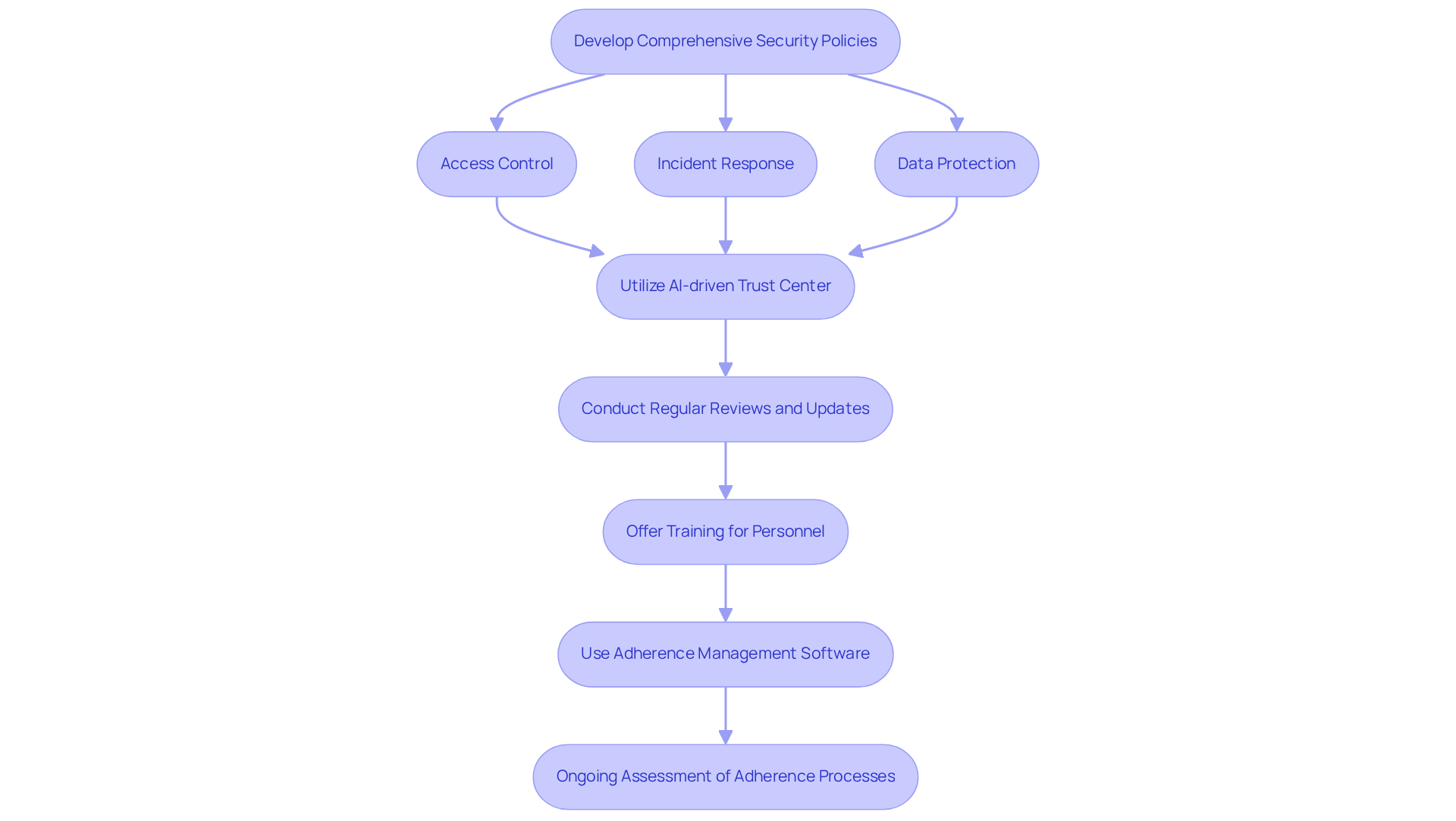
To ensure compliance with CMMC requirements, organizations must develop comprehensive security policies that incorporate a CMMC readiness checklist for defense contractors, addressing critical areas such as:
- Access control
- Incident response
- Data protection
Utilize Koop Technologies' AI-driven Trust Center to centralize your regulatory efforts, ensuring that all policies are thoroughly documented, easily accessible, and effectively communicated to all employees. This approach fosters a robust compliance culture and enhances organizational accountability.
Conduct regular reviews and updates of policies to ensure they reflect the latest regulatory changes and organizational practices, maintaining alignment with compliance standards. Offer training for personnel on the importance of these policies and their specific roles in maintaining adherence, given that a mere 1% of Defense Industrial Base contractors meet the necessary standards outlined in the CMMC readiness checklist for defense contractors.
Furthermore, use Koop's adherence management software to automate policy enforcement and monitoring, simplifying regulatory processes and minimizing the risk of human error. Ongoing assessment of adherence processes is crucial to adjust to regulatory changes and sustain preparedness. Failure to maintain rigorous adherence to these policies can lead to significant compliance risks and potential penalties.
Train Your Team on Compliance
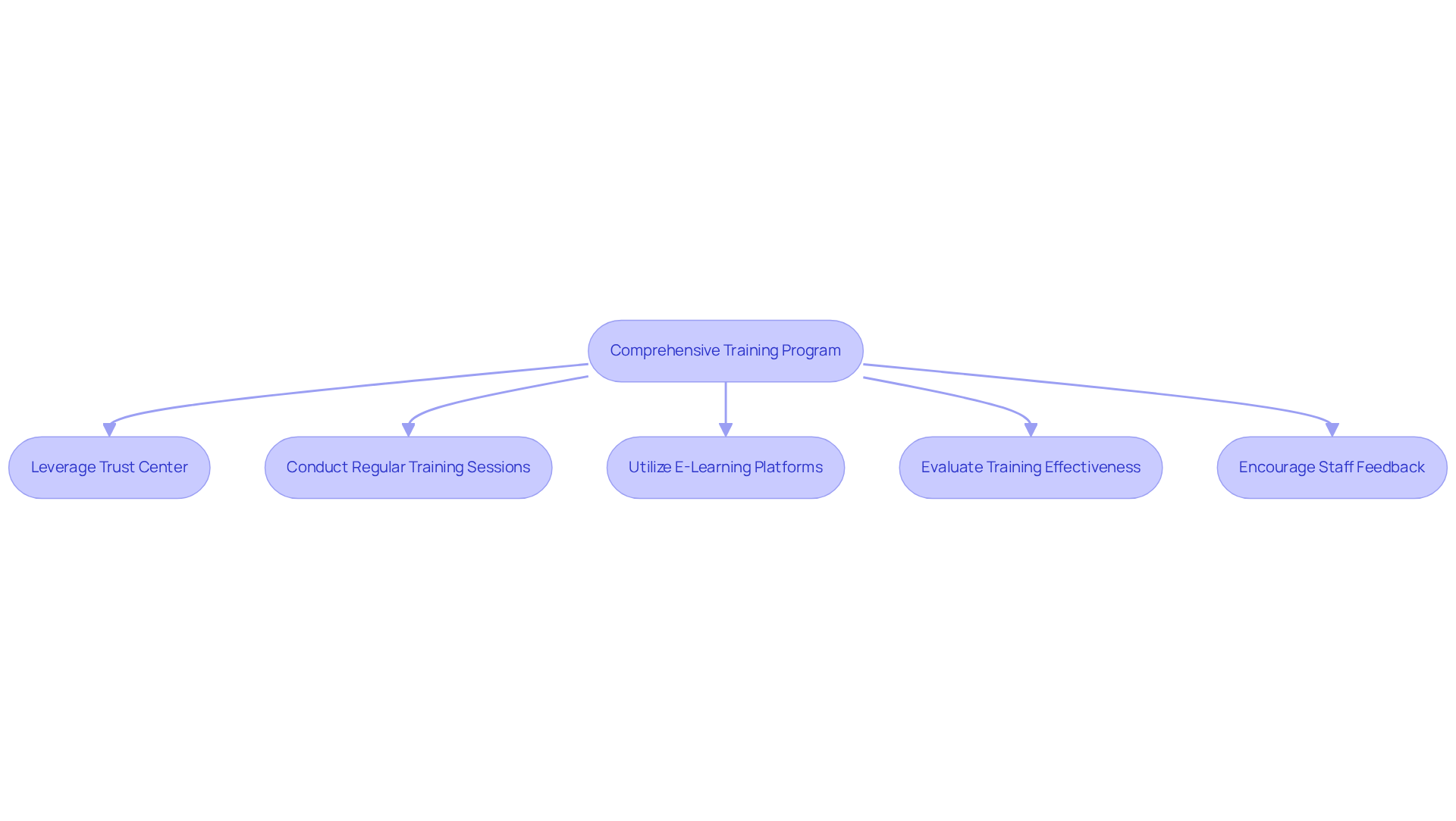
Creating a comprehensive training program is essential for addressing cybersecurity standards and organizational policies effectively. This program should leverage Koop Technologies' Trust Center to strengthen compliance efforts by providing resources and tools that facilitate alignment with these frameworks.
Conduct regular training sessions to update staff on regulatory changes and bolster security awareness, ensuring alignment with the CMMC readiness checklist for defense contractors, as well as FAR and NIST frameworks, which are critical for government procurement. Additionally, utilize e-learning platforms to offer flexible training options that cater to various learning styles, enhancing accessibility for startups and mid-market companies, which often face significant regulatory costs due to limited resources.
Evaluate training effectiveness through quizzes or practical exercises to ensure comprehension and preparedness for government procurement, addressing the unique regulatory challenges these companies encounter. Furthermore, encourage staff feedback to continually improve the training program, fostering a culture of security awareness and adaptability to evolving compliance standards.
Ultimately, a well-structured training program not only enhances compliance but also empowers organizations to thrive in a complex regulatory landscape.
Prepare Documentation for Assessment
Compiling comprehensive documentation is crucial for meeting CMMC requirements and ensuring compliance, as specified in the CMMC readiness checklist for defense contractors. This includes the System Security Plan (SSP), Plan of Action and Milestones (POA&M), and incident response policies. The SSP serves as a roadmap outlining security measures and must specify how a company implements controls to meet CMMC requirements.
Documentation should be clear, concise, and easily accessible for assessors. High-quality evidence enhances the credibility of the assessment process, making it essential for entities to maintain well-organized documentation. As Jon Forisha states, "Your entity remains responsible for documented policies, controls, and audit-ready evidence."
Consistently revising documentation to reflect changes in policies, procedures, or regulatory status is vital. SSPs must be updated at least once a year to ensure they accurately represent the entity's security stance and adherence efforts. Many organizations struggle to keep their documentation current, risking compliance and contract eligibility. This highlights the necessity for proactive management of regulatory documentation to prevent last-minute rushes that can threaten contract eligibility.
Conducting internal reviews is essential to verify that all documentation aligns with the CMMC readiness checklist for defense contractors. Organizations that integrate adherence into their regular practices will be better positioned for future contracts and audits, ensuring sustained eligibility. Integrating adherence into daily workflows is vital for capturing revisions and ensuring policies remain current.
Utilizing document management systems can effectively organize and track documentation. These systems centralize documentation storage, automate audit trails, and ensure that all necessary evidence is readily available for assessments. Utilizing AI-powered compliance automation can help organizations streamline their GRC solutions, reducing costs and accelerating processes, ultimately enhancing their CMMC readiness checklist for defense contractors. Ultimately, effective documentation management can be the difference between securing contracts and facing compliance challenges.

Conclusion
Achieving compliance with the Cybersecurity Maturity Model Certification (CMMC) is crucial for defense contractors seeking Department of Defense contracts. The outlined steps in the CMMC readiness checklist provide a structured approach to navigate the complexities of compliance, ensuring that organizations not only meet regulatory requirements but also enhance their overall cybersecurity posture.
Key steps include:
- Identifying the appropriate CMMC level based on the sensitivity of the information handled.
- Conducting a thorough readiness assessment to uncover vulnerabilities.
- Developing a robust remediation plan to address identified gaps.
- Implementing comprehensive security policies.
- Training staff on compliance.
- Preparing meticulous documentation.
These elements are essential for building a strong security culture and ensuring operational integrity.
The journey toward CMMC compliance is not just about meeting standards; it’s a strategic move that can enhance a contractor's competitiveness in the defense sector. By prioritizing these essential steps and integrating them into daily operations, defense contractors can position themselves for success in a challenging regulatory landscape. This proactive approach not only fortifies organizational integrity but also cultivates trust with stakeholders, ultimately leading to greater competitive advantage.
Frequently Asked Questions
What is the importance of identifying the required CMMC level?
Identifying the required CMMC level is crucial for maintaining eligibility for DoD contracts, as each level corresponds to specific compliance standards that must be met.
What are the requirements for CMMC Level 1 and Level 2?
Level 1 requires basic protection of Federal Contract Information (FCI) through an annual self-assessment, while Level 2 involves safeguarding Controlled Unclassified Information (CUI) and can be achieved through self-assessment or third-party assessment.
How can organizations determine the appropriate CMMC level?
Organizations can determine the appropriate CMMC level by evaluating the sensitivity of the Controlled Unclassified Information (CUI) they manage and understanding the nature of the information handled.
Why is documentation important in the compliance process?
Proper documentation is essential for audits and demonstrates compliance with standards, enhancing clarity and accountability in compliance efforts.
How can automated tools assist in the compliance process?
Automated tools can effectively compare an organization's current security posture against compliance standards, streamlining the regulatory process and making it easier to identify gaps and implement necessary controls.
What is a readiness assessment and why is it necessary?
A readiness assessment is a thorough gap analysis to evaluate current security measures against compliance requirements, which is necessary due to the alarming statistic that only 1% of contractors are prepared for CMMC audits.
What common vulnerabilities should be documented during the readiness assessment?
Common vulnerabilities include insufficient multi-factor authentication and unclear asset scoping, which can hinder adherence efforts.
How can automation tools help in the evaluation process?
Automation tools can reduce costs and expedite the evaluation process, facilitating the efficient collection of necessary evidence and documentation.
Why is stakeholder involvement important in the compliance process?
Involving essential stakeholders across all operational sectors ensures a comprehensive understanding of regulatory requirements and effectively addresses potential gaps.
What should be included in the report summarizing the findings of the readiness assessment?
The report should include identified vulnerabilities and actionable recommendations for remediation to guide the organization toward achieving regulatory standards.

