

Introduction
Compliance leaders face significant challenges in adapting to the evolving requirements of the Cybersecurity Maturity Model Certification (CMMC). This article outlines five essential steps that organizations must take to ensure readiness for CMMC compliance, from identifying the appropriate certification level to implementing continuous monitoring strategies. Addressing these challenges is crucial to avoid penalties and ensure organizational resilience in the face of stringent compliance demands.
Identify Your Required CMMC Level
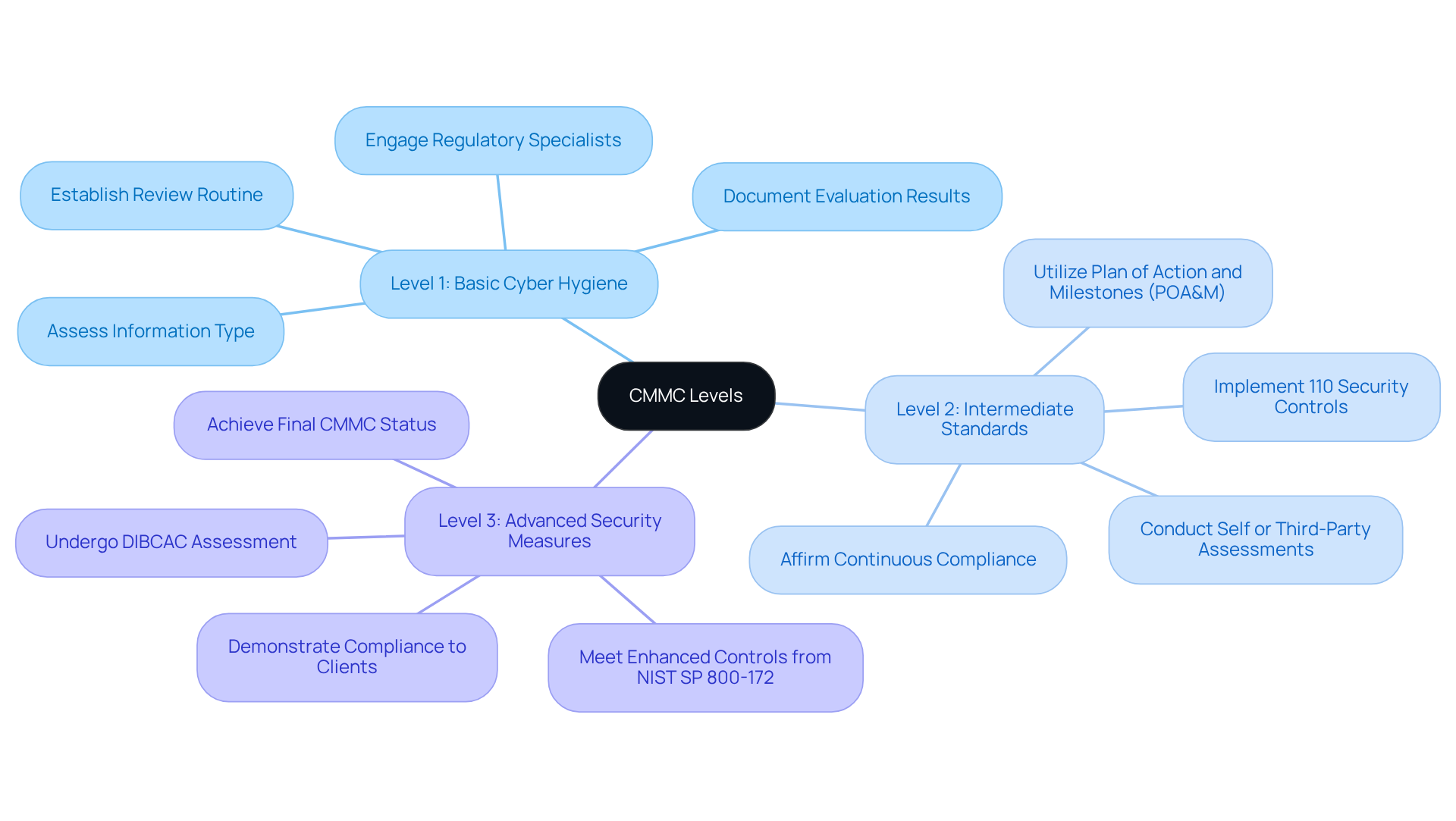
Understanding the cybersecurity maturity model framework is essential for organizations aiming to enhance their security posture. This framework consists of three certification levels:
- Level 1 focuses on basic cyber hygiene.
- Level 2 addresses intermediate standards.
- Level 3 encompasses advanced security measures.
Assess the type of information your organization handles, distinguishing between Federal Contract Information (FCI) and Controlled Unclassified Information (CUI). This differentiation will determine your obligations for compliance.
Engage with regulatory specialists or employ automated solutions, such as Koop Technologies' AI agent, Housekeeper, to accurately determine the necessary security level based on the sensitivity of your data and specific contractual obligations. Housekeeper can automate up to 95% of regulatory tasks, significantly reducing manual effort and costs.
Document your evaluation results to inform your adherence strategy and ensure alignment with relevant standards. Utilize Koop's onboarding method to streamline your entry into regulatory management, ensuring you have the essential support from the outset.
Establish a routine to regularly review and update this evaluation as your organization evolves or as regulatory standards change, ensuring continuous compliance with FAR and NIST frameworks. Leverage Koop's Trust Center to demonstrate adherence to excellence to potential and current clients, thereby enhancing your government procurement process.
Map Your Controlled Unclassified Information (CUI)
Effectively managing Controlled Unclassified Information (CUI) is crucial for organizational security and compliance. Begin by identifying all sources within your organization, including documents, databases, and communication channels.
Leverage Koop Technologies' Trust Center to ensure compliance with FAR and NIST frameworks, enhancing the efficiency of your procurement processes.
Create a data flow diagram to visualize how CUI moves through your systems, aiding in the understanding and management of this sensitive information.
Categorize CUI according to sensitivity and access criteria, ensuring that all employees are educated on the significance of managing this information securely.
Utilize automated tools to assist in monitoring and handling CUI, ensuring adherence to compliance standards.
Make it a point to update your CUI mapping whenever new data sources come in or existing ones change, while adhering to the confidentiality provisions outlined in Koop Technologies' Master Services Agreement, which emphasizes the importance of protecting sensitive information.
Failure to properly manage CUI can expose your organization to significant risks and compliance challenges.

Conduct a Cybersecurity Gap Assessment
To ensure a robust cybersecurity framework, it is crucial to clearly define the scope of your assessment, focusing on specific systems and processes. This foundational step ensures that all relevant areas are addressed and aligns with compliance requirements.
Utilizing a CMMC readiness checklist based on cybersecurity standards can help you effectively assess your security posture. This organized method allows for a thorough assessment and helps identify regulatory gaps.
Keep a record of any gaps between your current practices and CMMC requirements. This documentation will serve as a valuable reference for future audits and regulatory efforts, ensuring that all findings are tracked and addressed.
Collaborate with cybersecurity professionals or leverage automated assessment tools to enhance the accuracy of your evaluation. Engaging experts can provide insights that may not be apparent through self-assessment alone, while automation can streamline the process.
Create a detailed remediation plan to tackle the identified gaps, prioritizing actions according to their risk and potential impact. Addressing these gaps not only strengthens compliance but also fortifies your organization's cybersecurity resilience.

Build Your System Security Plan (SSP)
To establish a robust Security System Plan (SSP), it is essential to gather all relevant documentation regarding your organization's security controls, policies, and procedures.
- Employ a standardized SSP template to guarantee the inclusion of all necessary components, including system boundaries, roles, and responsibilities, essential for compliance.
- Detail the implementation and maintenance of each security control within your organization, ensuring the SSP acts as a reliable reference for assessors.
- Involve key stakeholders during the development process to ensure thorough coverage of all systems and practices, promoting accountability and collaboration.
- Regularly assess and update the SSP to reflect changes in your organization or regulatory requirements, maintaining its relevance and effectiveness in demonstrating compliance.

Implement Continuous Monitoring
To maintain compliance in a rapidly evolving regulatory landscape, organizations must establish a continuous monitoring strategy that includes regular assessments of security controls and practices. Utilize Koop Technologies' AI-driven solutions for real-time observation of system activities, vulnerabilities, and regulatory status, enhancing compliance monitoring capabilities and operational outcomes.
Statistics indicate that 54% of organizations face significant challenges in consistently monitoring regulatory adherence across diverse cloud platforms; Koop's unified platform effectively addresses this issue.
Implement alert systems to inform relevant personnel of any deviations from established security protocols or regulatory requirements, facilitating prompt corrective actions. Conduct periodic reviews of monitoring data to identify trends and areas for enhancement, enabling proactive adjustments to regulatory strategies.
Ensure thorough training for all personnel on the importance of ongoing monitoring and their specific responsibilities in upholding standards, promoting a culture of accountability and vigilance.
To initiate your journey with Koop, schedule a consultation with a representative to discuss your specific needs and facilitate a seamless onboarding process for compliance certification.

Conclusion
Achieving compliance with the Cybersecurity Maturity Model Certification (CMMC) presents significant challenges for organizations managing sensitive information. Following these steps - determining the required CMMC level, mapping Controlled Unclassified Information (CUI), conducting a cybersecurity gap assessment, building a comprehensive System Security Plan (SSP), and implementing continuous monitoring - can significantly enhance an organization’s cybersecurity posture and ensure compliance with regulatory standards.
The importance of each step in the CMMC readiness checklist cannot be overstated. Identifying the appropriate CMMC level based on the type of information handled lays the groundwork for compliance. Effectively mapping CUI safeguards sensitive data, while a thorough gap assessment reveals vulnerabilities that need addressing. Developing a robust SSP ensures that security controls are documented and maintained, and continuous monitoring keeps organizations vigilant against evolving threats and compliance challenges.
Ultimately, the journey toward CMMC compliance involves more than just regulatory adherence; it requires cultivating a culture of security and accountability. By committing to these essential steps, organizations not only enhance their security posture but also cultivate trust and accountability in an increasingly complex digital environment.
Frequently Asked Questions
What is the Cybersecurity Maturity Model Certification (CMMC) framework?
The CMMC framework consists of three certification levels: Level 1 focuses on basic cyber hygiene, Level 2 addresses intermediate standards, and Level 3 encompasses advanced security measures.
How can an organization determine its required CMMC level?
Organizations can determine their required CMMC level by assessing the type of information they handle, distinguishing between Federal Contract Information (FCI) and Controlled Unclassified Information (CUI), and engaging with regulatory specialists or automated solutions like Koop Technologies' AI agent, Housekeeper.
What role does Housekeeper play in compliance?
Housekeeper can automate up to 95% of regulatory tasks, significantly reducing manual effort and costs, helping organizations accurately determine the necessary security level based on data sensitivity and contractual obligations.
Why is it important to document evaluation results for compliance?
Documenting evaluation results informs an organization's adherence strategy and ensures alignment with relevant standards, facilitating continuous compliance with FAR and NIST frameworks.
How should organizations manage Controlled Unclassified Information (CUI)?
Organizations should identify all sources of CUI, create a data flow diagram, categorize CUI according to sensitivity and access criteria, and educate employees on secure management practices.
What tools can assist in managing CUI?
Automated tools can assist in monitoring and handling CUI, ensuring adherence to compliance standards.
How often should CUI mapping be updated?
CUI mapping should be updated whenever new data sources are introduced or existing ones change, while adhering to confidentiality provisions outlined in Koop Technologies' Master Services Agreement.
What are the risks of failing to manage CUI properly?
Failure to properly manage CUI can expose an organization to significant risks and compliance challenges.

