

Introduction
As cyber threats evolve, the Defense Industrial Base faces unprecedented challenges in safeguarding sensitive information. The CMMC Implementation Guide emerges as a vital resource for defense contractors, offering a structured approach to achieving compliance with the stringent cybersecurity standards mandated by the U.S. Department of Defense. However, as the deadline for adherence looms, many contractors struggle to understand the intricate requirements of the CMMC framework, raising the question: how can they navigate these challenges to maintain their competitive edge in defense contracting?
Define the CMMC Implementation Guide for Defense Contractors
The CMMC implementation guide for defense contractors serves as a critical framework for defense suppliers aiming to meet the stringent cybersecurity requirements set by the U.S. Department of Defense. This guide outlines essential practices and processes that builders must adopt to safeguard sensitive information and comply with federal regulations.
The cybersecurity maturity model framework is organized into various levels, each with specific requirements designed for the sensitivity of the information being handled. With the enforcement stage of CMMC beginning, vendors are under pressure to demonstrate compliance, yet only 1% feel prepared ahead of the rollout.
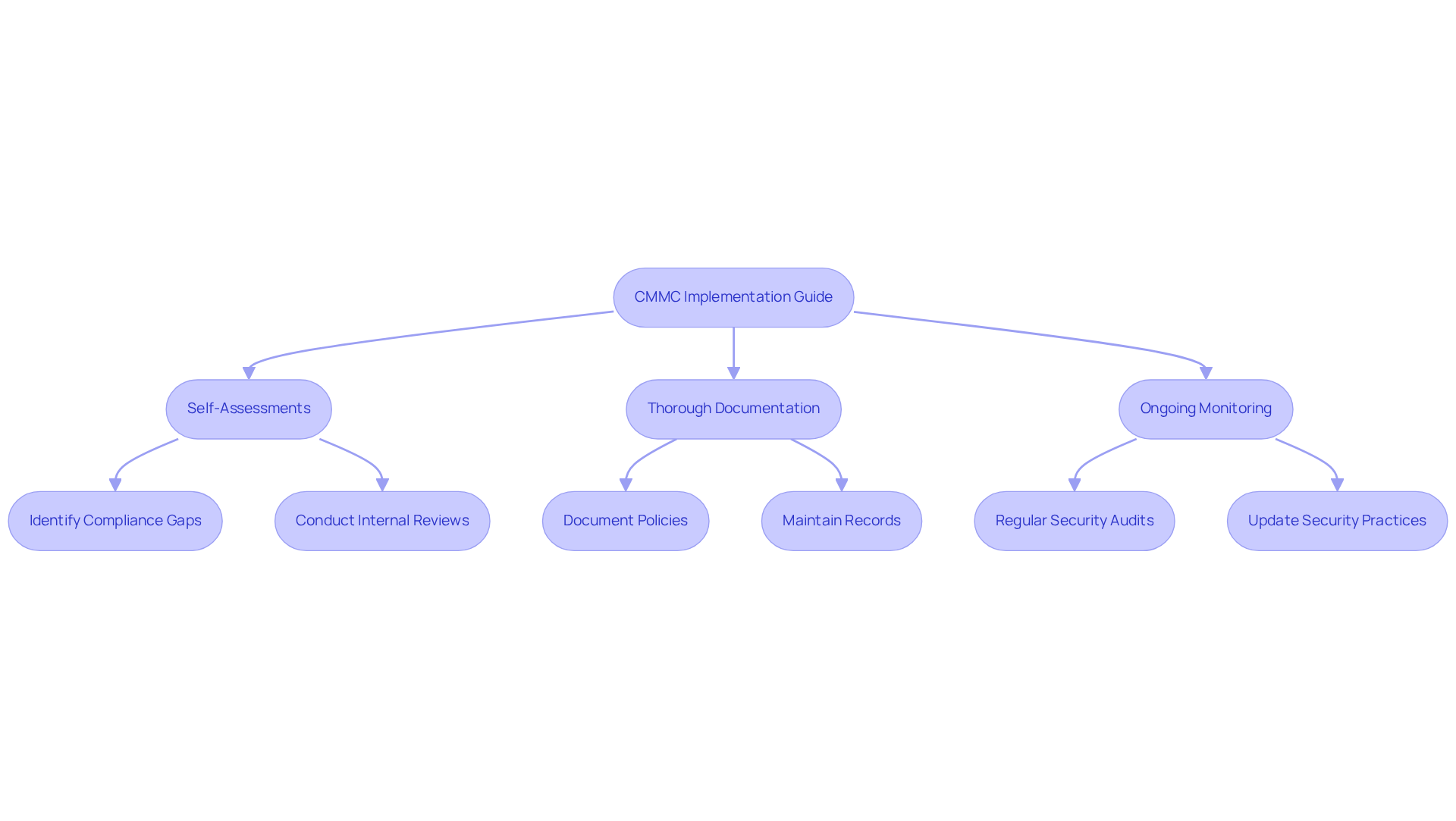
The CMMC implementation guide for defense contractors acts as a roadmap for organizations striving for certification, outlining necessary steps such as:
- Self-assessments
- Thorough documentation
- Ongoing monitoring of cybersecurity practices
With the adherence deadline of November 10, 2026, builders are struggling to find enough third-party auditors and readiness partners, complicating their compliance efforts. This urgency is compounded by prime contractors now requiring compliance from their subcontractors, further stressing the need for a structured approach as outlined in the CMMC implementation guide for defense contractors.
To navigate these complexities, Koop Technologies provides a comprehensive regulatory database and requirements management solutions that enhance automation of adherence. Their AI-driven platform greatly lowers expenses and speeds up processes, making it an essential asset for startups and mid-market firms encountering regulatory challenges. By leveraging these solutions, defense providers can navigate compliance challenges more effectively, ultimately fostering greater trust in regulated markets.
Contextualize the Importance of CMMC in Defense Contracting
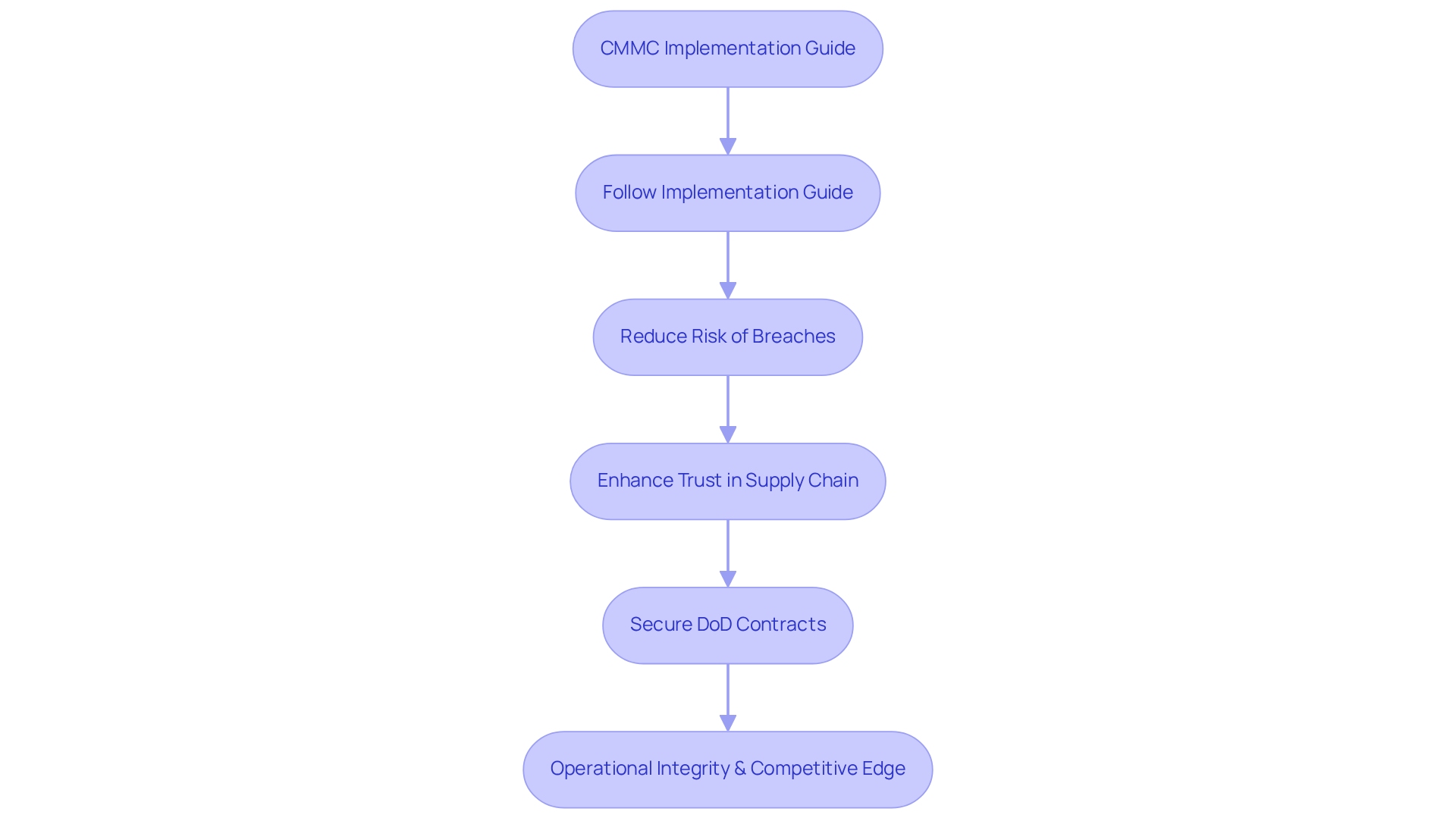
The Cybersecurity Maturity Model Certification framework addresses the escalating threats to information security within the Defense Industrial Base. To comply with the framework, it is essential to follow the CMMC implementation guide for defense contractors, which greatly reduces the risk of data breaches and cyberattacks. As of 2026, following the CMMC implementation guide for defense contractors is not merely advisable but a prerequisite for bidding on and securing Department of Defense contracts, highlighting its critical role in defense contracting. This framework not only safeguards sensitive information but also enhances the overall trust and reliability within the defense supply chain, as detailed in the CMMC implementation guide for defense contractors.
This statistic reveals a significant vulnerability, as over 60% of breaches in the DIB happen within small and mid-sized contractors, highlighting the urgent need for a CMMC implementation guide for defense contractors to ensure robust cybersecurity protocols. As David A. Africano aptly stated, 'The framework is about safeguarding national security and your business,' emphasizing that adherence to the CMMC implementation guide for defense contractors is essential for preserving operational integrity and competitive edge in the defense sector.
Koop Technologies plays a crucial role in this landscape by providing an AI-powered platform that significantly reduces the costs and complexities associated with following the CMMC implementation guide for defense contractors. By automating up to 95% of regulatory tasks, Koop's solutions not only simplify the process but also save businesses up to 50% compared to conventional methods. Furthermore, Koop offers a straightforward onboarding procedure and professional assistance, ensuring that startups and mid-market firms can efficiently manage regulatory requirements using the CMMC implementation guide for defense contractors. This efficiency helps protect sensitive information and builds greater trust and reliability within the defense supply chain, facilitating easier compliance with requirements and allowing firms to concentrate on their core operations.
Outline Key Components of the CMMC Implementation Guide
Achieving compliance with the CMMC Implementation Guide requires defense contractors to navigate several critical components effectively:
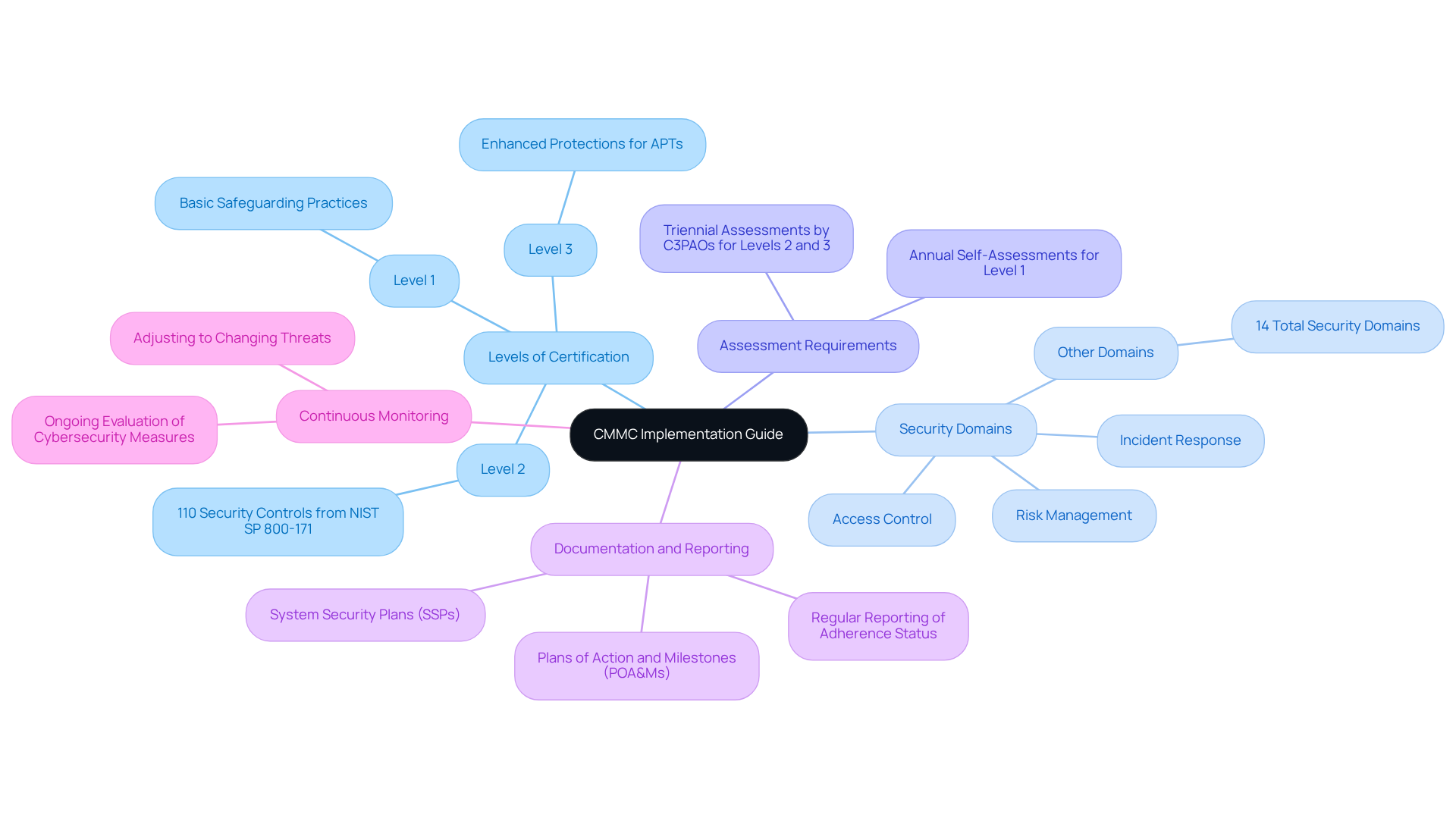
- Levels of Certification: CMMC has been simplified to three tiers, each representing a distinct degree of security maturity. Level 1 focuses on basic safeguarding practices, while Level 2 requires full implementation of 110 security controls from NIST SP 800-171, and Level 3 adds enhanced protections for organizations facing Advanced Persistent Threats (APTs).
- Security Domains: The guide encompasses 14 security domains that address various aspects of cybersecurity, including access control, incident response, and risk management. Each domain outlines specific practices that contractors must implement to ensure comprehensive security.
- Assessment Requirements: Contractors are required to undergo evaluations to confirm their adherence to the practices outlined for their assigned level. This includes annual self-assessments for Level 1 and triennial assessments by Certified Third-Party Assessment Organizations (C3PAOs) for Levels 2 and 3.
- Documentation and Reporting: Organizations must maintain detailed documentation of their cybersecurity practices, including System Security Plans (SSPs) and Plans of Action and Milestones (POA&Ms). Regular reporting of adherence status is essential to demonstrate conformity to CMMC requirements. Koop Technologies' AI-driven Trust Center simplifies this process by centralizing evidence gathering and automating tasks, enabling organizations to share audit certifications and proof of insurance with clients more efficiently.
- Continuous Monitoring: The guide stresses the importance of ongoing evaluation and enhancement of cybersecurity measures. Ongoing monitoring assists organizations in adjusting to changing threats and upholding regulations, ensuring that security measures are effectively applied and functional. Koop's solutions empower defense providers to ensure regulatory readiness and maintain comprehensive visibility into their contractual obligations by utilizing the CMMC Implementation Guide for defense contractors.
Real-world examples highlight how these components play a crucial role in compliance. For instance, contractors that perform a gap analysis early can prioritize remediation efforts and avoid unexpected challenges during formal evaluations, resulting in a more efficient adherence process. Additionally, organizations that automate continuous control monitoring can simplify audits and enhance their ability to detect issues in real-time, transforming compliance into a strategic advantage rather than a mere obligation.
Explore the Origins and Evolution of CMMC
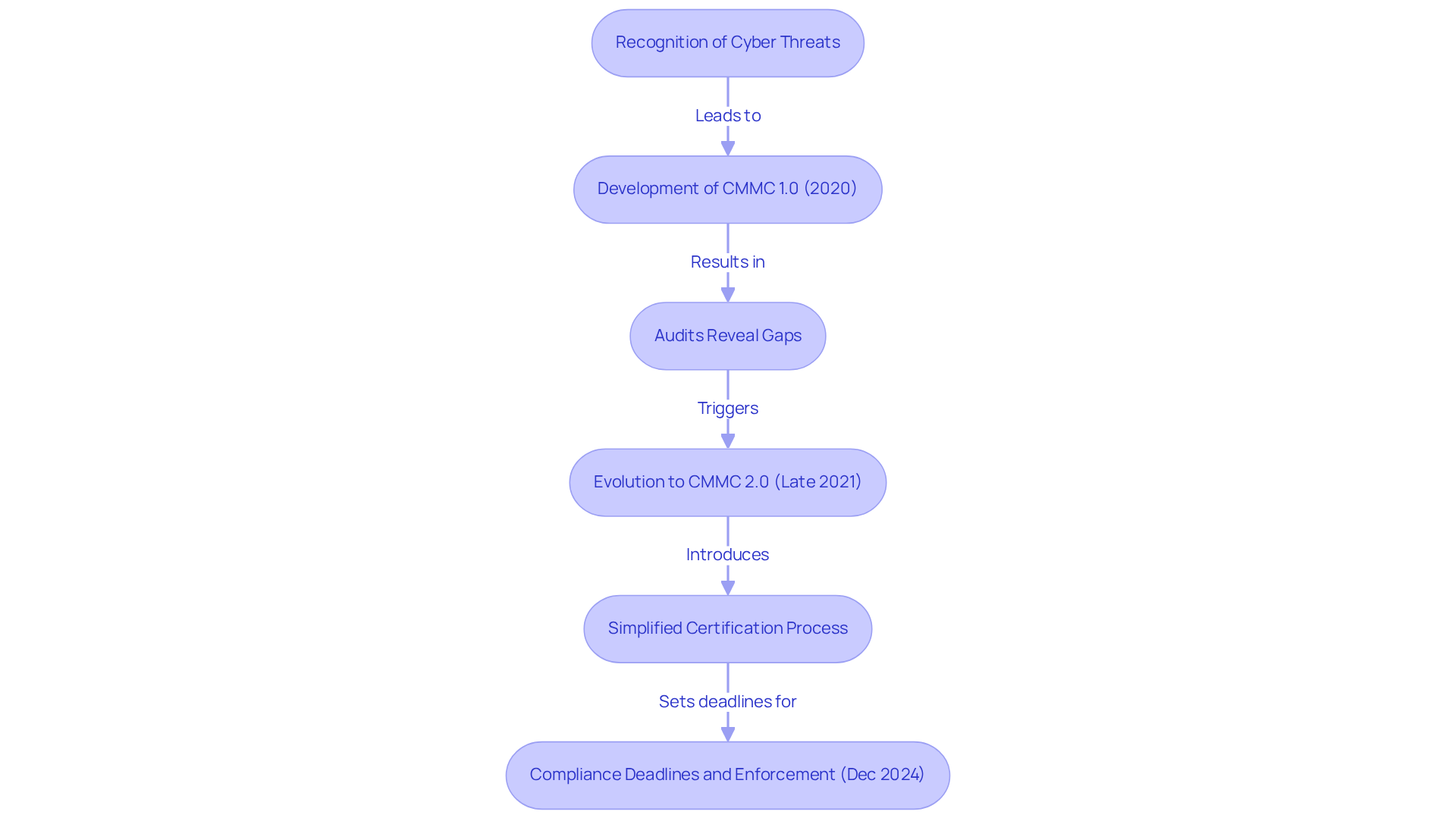
The Cybersecurity Maturity Model Certification arose from the Department of Defense's recognition of escalating cyber threats targeting the defense sector. In 2019, the shortcomings of the current self-attestation model led the DoD to begin the development of a more stringent and standardized security framework. The first edition, version 1.0, was launched in 2020, presenting a tiered framework that required suppliers to verify their security capabilities through external evaluations. The audits uncovered significant gaps in cybersecurity practices, indicating a pressing need for reform.
In reaction to input from small and medium-sized enterprises concerning the intricacy of version 1.0, the framework evolved to version 2.0, which was revealed in late 2021. This revised model simplifies the certification process by reducing the levels from five to three, aligning more closely with NIST 800-171 standards.
The DoD's dedication to improving supply chain security is clear in the staged rollout of the cybersecurity maturity model certification, with compliance deadlines nearing and the final rule scheduled to be enforced in December 2024. Starting in 2025, the new compliance framework will start to be enforced, making it essential for defense suppliers to obtain certification to retain eligibility for DoD contracts involving Controlled Unclassified Information (CUI). This evolution underscores the DoD's proactive stance in addressing cybersecurity vulnerabilities and ensuring that vendors meet rigorous standards.
Discuss Implications of CMMC Compliance for Defense Contractors
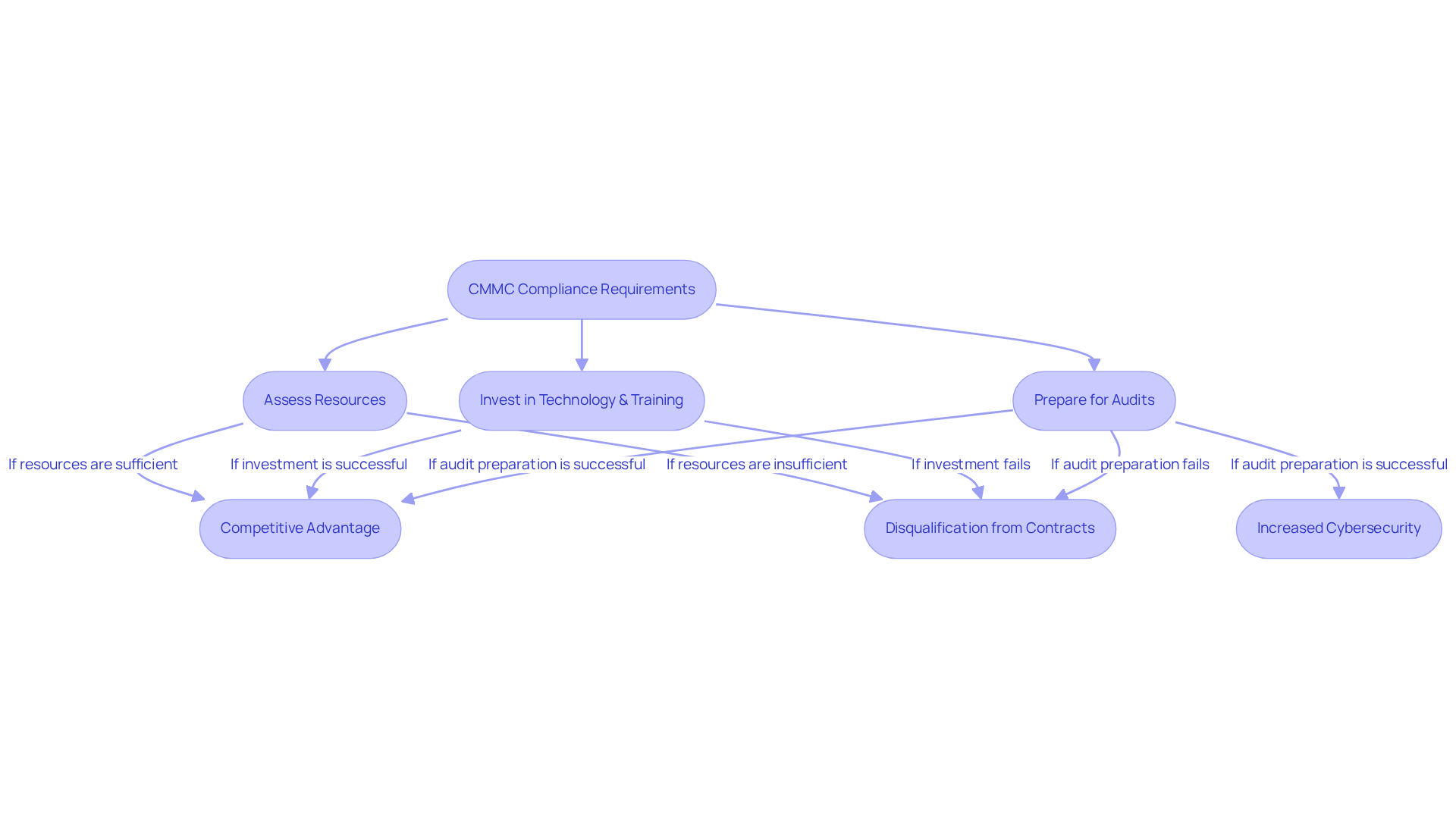
For defense suppliers, adhering to the CMMC implementation guide for defense contractors is not just a regulatory requirement; it is essential for maintaining competitive viability. Achieving certification, as detailed in the CMMC implementation guide for defense contractors, is a prerequisite for eligibility in Department of Defense (DoD) contracts. Non-compliance can result in disqualification from bidding processes, which can severely limit their ability to compete for lucrative government contracts. Moreover, adhering to the standards in the CMMC implementation guide for defense contractors enhances a contractor's cybersecurity stance, reducing the likelihood of data breaches and the financial repercussions that come with them. Organizations that successfully apply cybersecurity maturity model standards often gain heightened trust from clients and stakeholders, resulting in a competitive advantage in the defense sector.
However, many contractors struggle to allocate sufficient resources to meet the stringent requirements of the CMMC implementation guide for defense contractors, particularly startups and mid-market companies that face higher costs due to limited resources. Contractors must invest in technology, training, and continuous monitoring to meet the evolving standards. For example, the Pentagon's gradual execution of the CMMC implementation guide for defense contractors, which will pertain to all agreements involving Federal Contract Information (FCI) or Controlled Unclassified Information (CUI) by the fourth year, highlights the urgency for contractors to adjust. The financial consequences can be considerable, especially for smaller enterprises, as the expense of adherence may take up a significant share of their income.
Case studies demonstrate these challenges: Integris, for instance, has successfully attained cybersecurity maturity model certification standards, offering clients proven playbooks and audit-prepared documentation. Yet, reports suggest that only 1% of Defense Industrial Base suppliers are fully ready for audits, emphasizing the widespread challenge within the sector.
Experts stress that early preparation and strong internal controls are crucial for staying competitive in defense contracting. As William T. Kirkwood observes, "According to the CMMC implementation guide for defense contractors, adherence is now a contractual requirement for federal procurement contract awards, and firms lacking the necessary certification levels will be disqualified from receiving contracts." This reality forces contractors to carefully assess the costs of adherence against the potential advantages of obtaining and keeping government contracts. Getting started with Koop is straightforward; simply set up a call with a representative to discuss your needs and explore the options available, ensuring you have the support needed throughout the compliance journey. Ultimately, the decision to invest in compliance could determine a contractor's future in the defense sector.
Conclusion
Navigating the complexities of CMMC compliance is vital for defense contractors aiming to thrive in a competitive landscape. The CMMC Implementation Guide serves as a roadmap for certification and highlights the need to protect sensitive information in the defense supply chain. As enforcement of CMMC approaches, understanding and adhering to this guide is imperative for contractors seeking to secure their position in the defense contracting arena.
Throughout this article, we have explored key components of the CMMC Implementation Guide, including:
- Certification levels
- Security domains
- Assessment requirements
- The importance of continuous monitoring
The evolution of the CMMC framework reflects the Department of Defense's commitment to enhancing cybersecurity measures in response to escalating threats. Compliance impacts more than just regulations; it helps maintain operational integrity and builds trust in the defense sector.
In light of these insights, it is crucial for defense contractors to prioritize their compliance efforts and invest in the necessary resources to meet CMMC standards. Failure to comply could jeopardize your ability to compete for vital government contracts, underscoring the urgency of taking proactive measures. By leveraging tools and solutions, such as those offered by Koop Technologies, contractors can streamline their compliance processes and enhance their cybersecurity posture. Contractors who prioritize CMMC compliance will not only safeguard their operations but also enhance their role in protecting national interests.
Frequently Asked Questions
What is the CMMC implementation guide for defense contractors?
The CMMC implementation guide for defense contractors is a framework designed to help defense suppliers meet the cybersecurity requirements set by the U.S. Department of Defense. It outlines essential practices and processes to safeguard sensitive information and ensure compliance with federal regulations.
How is the CMMC framework organized?
The CMMC framework is organized into various levels, each with specific requirements tailored to the sensitivity of the information being handled.
What are the key steps outlined in the CMMC implementation guide for achieving certification?
Key steps include conducting self-assessments, maintaining thorough documentation, and ongoing monitoring of cybersecurity practices.
What is the deadline for compliance with the CMMC requirements?
The adherence deadline for CMMC compliance is November 10, 2026.
What challenges are defense contractors facing in achieving compliance?
Defense contractors are struggling to find enough third-party auditors and readiness partners, which complicates their compliance efforts. Additionally, prime contractors are now requiring compliance from their subcontractors, increasing the urgency for a structured approach.
How does Koop Technologies assist defense contractors with CMMC compliance?
Koop Technologies provides a comprehensive regulatory database and requirements management solutions that enhance automation of adherence. Their AI-driven platform reduces costs and speeds up processes, making it easier for startups and mid-market firms to navigate compliance challenges.
Why is the CMMC framework important in defense contracting?
The CMMC framework is crucial as it addresses escalating threats to information security within the Defense Industrial Base. Following the CMMC implementation guide is a prerequisite for bidding on and securing Department of Defense contracts, thereby safeguarding sensitive information and enhancing trust within the defense supply chain.
What is the impact of data breaches in the Defense Industrial Base (DIB)?
Over 60% of data breaches in the DIB occur within small and mid-sized contractors, highlighting the urgent need for robust cybersecurity protocols as outlined in the CMMC implementation guide.
How does Koop Technologies' platform improve the compliance process?
Koop Technologies' platform automates up to 95% of regulatory tasks, simplifies the compliance process, and can save businesses up to 50% compared to conventional methods, facilitating easier management of regulatory requirements.

