

Introduction
Achieving Cybersecurity Maturity Model Certification (CMMC) is essential for defense contractors facing imminent compliance deadlines. This article presents five essential steps to achieve CMMC compliance and the benefits of adhering to these standards. Many contractors struggle to achieve certification, leaving them vulnerable to compliance risks. Organizations that do not comply risk significant financial penalties and loss of contracts.
Identify Required CMMC Level for Contracts
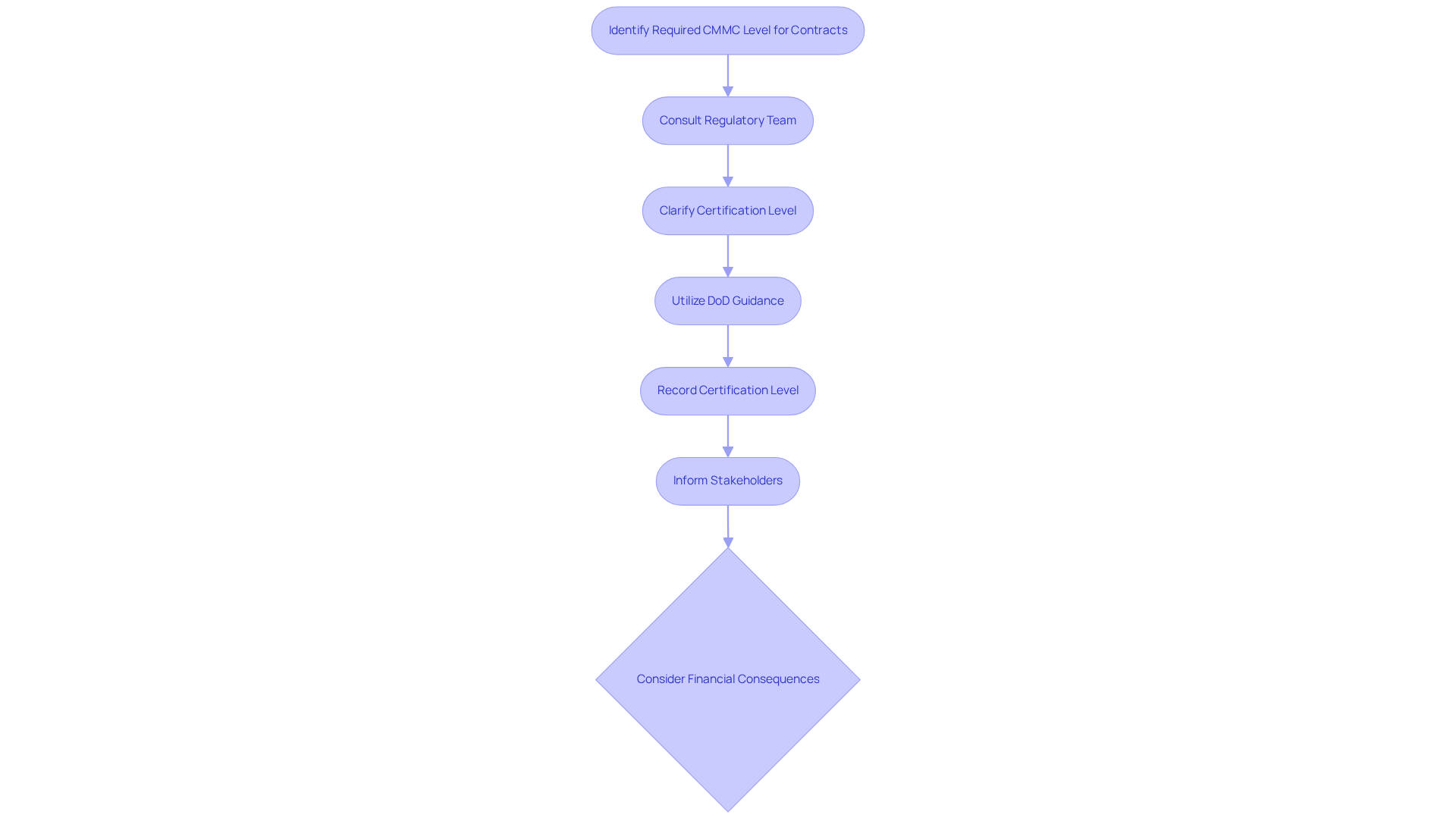
Determining the designated cybersecurity maturity model level in the contract solicitation is crucial for regulatory compliance. Consult with your regulatory team or legal advisors to clarify any uncertainties regarding the necessary certification level, ensuring a thorough understanding of obligations. Utilize the Department of Defense's guidance documents to make informed decisions about the implications of each cybersecurity maturity model level. Record the necessary certification level for continuous reference during the adherence process, facilitating oversight and accountability. Ensure that all stakeholders are informed about the required level to align efforts effectively, promoting a cohesive approach to adherence.
Be aware that as of February 2026, only 8% of defense contractors have achieved Level 2 certification, emphasizing the urgency for adherence. Consider the financial consequences of non-adherence, which averages $14.82 million, compared to $5.47 million for upholding standards, highlighting the importance of accurately identifying the necessary certification level.
Utilize Koop Technologies' Regulatory Database and Requirements Management Solutions, which provide sophisticated filtering and regulatory implementation guidance, to enhance automation and effectively handle the intricacies of the compliance standards. Timely action is imperative to meet the CMMC requirements by the November 10, 2026 deadline, as failure to do so could have significant repercussions.
Conduct a CMMC Self-Assessment
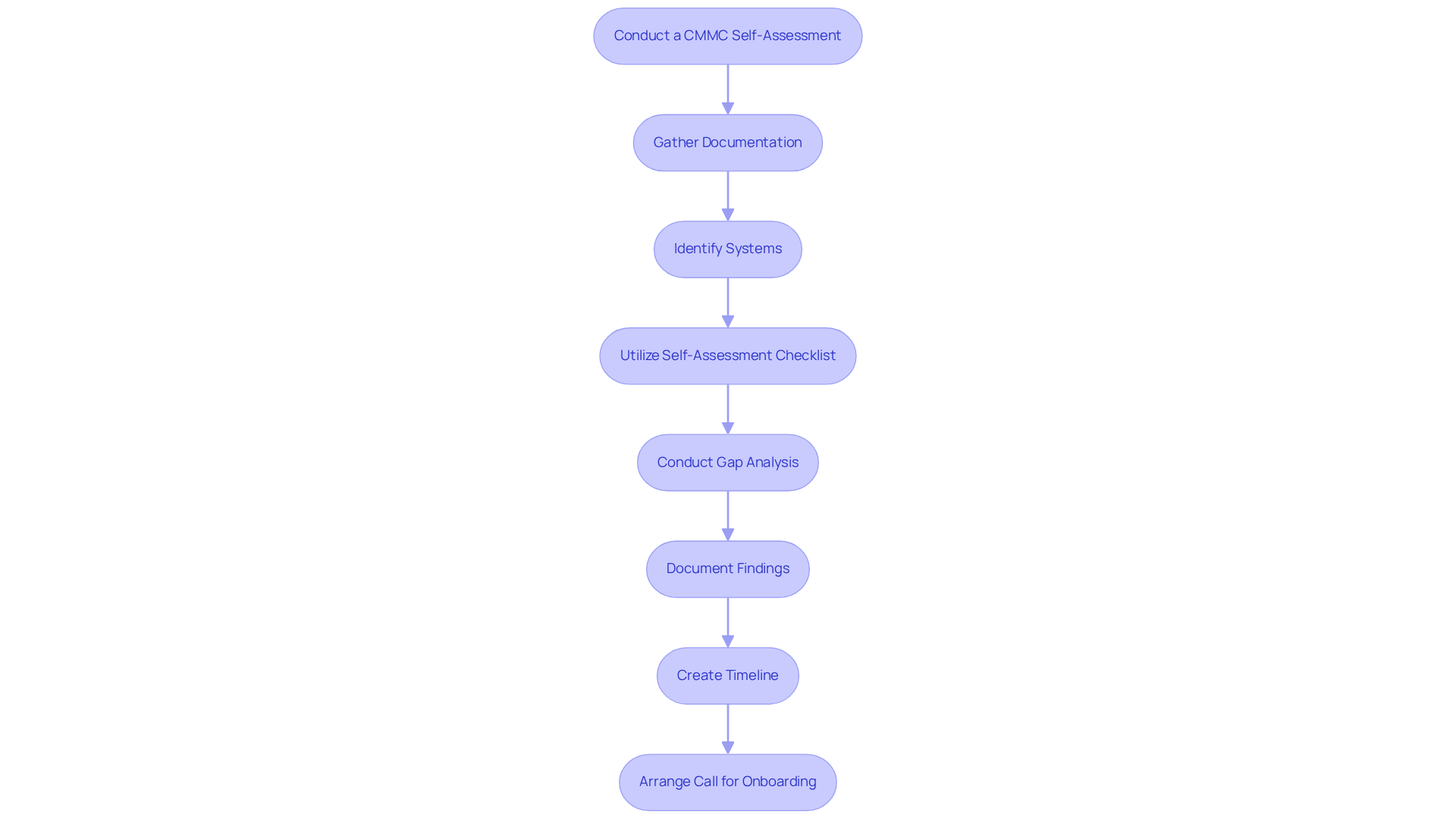
Gathering all relevant documentation is crucial for a comprehensive review of your security posture. This includes current security policies, procedures, and any prior evaluations. Without gathering this documentation, you risk missing critical insights during your review.
Identify all systems that process, store, or transmit Controlled Unclassified Information (CUI). Grasping the extent of your systems is essential for identifying regulatory requirements and possible vulnerabilities.
Utilize a self-assessment checklist that serves as a CMMC compliance checklist for defense contractors, tailored to the specific CMMC level required for your organization. This checklist acts as a structured guide to assess adherence to the CMMC compliance checklist for defense contractors and identify areas needing attention.
Conduct a gap analysis to identify deficiencies in adherence before starting the self-assessment. This step is essential for prioritizing remediation efforts and ensuring a thorough evaluation. You might find it helpful to use Koop Technologies' AI-driven Trust Center for this analysis, as it can identify gaps in your regulatory documentation.
Thoroughly document findings, including any gaps in adherence or areas requiring improvement. Precise documentation is crucial for showing adherence and preparing for possible audits. The Housekeeper AI can automate much of this documentation task, ensuring efficiency and accuracy.
Create a timeline for addressing identified deficiencies, assigning responsibilities to relevant team members. This approach helps ensure that your adherence efforts are well-organized and prioritized.
It's important to note that beginning November 10, 2025, all new defense contracts will require Level 1 and Level 2 self-assessments, and results must be submitted to the Supplier Performance Risk System (SPRS) to maintain eligibility for contracts.
Furthermore, think about utilizing Koop Technologies' AI-driven Trust Center to centralize your regulatory documentation and simplify the evidence collection process. With the Housekeeper AI, you can automate up to 95% of regulatory tasks, significantly reducing manual effort and expenses. This integration not only improves your adherence efficiency but also fosters trust with enterprise and government clients, ensuring you meet regulatory requirements effectively. Neglecting to integrate these tools may result in compliance challenges and diminished client confidence. To begin with the platform, arrange a call with a representative to discuss your requirements and examine the onboarding procedure, which is intended to ensure a seamless shift into management of regulations.
Create System Security Plan (SSP) and POA&M
To effectively create a System Security Plan (SSP) that aligns with the CMMC compliance checklist for defense contractors, it is essential to first outline the existing security controls and their compliance with established standards.
Startups and mid-market firms often struggle with the burden of compliance costs, which can hinder their growth. By adopting AI-driven solutions, organizations can significantly reduce compliance costs and streamline their regulatory processes.
Identify any controls that are not fully implemented and document them in the Plan of Action and Milestones (POA&M), utilizing expert services and pre-built templates for efficiency. Assign responsible parties for each action item in the POA&M, including timelines for completion, ensuring accountability and clarity.
Consistently examine and revise the SSP and POA&M to represent alterations in your organization or regulatory requirements, using Koop Technologies' regulatory database for the latest information.
This proactive approach not only ensures adherence to the CMMC compliance checklist for defense contractors but also fosters a culture of security readiness that is vital in high-stakes sectors like defense and security.

Implement Required Security Controls
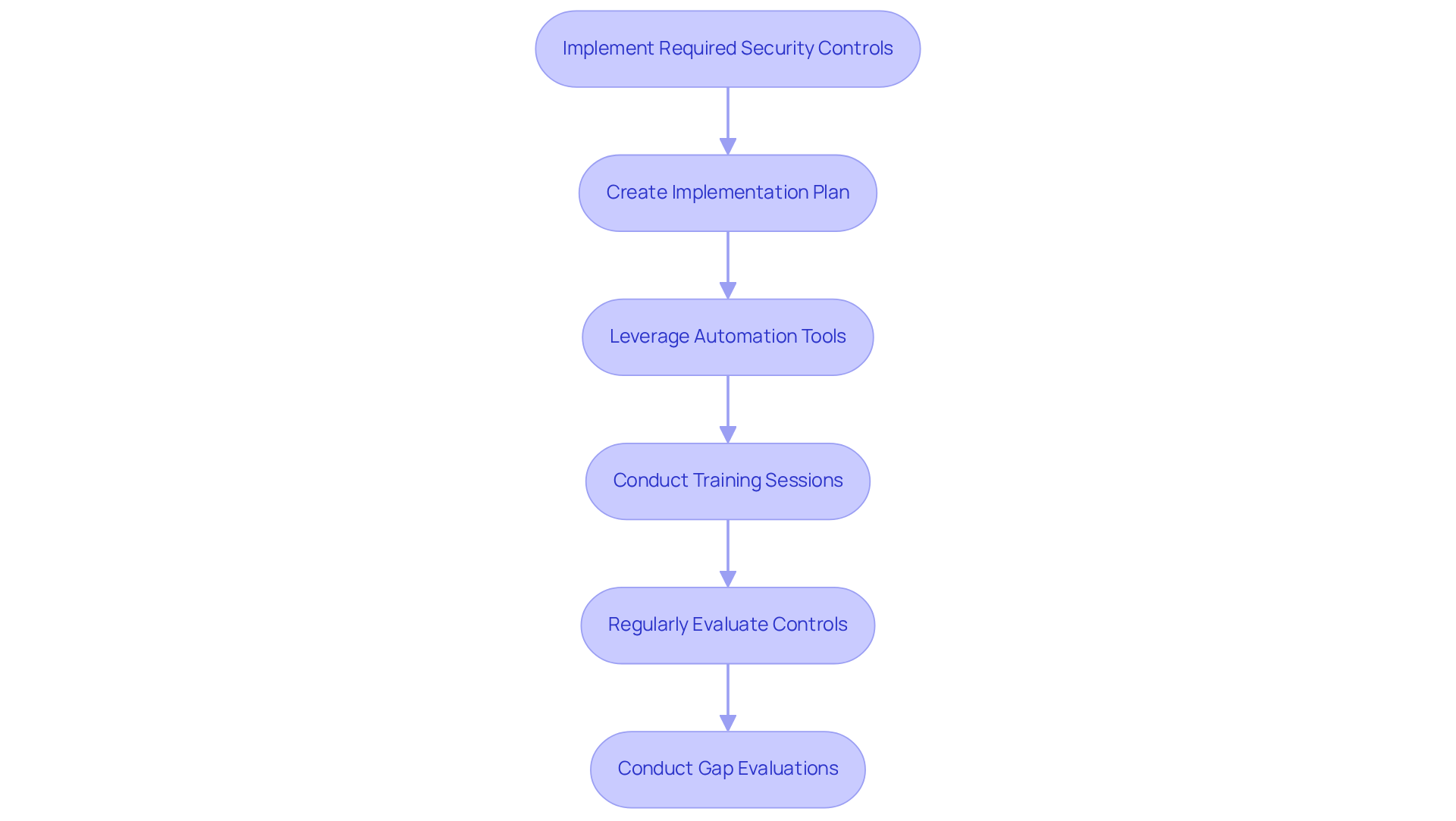
Many organizations struggle to meet the CMMC Level 2 requirements, particularly the 110 security controls aligned with NIST SP 800-171 standards. To ensure compliance with the CMMC compliance checklist for defense contractors, it is essential to create a clear implementation plan for each control, detailing timelines, responsible parties, and necessary resources for accountability. Leveraging automation tools, such as Technologies' AI-driven Housekeeper, can streamline the implementation process, enhancing consistency and reducing manual regulatory tasks.
Thirty to fifty percent of firms pursuing evaluation are unprepared and fail to succeed in Phase 1; employing Koop's Trust Center can centralize trust assets and enhance regulatory management effectively. Conducting comprehensive training sessions for staff to familiarize them with new security protocols and controls is crucial for adhering to the CMMC compliance checklist for defense contractors, ensuring all team members understand their roles in compliance.
Regularly evaluating the effectiveness of established controls through audits and assessments is necessary, as auditors expect to review four to six months of operational evidence for the CMMC compliance checklist for defense contractors confirmation. This ongoing assessment is crucial for adapting to changing regulatory requirements and maintaining operational integrity. If a control is not documented, tested, and demonstrable, auditors will consider it absent. Additionally, organizations should conduct gap evaluations and engage legal advisors early in the compliance process to mitigate risks and ensure thorough readiness for the upcoming November 2026 deadline, following the CMMC compliance checklist for defense contractors.
Schedule C3PAO Assessment
Choosing the right C3PAO is critical for aligning with your organization's regulatory needs and ensuring compliance success. Identify and select a qualified C3PAO that meets your specific requirements. Look for C3PAOs with full-time Certified Assessors (CCAs) and a proven track record in federal compliance.
Engage with the C3PAO to discuss availability and scheduling options, ideally starting this process 9-12 months in advance. With many C3PAOs fully booked, organizations face challenges in securing timely assessments. Therefore, it is advisable to initiate this procedure 3-6 months before your target assessment date to ensure availability. Koop Technologies' AI-driven platform simplifies regulatory management, saving time and costs for startups and mid-market firms.
Prepare all necessary documentation and evidence of compliance, including your System Security Plan (SSP) and relevant policies. Organizations that have conducted thorough gap assessments are better positioned for success, as nearly one-third of contractors are unaware of which CMMC level applies to them. Budgeting for C3PAO assessments is crucial for financial planning, as costs typically range from $30,000 to $100,000, depending on organizational size and complexity. By leveraging technology solutions, companies can better manage these costs and enhance their compliance readiness.
A pre-assessment review can help ensure your readiness and tackle any last-minute issues. This step significantly increases your chances of passing the assessment on the first attempt, as only about 1,042 out of an estimated 76,598 organizations have completed Level 2 certification. Additionally, 80% of assessors cite 'assumed readiness without validation' as a leading cause for rescheduling assessments, underscoring the importance of this review. Technologies' platform can assist in identifying gaps and ensuring that all necessary preparations are in place.
Confirm the assessment date and communicate it to all relevant stakeholders to ensure full participation. Clear communication is essential to align your team and resources effectively, facilitating a smoother assessment process. By integrating Koop Technologies' compliance management tools, organizations can enhance collaboration and ensure that all team members are informed and prepared. Effective preparation can mean the difference between a successful assessment and costly delays.

Conclusion
For defense contractors, mastering the CMMC compliance checklist is not just beneficial; it is essential for securing contracts and ensuring regulatory adherence. By implementing the specified steps, organizations can tackle the challenges posed by CMMC requirements, ensuring they meet the necessary standards to protect sensitive information and avoid significant financial repercussions.
Key steps include:
- Identifying the required CMMC level for contracts
- Conducting thorough self-assessments
- Creating a comprehensive System Security Plan (SSP) and Plan of Action and Milestones (POA&M)
- Implementing necessary security controls
- Scheduling assessments with a qualified C3PAO
These components are vital for creating a strong compliance framework that not only meets regulatory demands but also fosters a culture of security within the organization.
With the compliance deadline looming, defense contractors must act decisively to ensure they meet the requirements. Engaging with technology solutions can streamline the compliance process, reduce costs, and enhance overall readiness. Ultimately, prioritizing CMMC compliance is not merely a regulatory obligation; it is a strategic advantage that can define an organization's future success.
Frequently Asked Questions
Why is it important to identify the required CMMC level for contracts?
Identifying the designated cybersecurity maturity model (CMMC) level in contract solicitations is crucial for regulatory compliance and understanding obligations. It ensures that all stakeholders are informed and aligned in their efforts to adhere to the necessary standards.
What resources can help in determining the required CMMC level?
Consulting with regulatory teams or legal advisors and utilizing the Department of Defense's guidance documents can help clarify the necessary certification level and its implications.
What is the current status of defense contractors regarding CMMC Level 2 certification?
As of February 2026, only 8% of defense contractors have achieved Level 2 certification, highlighting the urgency for compliance.
What are the financial consequences of non-adherence to CMMC standards?
The average financial consequence of non-adherence is $14.82 million, compared to $5.47 million for maintaining compliance, emphasizing the importance of accurately identifying the necessary certification level.
How can Koop Technologies assist with CMMC compliance?
Koop Technologies offers a Regulatory Database and Requirements Management Solutions that provide filtering and regulatory implementation guidance to enhance automation and manage compliance standards effectively.
What is the deadline for meeting CMMC requirements?
The deadline to meet CMMC requirements is November 10, 2026, and timely action is imperative to avoid significant repercussions.
What steps should be taken for a CMMC self-assessment?
Gather relevant documentation, identify systems processing Controlled Unclassified Information (CUI), use a self-assessment checklist, conduct a gap analysis, document findings, and create a timeline for addressing deficiencies.
What is the significance of the self-assessment checklist?
The self-assessment checklist serves as a structured guide for defense contractors to assess adherence to the specific CMMC level required and identify areas needing attention.
What changes will occur starting November 10, 2025, regarding defense contracts?
All new defense contracts will require Level 1 and Level 2 self-assessments, and the results must be submitted to the Supplier Performance Risk System (SPRS) to maintain eligibility for contracts.
How can automation tools like Housekeeper AI benefit the compliance process?
Housekeeper AI can automate up to 95% of regulatory tasks, improving adherence efficiency, reducing manual effort and expenses, and fostering trust with clients.
How can I start using Koop Technologies' platform for regulatory management?
To begin using the platform, you can arrange a call with a representative to discuss your requirements and examine the onboarding procedure for a seamless transition into regulatory management.

