

Introduction
As cyber threats become more sophisticated, technology companies must adapt their cybersecurity strategies, especially those working with the Department of Defense (DoD). The Cybersecurity Maturity Model Certification (CMMC) establishes a rigorous framework that enhances security measures and serves as a gateway to lucrative government contracts.
However, many firms struggle to understand and implement the intricate requirements of CMMC certification. How can technology companies effectively prepare for CMMC certification while ensuring they remain competitive in a rapidly evolving landscape?
Without effective preparation for CMMC certification, technology firms risk losing competitive advantages in a critical market.
Define CMMC: Understanding Cybersecurity Maturity Model Certification
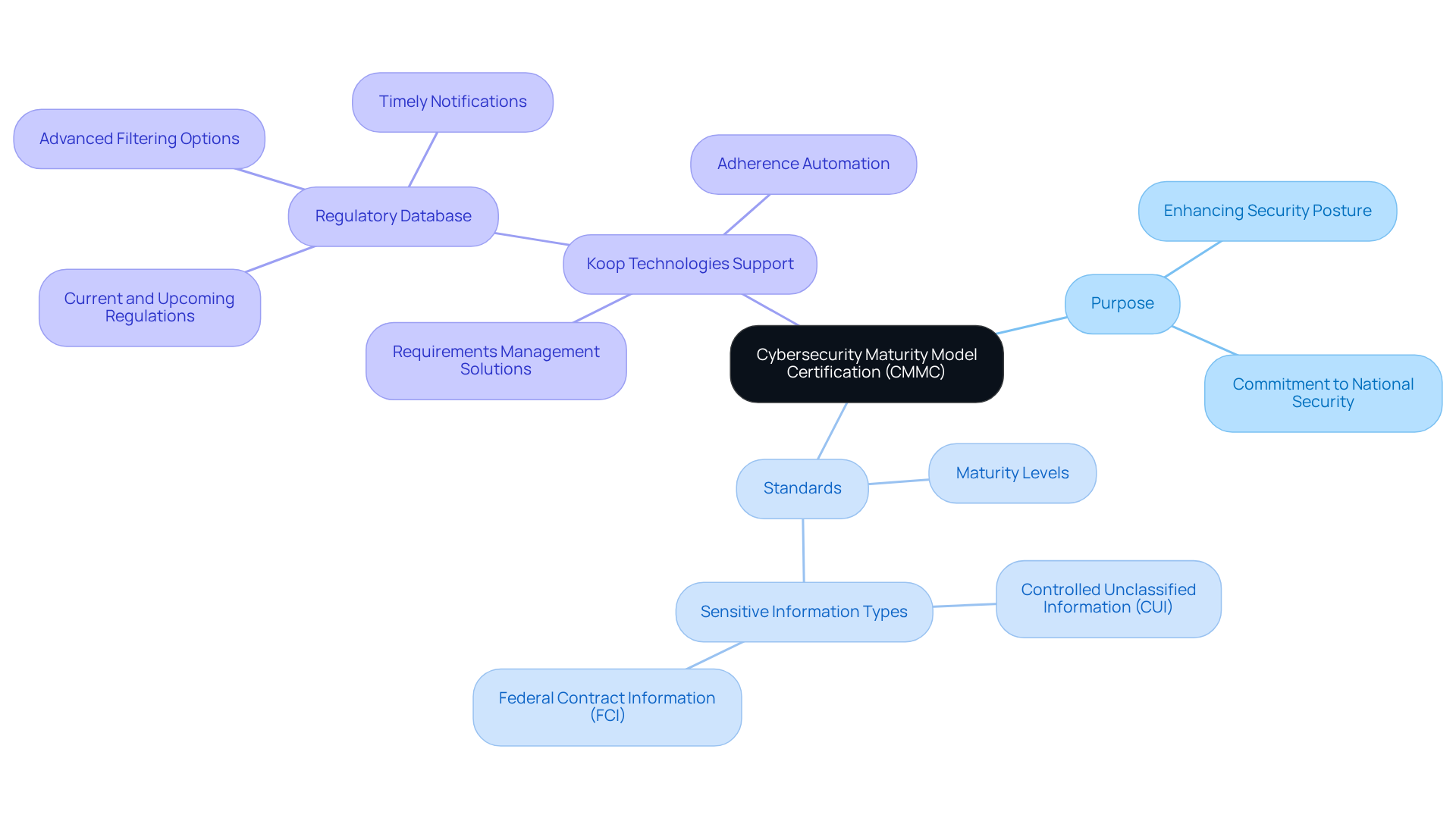
The Cybersecurity Maturity Model Certification (CMMC) is essential for enhancing the security posture of entities within the Defense Industrial Base. CMMC establishes a set of standards that contractors must meet to protect sensitive information, particularly Controlled Unclassified Information (CUI) and Federal Contract Information (FCI). The model includes various security practices and processes, classified into different maturity levels, which organizations must attain to qualify for DoD contracts. This certification signifies a commitment to national security, ensuring defense contractors implement strong cybersecurity measures.
To support adherence to industry standards, Koop Technologies offers a comprehensive Regulatory Database featuring:
- Current and upcoming regulations
- Advanced filtering options for go-to-market teams
- Timely notifications for regulatory updates
Their Requirements Management solutions enhance adherence automation, allowing organizations to produce immediate requirements, handle evidence, and monitor counterparty adherence status efficiently. This comprehensive method streamlines the adherence process and improves third-party risk automation, ensuring that technology firms can comply with the CMMC requirements for technology companies. Ultimately, compliance with CMMC is crucial for maintaining national security and ensuring the integrity of defense operations.
Context and Evolution: The Origins of CMMC Requirements
The rise in digital security threats has necessitated a robust response from the Department of Defense (DoD) regarding its supply chain. In 2019, the DoD recognized major deficiencies in the self-attestation model, which allowed contractors to self-certify their adherence to security standards. This realization prompted the establishment of the Cybersecurity Maturity Model Certification, which launched in early 2020 to create a more rigorous and standardized protection framework.
The framework mandates that all contractors comply with the CMMC requirements for technology companies, which reflects a critical shift in accountability for protecting sensitive information against increasingly sophisticated cyber threats. As cyberattacks continue to rise, the framework plays a crucial role in strengthening the security of the defense supply chain, ensuring that entities are not only compliant but also proactive in their cybersecurity measures.
Most entities require 6 to 12 months to achieve readiness for the certification, underscoring the critical need for compliance efforts with CMMC requirements for technology companies. However, startups and mid-market firms face significant challenges in navigating the CMMC requirements for technology companies due to limited resources.
Koop Technologies stands ready to make a significant impact here. By utilizing their Trust Center, organizations can simplify adherence to FAR, NIST, and CMMC frameworks. The Trust Center offers a centralized platform for managing regulatory documentation and processes, effectively signaling adherence excellence to prospective and existing customers.
Furthermore, Koop's AI-powered platform not only reduces costs but also accelerates the compliance process, providing a competitive edge for certified firms that can quickly prove their compliance. Failure to comply can lead to severe financial repercussions, making adherence essential for survival. Compliance readiness, therefore, is not merely a regulatory necessity but a strategic benefit that entities must prioritize.

CMMC Levels Explained: Key Requirements for Technology Companies
Organizations seeking certification must navigate a structured framework comprising three distinct levels, each with specific criteria.
- Level 1, known as 'Foundational,' focuses on basic cybersecurity hygiene practices, such as implementing access controls and ensuring proper password management. In the first year of CMMC implementation, around 1,104 small businesses will face compliance challenges, indicating a significant entry point for compliance.
- Level 2, or 'Advanced,' requires entities to implement more comprehensive security measures, including risk assessments and incident response plans. This level is critical for entities managing Controlled Unclassified Information (CUI), as most contractors dealing with CUI will need to attain Level 2 certification.
- Finally, Level 3, termed 'Expert,' mandates the implementation of advanced security practices that align with the NIST SP 800-171 framework, which includes 24 specific security requirements. Achieving Level 3 certification is critical for entities engaged in sensitive defense contracts.
Each level builds upon the previous one, creating a tiered approach that enables entities to progressively enhance their cybersecurity posture. Understanding the CMMC requirements for technology companies is crucial for firms aiming to secure DoD contracts and remain competitive in a regulated environment.
With Koop Technologies' AI-driven Trust Center, entities can centralize their regulatory efforts, streamline evidence gathering, and automate tasks, significantly lowering expenses and speeding up growth in the face of regulatory challenges.

Implications of CMMC Compliance: Why It Matters for Technology Companies
Adhering to CMMC requirements for technology companies is crucial for firms aiming to engage with the Department of Defense (DoD). Achieving certification not only enhances an organization's cybersecurity posture but also opens doors to lucrative government contracts.
Beginning January 6, 2026, compliance with the CMMC requirements for technology companies will be required for contracting with the DoD, making it essential for companies to prepare ahead of time. Failing to comply with CMMC can lead to significant financial losses and diminished market presence. Additionally, adherence builds trust with clients and stakeholders by showcasing a commitment to protecting sensitive information.
Given the evolving nature of cybersecurity threats, being compliant with the CMMC requirements for technology companies positions them as responsible and trustworthy partners in the defense supply chain. In an increasingly competitive landscape, this strategic advantage can lead to increased competitiveness and market share.
Koop Technologies' AI-powered platform specifically addresses the compliance challenges faced by startups and mid-market companies, significantly reducing costs associated with compliance management.
As Bret S. Wacker notes, "Compliance is increasingly important in light of the U.S. government’s lawsuits under the False Claims Act against various contractors for failure to meet cybersecurity requirements in government contracts." This highlights the possible consequences for non-compliance, further demonstrating the risks linked to not obtaining certification.
By prioritizing compliance, companies not only protect their interests but also enhance their reputation in a demanding market.

Conclusion
As technology companies face increasing scrutiny in cybersecurity, the Cybersecurity Maturity Model Certification (CMMC) emerges as a critical framework for compliance and security. By establishing a structured framework of compliance requirements, CMMC enhances the security of sensitive information and underscores the importance of accountability in the defense supply chain. As organizations strive to meet these standards, the commitment to robust cybersecurity practices becomes essential for securing government contracts and maintaining national security.
Key insights into the evolution of CMMC requirements highlight the necessity for technology firms to adapt to an increasingly complex regulatory landscape. The three levels of certification - Foundational, Advanced, and Expert - each present unique challenges and requirements that organizations must navigate. Navigating compliance is fraught with challenges, as non-compliance can lead to severe financial penalties and damage to reputation. Innovative solutions, like those from Koop Technologies, demonstrate how technology can simplify compliance and enhance the adherence process.
By prioritizing compliance, companies can transform regulatory challenges into opportunities for growth and trust-building. As the landscape of cybersecurity threats continues to evolve, prioritizing compliance will not only safeguard sensitive information but also enhance a company's reputation and competitiveness in a demanding market. Failure to act now could jeopardize not only compliance but also the future viability of technology firms in the defense sector.
Frequently Asked Questions
What is the Cybersecurity Maturity Model Certification (CMMC)?
The CMMC is a certification designed to enhance the security posture of entities within the Defense Industrial Base by establishing standards that contractors must meet to protect sensitive information, particularly Controlled Unclassified Information (CUI) and Federal Contract Information (FCI).
Why is CMMC important for defense contractors?
CMMC is important because it signifies a commitment to national security, ensuring that defense contractors implement strong cybersecurity measures to protect sensitive information.
How is the CMMC structured?
The CMMC includes various security practices and processes classified into different maturity levels that organizations must attain to qualify for Department of Defense (DoD) contracts.
What services does Koop Technologies provide to support CMMC compliance?
Koop Technologies offers a comprehensive Regulatory Database that includes current and upcoming regulations, advanced filtering options for go-to-market teams, and timely notifications for regulatory updates. They also provide Requirements Management solutions to enhance adherence automation.
How do Requirements Management solutions help organizations with CMMC compliance?
These solutions allow organizations to produce immediate requirements, handle evidence, and monitor counterparty adherence status efficiently, streamlining the adherence process and improving third-party risk automation.
What is the ultimate goal of complying with CMMC?
The ultimate goal of complying with CMMC is to maintain national security and ensure the integrity of defense operations.

