

Introduction
Achieving compliance with the Cybersecurity Maturity Model Certification (CMMC) is essential for contractors in the Defense Industrial Base, yet it presents significant challenges that require careful navigation. This guide offers a comprehensive roadmap for contractors seeking to achieve CMMC compliance, detailing the essential steps and best practices necessary for success.
Organizations face significant challenges in allocating resources and adapting to changing compliance requirements. To navigate these complexities, organizations must adopt strategic approaches to ensure compliance and enhance their cybersecurity posture.
Define Cybersecurity Maturity Model Certification (CMMC)
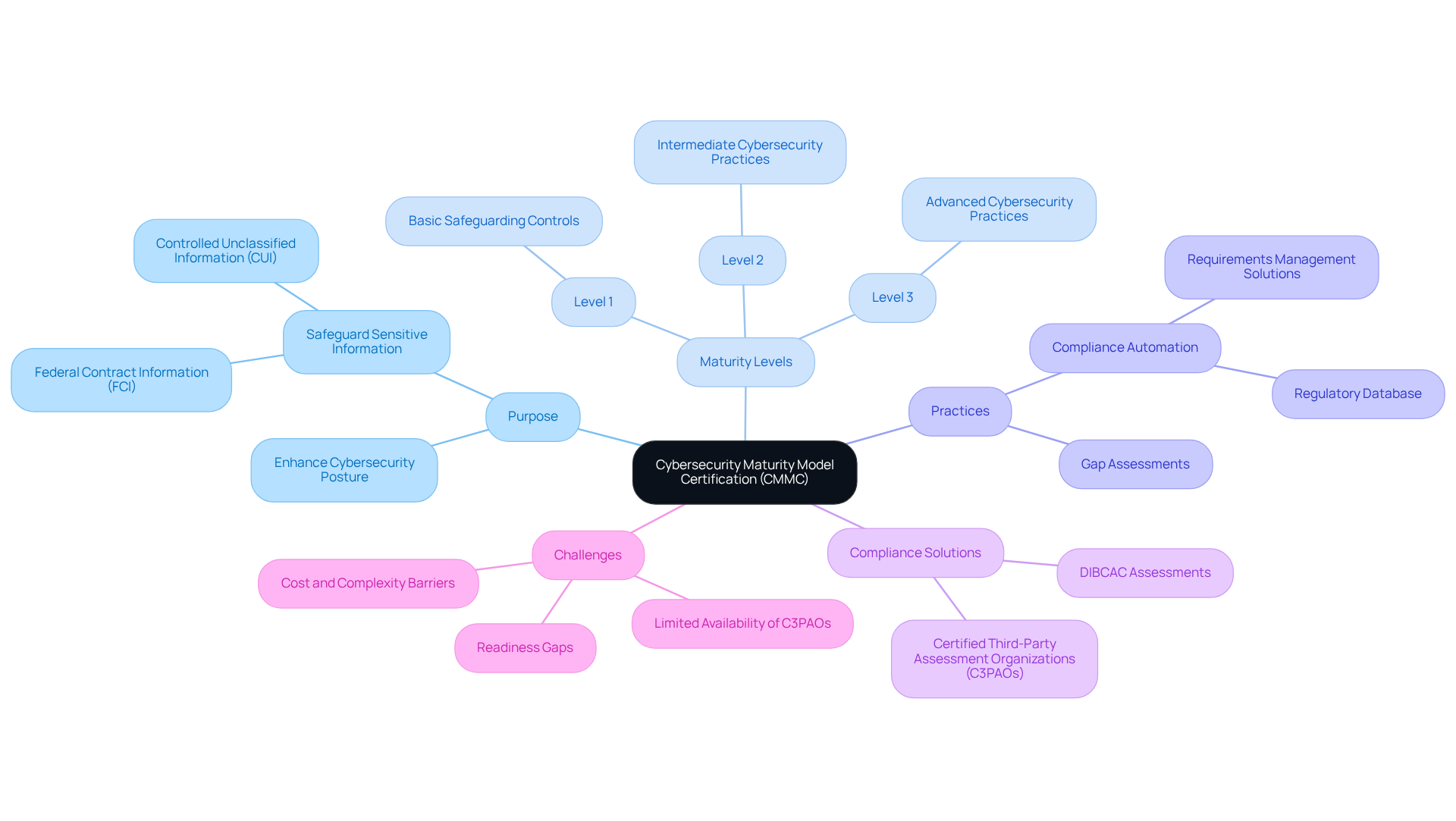
The Cybersecurity Maturity Model Certification is essential for contractors aiming to enhance their cybersecurity posture within the Defense Industrial Base. This framework, created by the U.S. Department of Defense (DoD), is designed to ensure that contractors effectively safeguard sensitive information, including Federal Contract Information (FCI) and Controlled Unclassified Information (CUI). It encompasses a range of cybersecurity practices and processes, assessed across multiple maturity levels, to ensure that organizations meet the CMMC requirements for government contracts.
CMMC is not just a checklist; it represents a comprehensive approach to cybersecurity that integrates existing regulations and guidelines. Understanding its implications is vital for contractors navigating regulatory complexities to secure their positions in the defense market.
Koop Technologies can assist in this process with its Regulatory Database and Requirements Management Solutions, which offer advanced filtering, alerts for regulatory changes, and instant requirements generation. These features streamline compliance automation, helping contractors efficiently manage their compliance needs.
As the need for cybersecurity maturity model assessments increases, contractors face potential delays in securing assessments due to limited availability of Certified Third-Party Assessment Organizations (C3PAOs). This necessitates early preparation to ensure timely compliance and assessment.
As Nick DelRosso, DIBCAC Director, notes, "It’s always better to be prepared and make sure you’re fully implemented, rather than trying to get into a crunch where you need to get assessed quickly to support a contract." Engaging with Koop Technologies can help you identify the best solutions for your compliance needs.
Explore CMMC Levels and Their Requirements
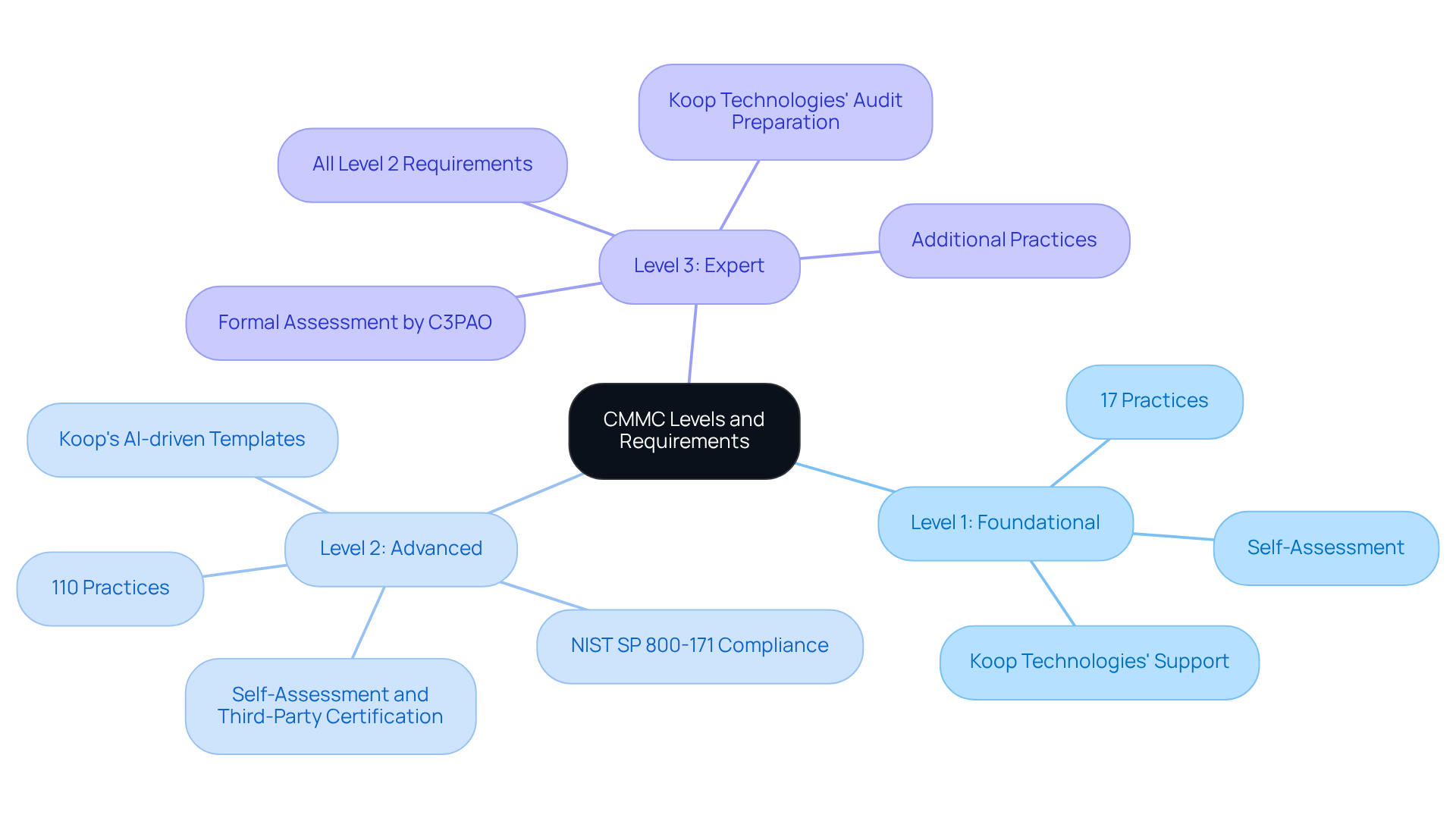
Understanding the three levels of CMMC requirements for government contracts is crucial for contractors aiming to achieve compliance and secure federal contracts.
- Level 1: Foundational - This level focuses on basic safeguarding of Federal Contract Information (FCI). Organizations must implement 17 practices, including access control and user identification. Compliance is assessed through self-assessment, which is required annually for contractors and applicable subcontractors. Koop Technologies' AI-driven Trust Center helps organizations quickly demonstrate compliance and effectively manage procurement needs, enhancing their foundational efforts.
- Level 2: Advanced - Level 2 requires a more comprehensive cybersecurity program, encompassing 110 practices aligned with NIST SP 800-171 and specified by DFARS clause 252.204-7012. Organizations must demonstrate their ability to protect Controlled Unclassified Information (CUI) through a combination of self-assessment and third-party certification. As of 2026, many organizations are working diligently to meet these criteria, with a considerable number anticipated to finish their evaluations by the approaching November deadline. Koop's AI-driven templates and professional services simplify compliance evidence gathering, offering complete insight into the extent of contractual obligations and facilitating the fulfillment of these advanced criteria.
- Level 3: Expert - This level is intended for entities managing the most sensitive information. It includes all Level 2 requirements plus additional practices to ensure robust security measures are in place. Organizations must undergo a formal assessment by a Certified Third-Party Assessment Organization (C3PAO), which is crucial for maintaining eligibility for contracts involving advanced technology or significant aggregations of CUI. Utilizing a platform like Koop Technologies can help organizations streamline their audit preparation, reducing both costs and time associated with regulatory compliance.
Grasping these levels assists contractors in recognizing their adherence route to the CMMC requirements for government contracts and the essential actions needed to obtain certification, ensuring they are prepared for the changing regulatory environment. Being proactive in understanding these levels can significantly impact a contractor's ability to navigate the evolving regulatory landscape.
Implement Steps for Achieving CMMC Compliance
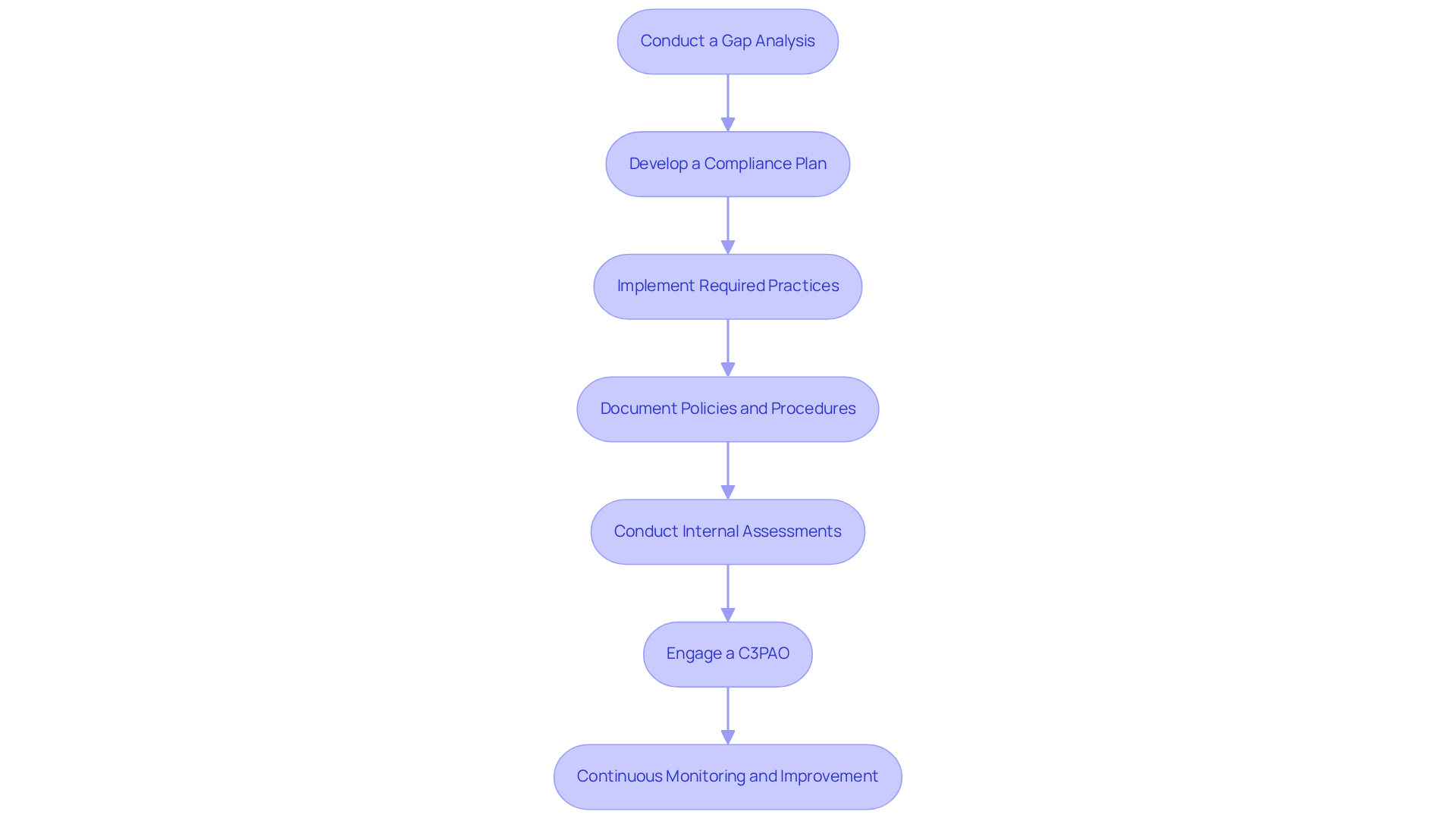
To achieve CMMC compliance, organizations should follow these essential steps:
- Conduct a Gap Analysis: Evaluate your current cybersecurity posture against compliance requirements to identify any gaps in practices and policies. This foundational step is crucial, as it sets the stage for effective adherence planning. A thorough gap analysis is essential for identifying necessary improvements.
- Develop a Compliance Plan: Create a comprehensive plan detailing the necessary actions to address identified gaps, including timelines and responsible parties. The stark reality is that most contractors are unprepared for compliance audits concerning CMMC requirements for government contracts, underscoring the need for meticulous planning. The increased expenses of adherence for startups and mid-market companies further intensify the urgency for compliance efforts among smaller organizations. Preparation for cybersecurity audits has sharply declined, with only 1% of contractors ready for compliance with CMMC requirements for government contracts in 2025, underscoring the critical need for adherence.
- Implement Required Practices: Begin executing the necessary cybersecurity practices based on your targeted CMMC level. This may involve enhancing access controls, conducting regular training, and establishing robust incident response protocols. Consider leveraging expert services and pre-built templates to simplify this implementation phase.
- Document Policies and Procedures: Ensure that all cybersecurity practices are meticulously documented. This documentation is essential during evaluations and audits, as it provides proof of adherence to CMMC requirements for government contracts. Organizations must maintain comprehensive records to avoid potential legal exposure and reputational damage associated with non-compliance.
- Conduct Internal Assessments: Regularly evaluate your adherence status through internal evaluations to confirm that all practices are being followed and are effective. Ongoing assessment of regulatory scope is essential to adjust to changes in business operations.
- Engage a C3PAO: For Levels 2 and 3, partner with a Certified Third-Party Assessment Organization to conduct formal assessments and provide certification. Interacting with a trustworthy C3PAO early can assist in simplifying the certification process and reducing risks linked to regulatory failures.
- Continuous Monitoring and Improvement: After attaining adherence, establish a process for ongoing monitoring and enhancement to adapt to evolving cybersecurity threats and sustain conformity over time. Organizations must show adherence in a thorough way to meet deadlines and readiness for the certification, as failure to adhere to compliance standards can lead to severe penalties and jeopardize future business opportunities.
Address Challenges in CMMC Compliance
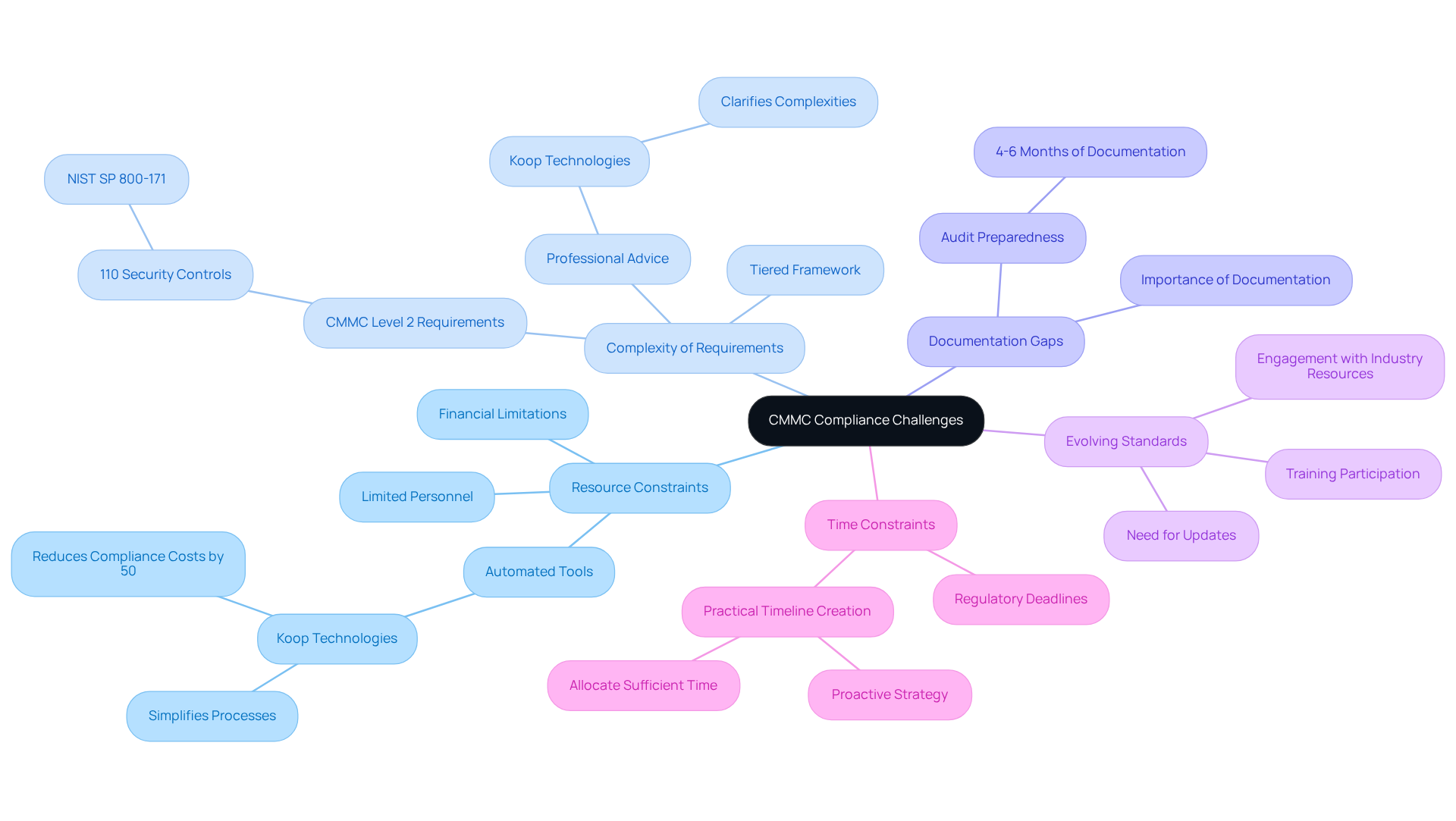
Small and medium-sized enterprises (SMEs) face significant hurdles in achieving compliance with cybersecurity frameworks, primarily due to resource constraints. Approximately 60% of SMBs report difficulties in meeting CMMC requirements for government contracts due to limited resources, highlighting the need for effective strategies to overcome these obstacles.
- Resource Constraints: Many organizations lack the necessary personnel and financial resources to implement comprehensive cybersecurity measures. Automated regulatory tools from Koop Technologies simplify processes, reduce manual effort, and allow teams to focus on core business activities. This approach can reduce compliance costs by up to 50% compared to traditional methods.
- Complexity of Requirements: The tiered framework of the certification model can be daunting. Organizations should invest time in understanding the specific requirements for their targeted level, particularly as CMMC Level 2 requires full implementation of all 110 security controls outlined in NIST SP 800-171. Pursuing professional advice, like that offered by Koop Technologies, can clarify these complexities and aid in meeting requirements.
- Documentation Gaps: Lack of proper documentation can really hinder compliance efforts. It is crucial to ensure that all policies, procedures, and practices are thoroughly documented and regularly updated. This not only assists in adherence but also readies entities for audits, which generally necessitate four to six months of documentation.
- Evolving Standards: CMMC requirements are subject to change, necessitating that organizations stay informed about updates. Engaging with industry resources and participating in training can help teams adjust their regulatory strategies effectively.
- Time Constraints: Meeting regulatory deadlines can be particularly challenging under compressed timelines. Organizations should create a practical timeline for attaining adherence, allocating sufficient time for each step of the process. This proactive strategy can reduce last-minute regulatory issues and improve overall preparedness.
By tackling these challenges directly, organizations can greatly enhance their likelihood of meeting CMMC requirements for government contracts, ultimately fostering trust with stakeholders and ensuring operational integrity. Addressing these challenges is not just a regulatory necessity; it is a strategic imperative for securing future opportunities.
Conclusion
Navigating the complexities of the Cybersecurity Maturity Model Certification (CMMC) is essential for contractors aiming to secure government contracts, yet many face significant challenges in achieving compliance. This framework enhances cybersecurity practices and ensures sensitive information is protected.
Throughout this article, we explored the various levels of CMMC, from foundational practices to expert requirements. It's crucial to conduct a thorough gap analysis, develop a compliance plan, and engage with Certified Third-Party Assessment Organizations (C3PAOs) as vital steps in your compliance journey. Additionally, we highlighted the challenges faced by small and medium-sized enterprises (SMEs), underscoring the need for effective strategies to overcome resource constraints and documentation gaps.
Ultimately, the significance of CMMC compliance extends beyond mere regulatory adherence; it is a strategic imperative that fosters trust and integrity within the defense industrial base. Organizations that prioritize CMMC compliance not only enhance their chances of winning government contracts but also play a crucial role in strengthening the overall cybersecurity framework of the defense sector.
Frequently Asked Questions
What is the Cybersecurity Maturity Model Certification (CMMC)?
The CMMC is a framework created by the U.S. Department of Defense (DoD) designed to enhance the cybersecurity posture of contractors within the Defense Industrial Base by ensuring they effectively safeguard sensitive information, including Federal Contract Information (FCI) and Controlled Unclassified Information (CUI).
Why is CMMC important for contractors?
CMMC is important for contractors as it helps them meet the cybersecurity requirements necessary for securing government contracts, ensuring they can protect sensitive information and navigate regulatory complexities in the defense market.
How does CMMC differ from a simple checklist?
CMMC is not just a checklist; it represents a comprehensive approach to cybersecurity that integrates existing regulations and guidelines, assessing organizations across multiple maturity levels to ensure compliance.
How can Koop Technologies assist with CMMC compliance?
Koop Technologies offers a Regulatory Database and Requirements Management Solutions that provide advanced filtering, alerts for regulatory changes, and instant requirements generation, streamlining compliance automation for contractors.
What challenges do contractors face regarding CMMC assessments?
Contractors may face potential delays in securing CMMC assessments due to the limited availability of Certified Third-Party Assessment Organizations (C3PAOs), making early preparation essential for timely compliance.
What advice does Nick DelRosso, DIBCAC Director, provide regarding CMMC assessments?
Nick DelRosso advises that it is better to be prepared and fully implemented rather than trying to rush an assessment when under pressure to support a contract. Engaging with experts can help identify the best solutions for compliance needs.

