

Introduction
For AI companies, securing contracts in the defense industrial base hinges on effective CMMC compliance. The Cybersecurity Maturity Model Certification (CMMC) framework outlines specific requirements across its three levels. Organizations must not only understand these mandates but also implement effective strategies to meet them. The challenge involves:
- Identifying Controlled Unclassified Information (CUI)
- Establishing robust security controls
- Maintaining comprehensive documentation
- Adapting to evolving regulatory standards
Failure to comply can result in lost contracts and diminished trust within the defense sector. What strategies can AI companies employ to streamline compliance efforts and secure a competitive edge? Successfully navigating these requirements can lead to enhanced credibility and increased opportunities in the defense market.
Understand CMMC Compliance Requirements
Understanding CMMC compliance for AI companies is critical for organizations aiming to secure contracts in the defense industrial base. The Cybersecurity Maturity Model Certification (CMMC) framework consists of three levels, each with distinct requirements.
- Level 1 focuses on basic safeguarding of Federal Contract Information (FCI).
- Level 2, which is particularly relevant for many organizations, mandates the implementation of 110 security controls derived from NIST SP 800-171. This level is essential for those handling Controlled Unclassified Information (CUI).
Organizations must identify the types of information classified as CUI, as improper handling can lead to significant compliance risks. Failure to achieve CMMC compliance for AI companies can result in the loss of contracts, as eligibility for contract awards depends on maintaining an up-to-date certification status that meets or exceeds the necessary level.
Businesses must stay updated by regularly consulting the official documentation for the latest guidelines and updates. Using resources such as the CMMC Assessment Guide can clarify expectations and assist organizations in navigating the complexities of adherence effectively. As the Department of Defense continues to enforce these standards, proactive engagement with regulatory requirements will be vital for maintaining competitiveness in the defense marketplace.
Koop Technologies provides a streamlined method for regulatory management, utilizing its AI-driven platform, which features the AI agent, Housekeeper, to automate up to 95% of regulatory tasks. This automation greatly decreases manual effort and expenses, saving businesses up to 50% compared to conventional regulatory methods. This efficiency is vital for the approximately 118,000 companies in the defense industrial base that require CMMC compliance for AI companies at Level 2 certification. Recognizing the urgency of compliance efforts is crucial, particularly with the timeline for Rev. 3 adherence projected within the next 12-18 months. Getting started with Koop Technologies involves a simple onboarding process, ensuring that entities are well-equipped to meet compliance standards and enhance trust in regulated markets. Without effective compliance strategies, companies risk not only contracts but their standing in a competitive market.

Identify and Classify Controlled Unclassified Information (CUI)
Identifying and managing Controlled Unclassified Information (CUI) is essential for safeguarding sensitive data within your organization. Conduct a thorough data inventory to identify all CUI present. This step is crucial for understanding what sensitive data you hold and where it is located. Ensure that this classification aligns with the guidelines from the Cybersecurity Maturity Model Certification (CMMC) and NIST SP 800-171 to achieve CMMC compliance for AI companies and effectively safeguard sensitive information. Classify CUI based on its sensitivity and the required protection levels, distinguishing between CUI Basic and CUI Specified.
Implement a robust marking system for CUI to facilitate proper handling and access controls. Clearly marking CUI helps prevent unauthorized access and ensures that all personnel understand the sensitivity of the information they are managing. Conduct regular training sessions to empower employees in recognizing and managing CUI effectively. This approach reduces the risk of data breaches. Remember, contractors must promptly report cybersecurity incidents involving CUI to GSA within one hour after identification, emphasizing the critical need for effective CUI management.
Regularly review and update CUI classifications as new data is created or existing data changes. This ongoing process is essential for maintaining CMMC compliance for AI companies and adapting to evolving regulatory requirements. Furthermore, be mindful that under the Master Services Agreement with Koop Technologies, any unauthorized access or use of the services can result in suspension of access, highlighting the significance of adherence in managing CUI. It is also critical to note that any transmission of CUI to Koop Technologies requires a prior written amendment to this Agreement and the implementation of appropriate safeguarding measures.
Example: Use a spreadsheet to monitor types of CUI, their locations, and access permissions, ensuring that all information is structured and easily retrievable for audits and regulatory checks. Establishing a clear classification structure will further enhance your data inventory management. Neglecting these responsibilities can expose your organization to serious vulnerabilities and compliance issues.

Implement Required Security Controls for CMMC Level 2
To achieve CMMC certification, a comprehensive System Security Plan (SSP) is not just beneficial; it is essential. A well-crafted SSP is crucial for achieving CMMC certification and forms the foundation of your compliance efforts. It must accurately reflect your specific system boundaries, technologies, configurations, policies, and procedures.
Implement robust access controls, including multi-factor authentication (MFA). Adoption rates for MFA have been steadily rising, with entities acknowledging its essential role in improving security. This measure directly mitigates the risk of unauthorized access to sensitive information.
Ensure that Controlled Unclassified Information (CUI) is encrypted both at rest and in transit. Utilizing strong encryption methods, such as AES 256-bit encryption for data at rest and TLS 1.2 for data in transit, is vital for safeguarding sensitive information against potential breaches.
Conduct regular security training for employees to raise awareness of security practices. Annual training is mandated for personnel handling CUI, ensuring they are well-informed about their responsibilities and the proper handling of sensitive information.
Establish incident response procedures to effectively address potential security breaches. With a structured incident response plan, organizations can respond swiftly to security incidents, reducing damage and meeting regulatory requirements.
Tip: Utilize automated tools to monitor adherence to security controls and generate reports, streamlining the process of maintaining regulatory readiness.

Maintain Comprehensive Documentation and Evidence Management
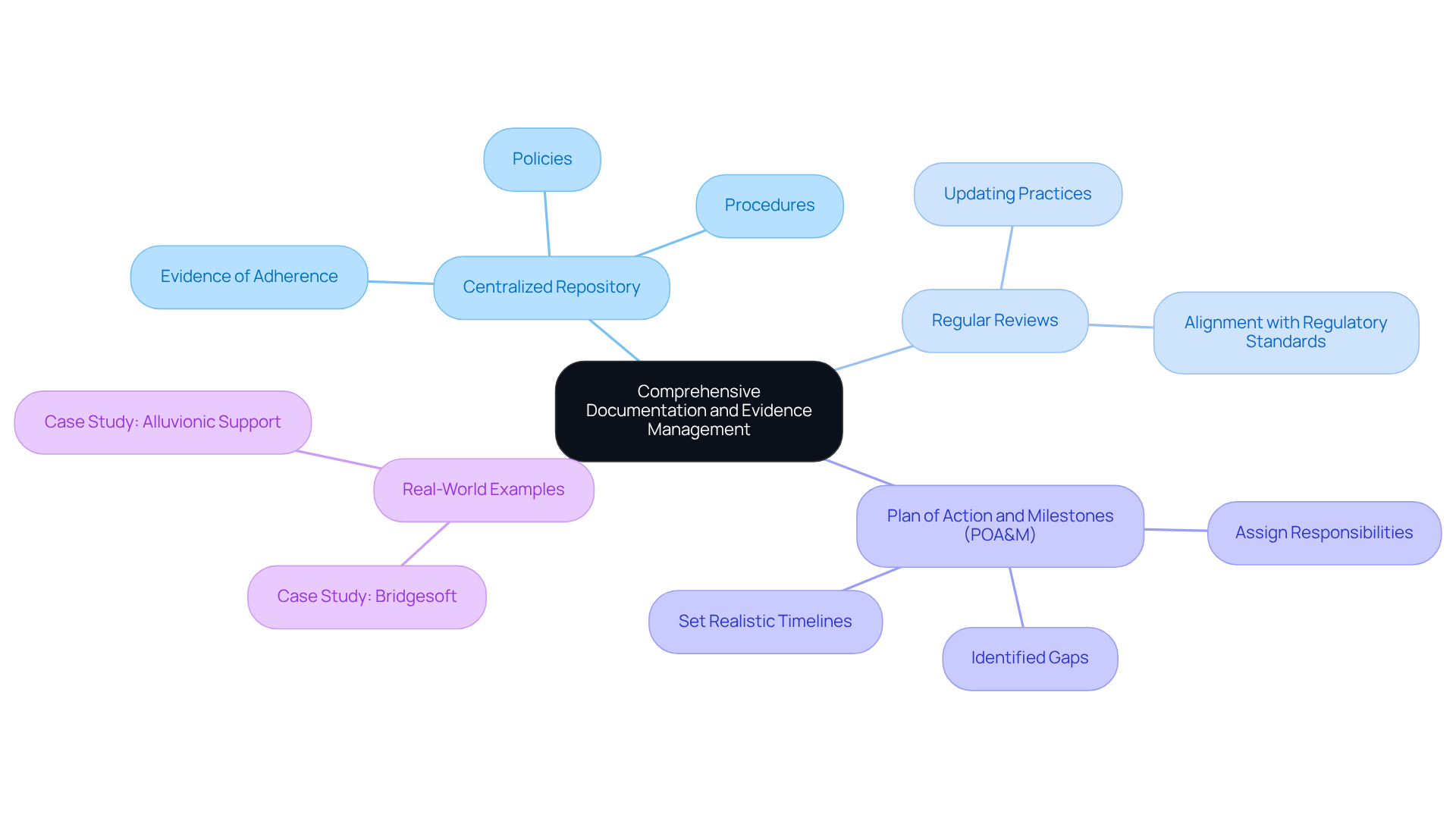
Establishing a centralized repository for compliance-related documents is crucial for effective management and access. This repository must include policies, procedures, and evidence of adherence to each CMMC requirement. This ensures that all documentation is organized and easily retrievable. Limited resources often hinder startups and mid-market firms in managing compliance effectively, highlighting the need for centralization.
It is essential to regularly review and update documentation to reflect current practices and controls. This proactive approach aids in maintaining alignment with changing regulatory standards and organizational practices, ensuring that all evidence is pertinent and precise. For smaller entities, remaining up-to-date can be especially challenging due to resource limitations.
Create a detailed Plan of Action and Milestones (POA&M) to address any identified adherence gaps. This management tool should outline specific steps to remediate vulnerabilities, assign responsibilities, and set realistic timelines for completion, thereby enhancing accountability and tracking progress. Each POA&M item should tie directly to the organization’s risk register to ensure that remediation efforts address recognized risks.
Ensure that all documentation is readily accessible for audits and assessments. A well-structured document management system can aid this process, enabling efficient retrieval of necessary evidence during regulatory assessments. Organizations that establish centralized regulatory document repositories report enhanced efficiency in managing regulatory documentation and a greater ability to respond to audit requests swiftly.
Real-world examples illustrate the effectiveness of centralized regulatory document repositories. For instance, Bridgesoft, an Identity and Access Management provider, attained SOC 2 certification in only five days with the assistance of Koop Technologies' AI-powered GRC platform. This swift accomplishment highlights the potential for efficient adherence procedures, demonstrating how entities can greatly improve their documentation management and readiness for regulations. This strategy not only enhances compliance management but also equips organizations to meet regulatory demands with greater agility.
Establish Continuous Monitoring and Improvement Processes
To maintain robust security, entities must implement continuous monitoring tools that evaluate the effectiveness of their security controls. Ongoing monitoring enhances audit preparedness, streamlines system integration, and improves detection and response capabilities, particularly under FAR and NIST frameworks.
Schedule regular audits and assessments to identify areas for improvement. Research indicates that many organizations conduct only one or fewer audits each year, highlighting a critical compliance gap. Frequent evaluations are crucial for upholding regulations, as they assist entities in remaining aligned with changing security standards and guarantee that all controls are operating as expected.
Stay informed about updates to CMMC requirements and adjust practices accordingly. The environment of adherence is continually evolving, and failure to adapt to these changes can result in significant competitive disadvantages.
Encourage a culture of compliance by inviting feedback and suggestions for improvement from employees. Involving employees in regulatory efforts can improve awareness and adherence to policies, ultimately reinforcing the organization's overall regulatory stance.
Record all monitoring activities and enhancements made to maintain a clear adherence history. This documentation is essential for showing adherence during audits and for monitoring progress over time.
Tip: Use automated reporting tools, such as those provided by Koop Technologies, to streamline the monitoring process and ensure timely updates, significantly reducing the administrative burden associated with compliance management. Without a proactive approach to monitoring and compliance, organizations may find themselves vulnerable to regulatory scrutiny and operational inefficiencies.

Conclusion
Navigating CMMC compliance presents significant challenges for AI companies aiming to thrive in the defense industrial base. The framework outlines essential steps that organizations must follow to ensure they meet the necessary security standards, particularly focusing on the identification and management of Controlled Unclassified Information (CUI), the implementation of required security controls, and the maintenance of comprehensive documentation.
Key insights from the article emphasize the importance of understanding CMMC levels, particularly Level 2, which requires the implementation of 110 security controls. Organizations must prioritize the classification of CUI, establish robust security measures, and maintain thorough documentation to demonstrate compliance. Continuous monitoring and improvement processes are also crucial for adapting to evolving regulatory requirements and ensuring ongoing adherence.
In light of these considerations, AI companies must adopt a proactive approach to CMMC compliance. Using tools and resources from providers like Koop Technologies can help organizations simplify their compliance efforts, reduce administrative burdens, and enhance their competitive edge in the market. Embracing these practices not only safeguards sensitive information but also positions companies for success in securing valuable contracts within the defense sector. Without a strategic approach to compliance, AI companies risk losing their competitive advantage in a rapidly evolving market.
Frequently Asked Questions
What is CMMC compliance and why is it important for AI companies?
CMMC compliance refers to the Cybersecurity Maturity Model Certification, which is essential for organizations seeking contracts in the defense industrial base. It ensures that companies meet specific cybersecurity standards to protect sensitive information.
What are the different levels of CMMC compliance?
The CMMC framework consists of three levels. Level 1 focuses on basic safeguarding of Federal Contract Information (FCI), while Level 2 requires the implementation of 110 security controls derived from NIST SP 800-171, particularly for those handling Controlled Unclassified Information (CUI).
What is Controlled Unclassified Information (CUI) and why is it significant?
CUI is sensitive data that requires specific handling and protection. Proper identification and management of CUI are crucial for compliance with CMMC and to mitigate risks associated with improper handling.
What are the consequences of failing to achieve CMMC compliance?
Failure to achieve CMMC compliance can result in the loss of contracts, as maintaining an up-to-date certification status is necessary for eligibility in contract awards.
How can organizations stay updated on CMMC compliance requirements?
Organizations should regularly consult official documentation for the latest guidelines and updates, and utilize resources like the CMMC Assessment Guide to clarify expectations and navigate compliance effectively.
What role does Koop Technologies play in CMMC compliance?
Koop Technologies offers an AI-driven platform that automates up to 95% of regulatory tasks, significantly reducing manual effort and costs, which is essential for the approximately 118,000 companies in the defense industrial base needing Level 2 certification.
What steps should organizations take to identify and manage CUI?
Organizations should conduct a thorough data inventory to identify all CUI, classify it based on sensitivity, implement a robust marking system, and provide regular training to employees on managing CUI effectively.
What should contractors do in case of a cybersecurity incident involving CUI?
Contractors must report any cybersecurity incidents involving CUI to the GSA within one hour of identification.
How often should CUI classifications be reviewed and updated?
CUI classifications should be regularly reviewed and updated as new data is created or existing data changes to maintain compliance with CMMC requirements.
What are the implications of unauthorized access to services provided by Koop Technologies?
Unauthorized access or use of services can result in suspension of access under the Master Services Agreement, highlighting the importance of adherence to compliance and data management practices.

