

Introduction
As cyber threats escalate, organizations, especially those in the Defense Industrial Base, must prioritize cybersecurity to protect sensitive information. For government contractors, understanding and achieving Cybersecurity Maturity Model Certification (CMMC) compliance is not merely a regulatory requirement; it is a crucial step toward securing sensitive information and maintaining a competitive advantage in federal contracting.
However, as the deadline for compliance approaches, many contractors face significant challenges in navigating the intricate landscape of CMMC compliance. Failure to achieve compliance may jeopardize their position in federal contracting. Organizations must adopt effective strategies to meet CMMC standards and secure their future in a rapidly evolving regulatory landscape.
Define CMMC Compliance: Understanding Its Importance for Government Contractors
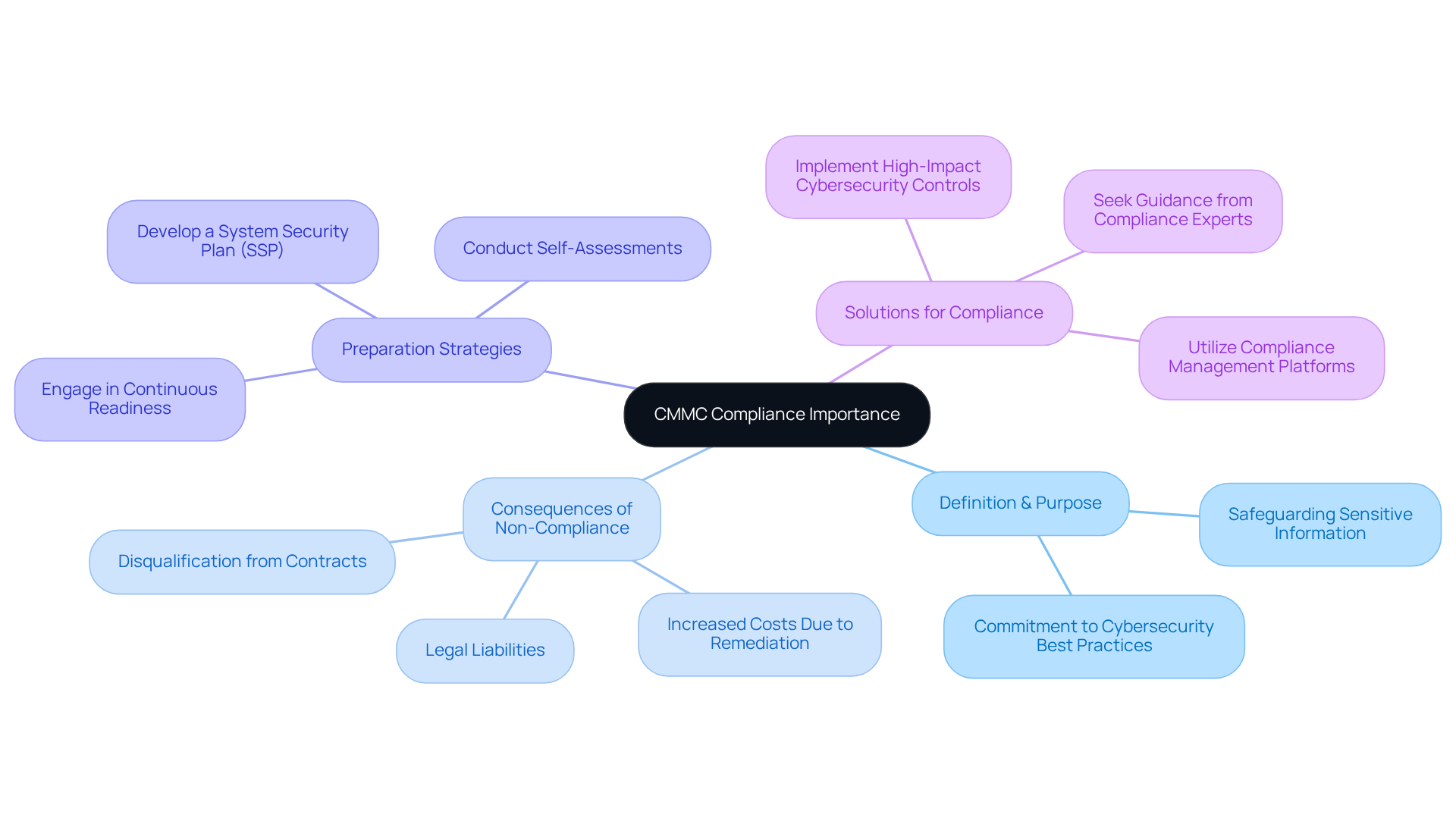
The Cybersecurity Maturity Model Certification (CMMC) is a critical framework established by the U.S. Department of Defense to safeguard sensitive information. This certification is essential for any organization that interacts with Controlled Unclassified Information (CUI) or Federal Contract Information (FCI), particularly for those who need CMMC compliance for government contractors. Meeting the required standards is not merely a regulatory obligation; it reflects a commitment to cybersecurity best practices and enhances the overall security posture of the defense supply chain. For government contractors who need CMMC compliance for government contractors, achieving these standards is vital for securing contracts and maintaining eligibility for future opportunities.
By 2026, many organizations in the Defense Industrial Base (DIB) who need CMMC compliance for government contractors will face CMMC requirements in solicitations and renewals. Early preparation is essential. Contractors should conduct self-evaluations to ensure compliance with their policies and procedures, reinforcing a proactive approach to regulations. Non-compliance can lead to disqualification from bidding on critical defense contracts, creating significant barriers for organizations. Statistics indicate that organizations with robust security programs often incur lower costs because they spend less on remediation and rework, further emphasizing the financial benefits of compliance.
As the landscape evolves, those who need CMMC compliance for government contractors are finding that adherence is increasingly becoming a gatekeeper for federal contract awards. Therefore, it is crucial for contractors to prioritize their preparedness. To facilitate this process, Koop Technologies offers a comprehensive regulatory database and requirements management solutions that enhance automation of compliance efforts. Their platform provides advanced filtering for regulatory changes and alerts, ensuring that contractors remain informed and ready. By utilizing Koop's solutions, organizations can automate manual tasks such as documentation management and regulatory tracking, thereby enhancing their compliance efforts and ultimately accelerating their growth and trust in regulated markets.
Context and Origin of CMMC Compliance: The Regulatory Landscape for Contractors
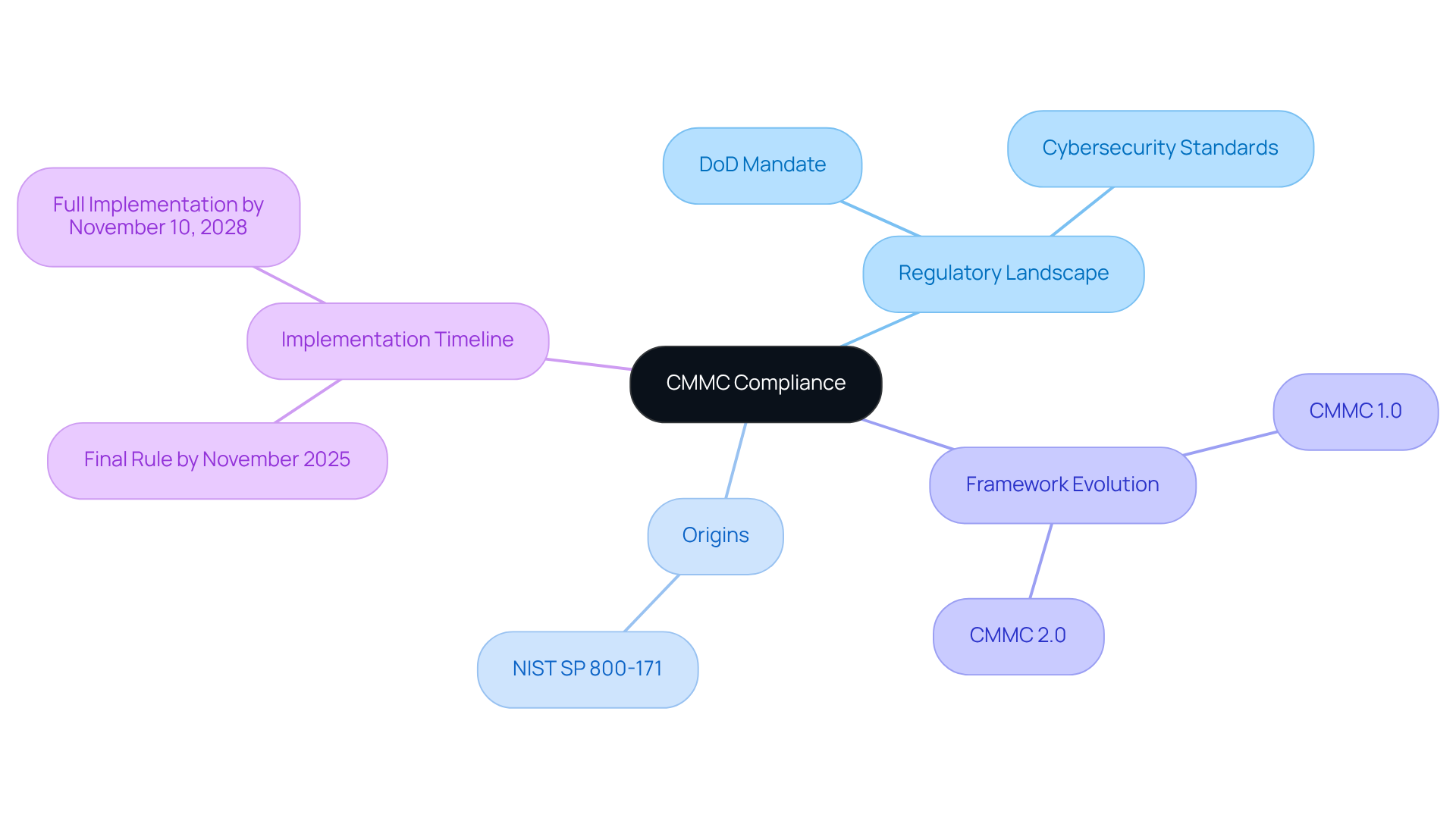
Concerns about cybersecurity vulnerabilities within the Defense Industrial Base (DIB) have prompted a critical need for compliance with established frameworks. In response to significant data breaches, the Department of Defense (DoD) mandated a standardized cybersecurity framework for its partners. Launched in 2019, the Cybersecurity Maturity Model Certification evolved from earlier guidelines such as NIST SP 800-171, effectively addressing these challenges. The framework includes a tiered adherence strategy, requiring vendors to follow specific cybersecurity standards tailored to the sensitivity of the information they handle.
Koop Technologies' Trust Center provides essential tools and resources that facilitate compliance with FAR and NIST frameworks, streamlining regulatory processes. This regulatory environment underscores the necessity for contractors who need CMMC compliance for government contractors to comply with the Cybersecurity Maturity Model Certification in order to engage with the DoD, particularly with the final rule set for November 2025 and full implementation expected by November 10, 2028.
Industry leaders assert that the framework is a critical component in safeguarding sensitive information against evolving cyber threats, rather than merely a regulatory formality.
Key Characteristics of CMMC Compliance: Levels and Requirements for Contractors
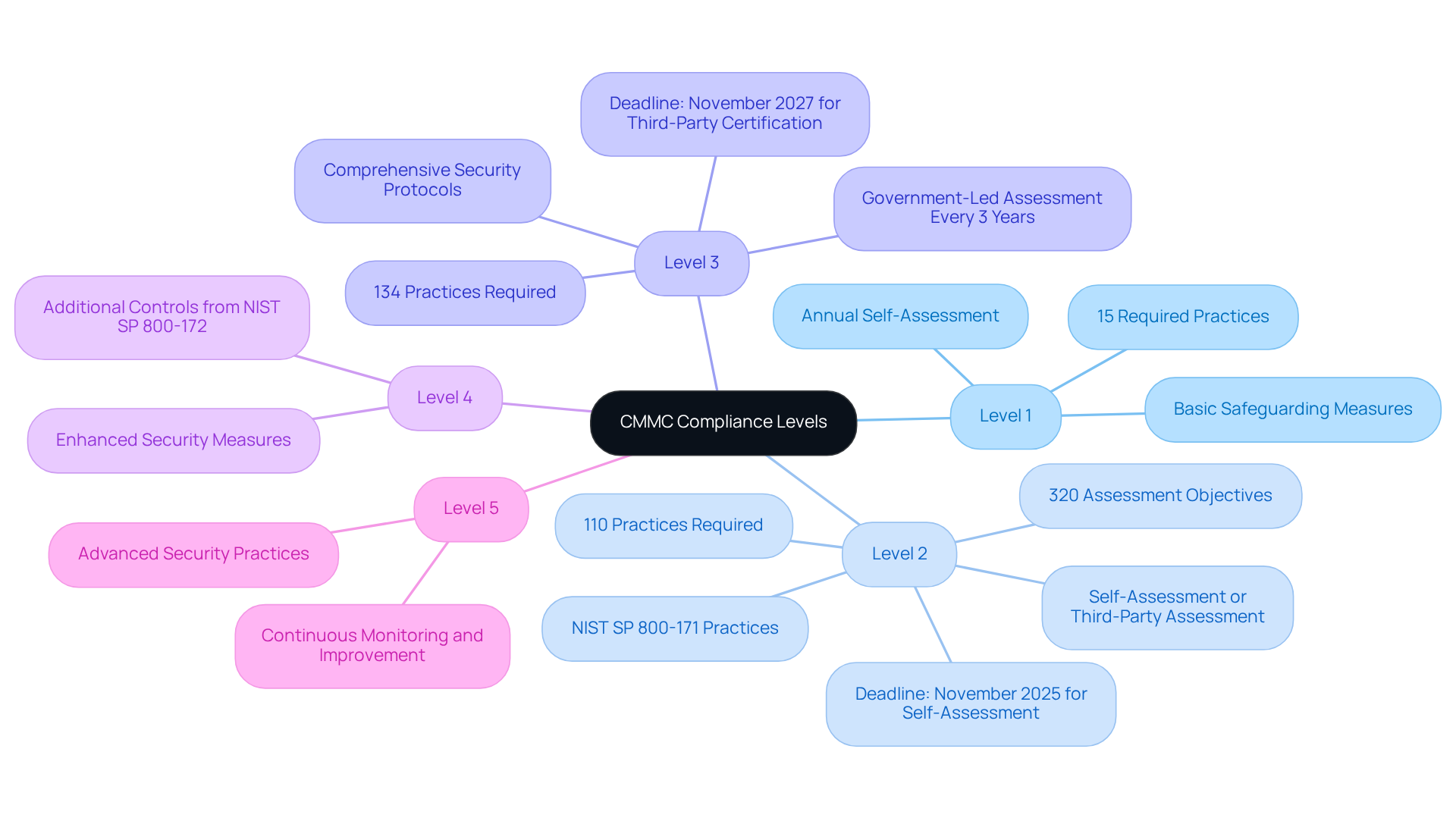
Understanding the five levels of CMMC compliance is essential for organizations aiming to secure sensitive information. CMMC compliance is organized into five distinct levels, each escalating in cybersecurity requirements.
- Level 1 establishes basic safeguarding measures.
- Level 2 introduces more sophisticated practices aligned with NIST SP 800-171, necessitating entities to effectively protect Controlled Unclassified Information (CUI).
- Level 3, the most stringent, demands comprehensive security protocols for those managing highly sensitive data.
Each level requires a third-party evaluation for certification, confirming that service providers implement and sustain the necessary security controls. As of July 2026, grasping these levels is crucial for builders to navigate their adherence journey and sufficiently prepare for forthcoming evaluations.
Organizations must finish their Level 2 self-evaluation by November 2025 to stay qualified for agreements involving CUI, highlighting the critical need for early preparation. Case studies reveal that organizations typically require 6 to 12 months to implement the necessary NIST 800-171 controls for Level 2 certification, emphasizing the urgency of adherence efforts.
With the approaching Phase 2 deadline on November 10, 2026, which requires third-party certification for Level 2 agreements, builders must prioritize adherence to avoid losing current contracts and ensure eligibility for new awards. Leveraging Koop's expert services and pre-built templates can assist builders in navigating regulatory complexities, thereby reducing costs and enhancing readiness for assessments. Timely action is not just advisable; it is essential for maintaining competitive advantage in a rapidly evolving regulatory landscape.
Implications of CMMC Compliance: Consequences of Non-Compliance and Benefits for Contractors
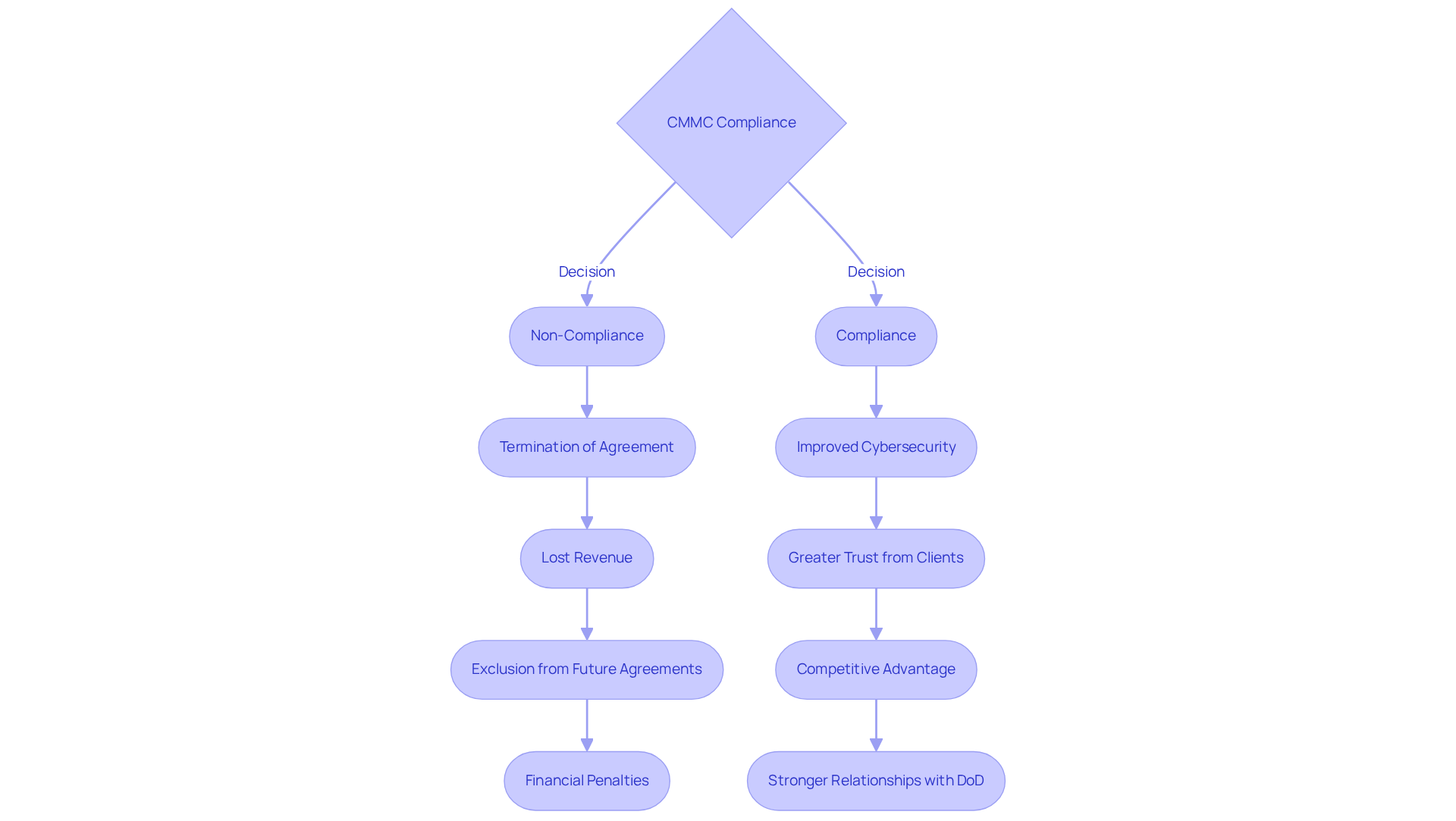
For government contractors who need CMMC compliance for government contractors, compliance with the cybersecurity maturity model is critical, as non-compliance poses severe risks. Non-compliance can lead to immediate termination of the agreement, resulting in lost revenue and operational disruptions. Businesses that do not comply with security standards risk being excluded from future DoD agreements, which is particularly concerning for those who need CMMC compliance for government contractors, significantly affecting their market presence and growth prospects. Non-compliance can result in significant financial penalties, with fines up to $10,000 per control under the False Claims Act. With at least 110 controls required at Level 2, this could lead to total fines exceeding $1 million.
Case studies illustrate these consequences vividly. For instance, contractors may encounter millions in penalties and lost income from canceled contracts, underscoring the critical importance of compliance to safeguard financial stability. Additionally, the legal consequences of failing to adhere to the compliance standards are significant, with increased scrutiny from the DoD and potential lawsuits from affected clients.
Conversely, achieving CMMC compliance is beneficial for those who need CMMC compliance for government contractors. It improves a builder's cybersecurity stance, cultivates greater trust from clients, and provides a competitive advantage in the bidding process. By demonstrating a commitment to cybersecurity, compliant contractors can build stronger relationships with the DoD and other stakeholders, ultimately leading to greater business opportunities and a more resilient operational framework. Ultimately, the choice to comply or not can determine a contractor's future viability in a competitive market.
Conclusion
CMMC compliance is essential for government contractors, serving as a cornerstone for safeguarding sensitive information in the defense supply chain. As the Cybersecurity Maturity Model Certification becomes increasingly pivotal in securing contracts, contractors must recognize that compliance is essential for maintaining eligibility and fostering trust with the Department of Defense.
The article highlights the critical nature of CMMC compliance, detailing its origins, the structured levels of certification, and the significant risks organizations face if they fail to comply. With looming deadlines for self-evaluations and third-party certifications, contractors are urged to take proactive steps to align their practices with the required standards. The financial implications of non-compliance, including potential penalties and lost contracts, underscore the urgency for organizations to prioritize their cybersecurity measures.
As cybersecurity threats evolve, it’s clear that CMMC compliance plays a crucial role in protecting sensitive information. Contractors are encouraged to leverage available resources, such as those offered by Koop Technologies, to streamline their compliance efforts and enhance their operational resilience. By committing to these standards, organizations not only protect their interests but also position themselves for future growth and success in a competitive market. Ultimately, embracing CMMC compliance is a strategic move that can define an organization's future in the defense sector.
Frequently Asked Questions
What is CMMC compliance?
CMMC compliance refers to the Cybersecurity Maturity Model Certification, a framework established by the U.S. Department of Defense to protect sensitive information, particularly for organizations that handle Controlled Unclassified Information (CUI) or Federal Contract Information (FCI).
Why is CMMC compliance important for government contractors?
CMMC compliance is crucial for government contractors as it reflects a commitment to cybersecurity best practices, enhances the security posture of the defense supply chain, and is necessary for securing contracts and maintaining eligibility for future opportunities.
What are the consequences of non-compliance with CMMC?
Non-compliance with CMMC can lead to disqualification from bidding on critical defense contracts, creating significant barriers for organizations.
When will CMMC requirements be implemented for organizations in the Defense Industrial Base (DIB)?
By 2026, many organizations in the DIB will face CMMC requirements in solicitations and renewals.
How can contractors prepare for CMMC compliance?
Contractors should conduct self-evaluations to ensure compliance with their policies and procedures, adopting a proactive approach to regulations.
What are the financial benefits of having robust security programs related to CMMC compliance?
Organizations with strong security programs often incur lower costs because they spend less on remediation and rework, highlighting the financial advantages of compliance.
How does Koop Technologies assist with CMMC compliance?
Koop Technologies offers a comprehensive regulatory database and requirements management solutions that enhance automation of compliance efforts, including advanced filtering for regulatory changes and alerts to keep contractors informed.
What tasks can be automated using Koop's solutions for CMMC compliance?
Koop's solutions can automate manual tasks such as documentation management and regulatory tracking, thereby enhancing compliance efforts and accelerating growth in regulated markets.

