

Introduction
The Cybersecurity Maturity Model Certification (CMMC) signifies a fundamental change in the cybersecurity landscape for defense contractors, driven by the U.S. Department of Defense's mandate for compliance to safeguard sensitive information. As the deadline for compliance looms in 2026, understanding who needs to adhere to these standards is crucial for maintaining eligibility for government contracts.
Many defense contractors face significant challenges in meeting the CMMC requirements due to a lack of preparedness. Defense suppliers must develop strategic approaches to navigate the complexities of CMMC compliance and maintain their competitive edge. Understanding these requirements is essential, as non-compliance could result in losing access to vital government contracts.
Define CMMC Compliance: An Overview for Defense Contractors
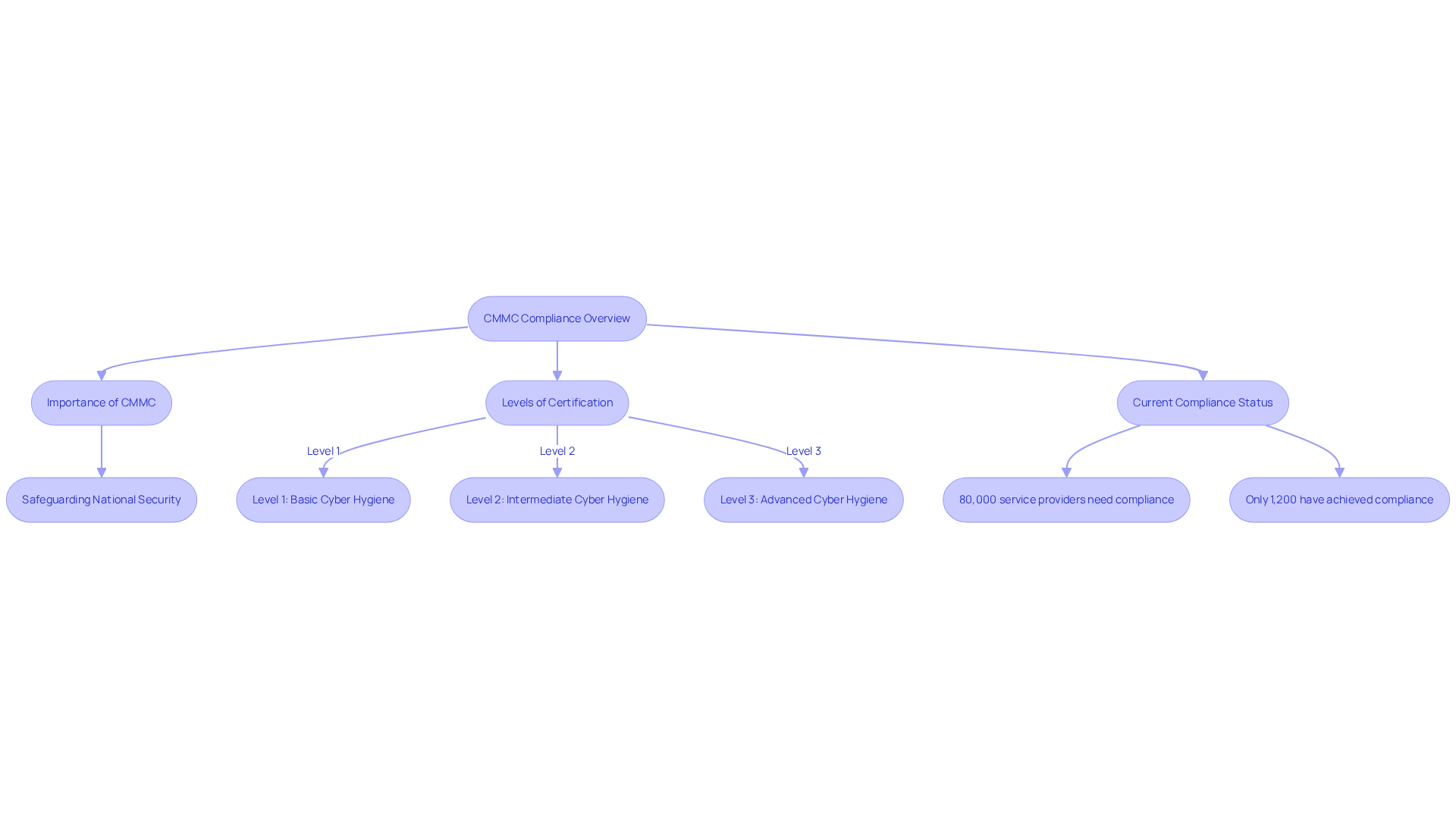
The Cybersecurity Maturity Model Certification (CMMC) is a critical framework established by the U.S. Department of Defense to bolster the cybersecurity posture of defense suppliers. Its primary goal is to ensure that service providers effectively safeguard sensitive information, particularly Controlled Unclassified Information (CUI) and Federal Contract Information (FCI).
Adherence to cybersecurity requirements is essential for all DoD vendors and subcontractors who need CMMC compliance for defense contractors, as they must comply with specific standards that vary based on the sensitivity of the information managed. The framework comprises three levels of certification, each with distinct requirements aimed at progressively enhancing security measures within the defense supply chain.
Currently, about 80,000 service providers who need CMMC compliance for defense contractors are required to achieve compliance, yet only around 1,200 have done so, revealing a significant preparedness gap. The deadline for compliance is set for November 10, 2026, creating a pressing need for those who need CMMC compliance for defense contractors to maintain eligibility for government contracts.
This initiative is vital not only for safeguarding national security but also for ensuring that defense suppliers can effectively compete in a rapidly evolving regulatory environment. Potential clients can initiate a conversation with a Koop Technologies representative to discuss their needs and available options.
Koop provides a unified, AI-driven platform that streamlines the onboarding process and automates up to 95% of regulatory tasks, significantly decreasing manual effort and saving businesses up to 50% compared to conventional methods.
As Emil Sayegh, CEO of CyberSheath, pointed out, "There’s definitely a mismatch between human capacity to do these assessments and the number of service providers, subcontractors that need to become compliant," emphasizing the urgent nature of the deadline and the challenges faced by many firms.
With Koop's expert-in-the-loop model, security firms can navigate the intricacies of regulatory adherence more efficiently, ensuring they are well-prepared to meet the upcoming requirements. As the deadline approaches, firms who need CMMC compliance for defense contractors must act swiftly to ensure compliance, or risk losing their competitive edge in the defense sector.
Contextualize CMMC: Importance for Defense Contractors and Regulatory Landscape
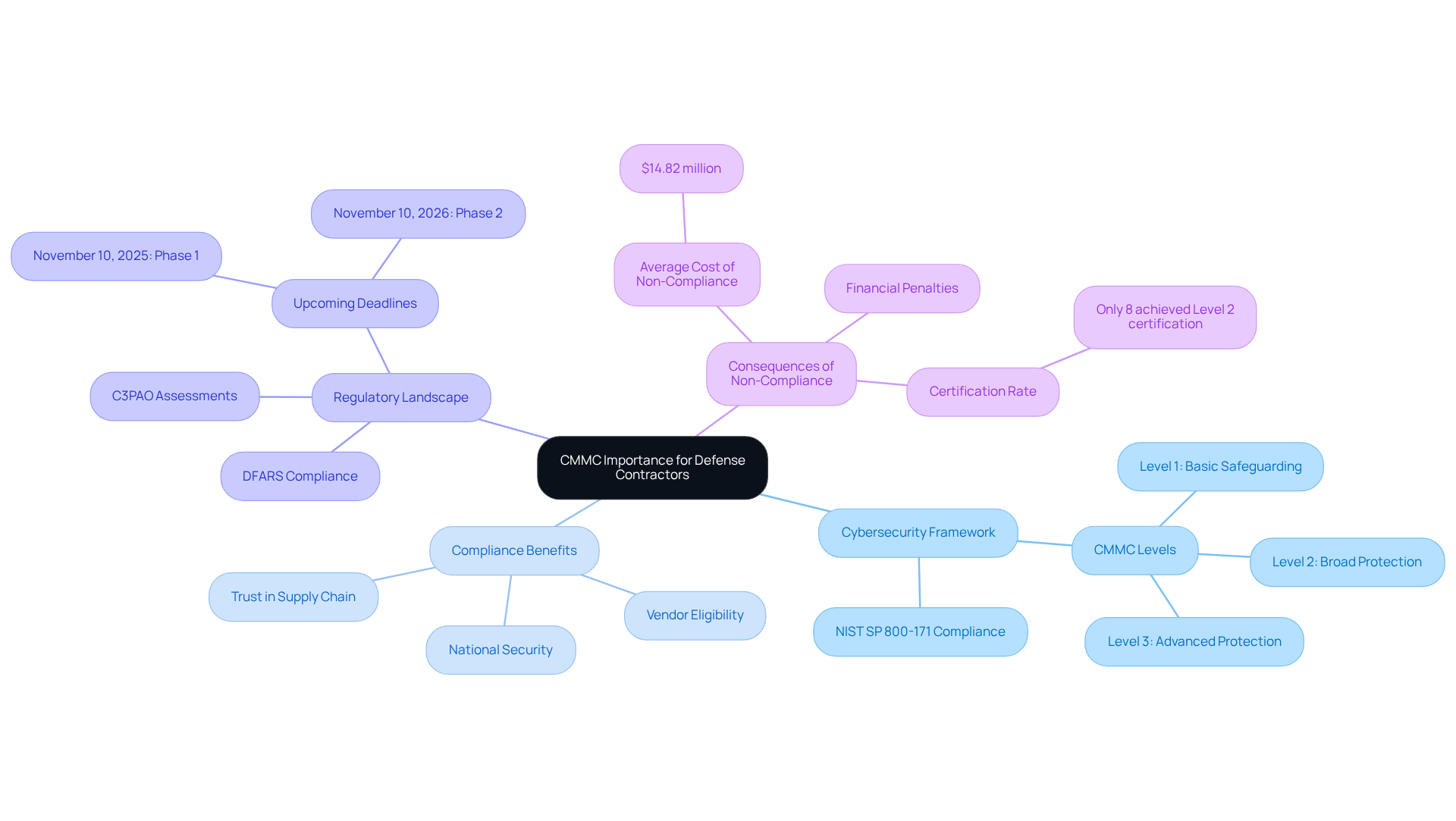
Cyber threats increasingly target national security, particularly affecting defense suppliers, making compliance standards more critical than ever. The Department of Defense (DoD) recognizes that a robust cybersecurity framework is vital for safeguarding sensitive information from adversaries. Compliance with this framework not only enhances national security priorities but also ensures that vendors remain eligible for DoD contracts.
The evolving regulatory environment has made the Cybersecurity Maturity Model Certification essential for all vendors in defense projects, reflecting a shift towards stricter cybersecurity protocols. This regulatory framework enhances accountability and transparency within the supply chain, fostering trust between the DoD and its suppliers.
Statistics reveal that non-compliance can lead to significant financial repercussions, with average costs of non-compliance reaching $14.82 million, compared to $5.47 million for compliant organizations. Furthermore, the anticipated backlog for C3PAO evaluations highlights the necessity for vendors to prioritize compliance efforts, as only 8% of required vendors had achieved Level 2 certification by early 2026. This underscores the need for security providers to adopt compliance standards to mitigate risks and protect their roles in the military supply chain.
Identify Who Needs CMMC Compliance: Target Audience and Requirements
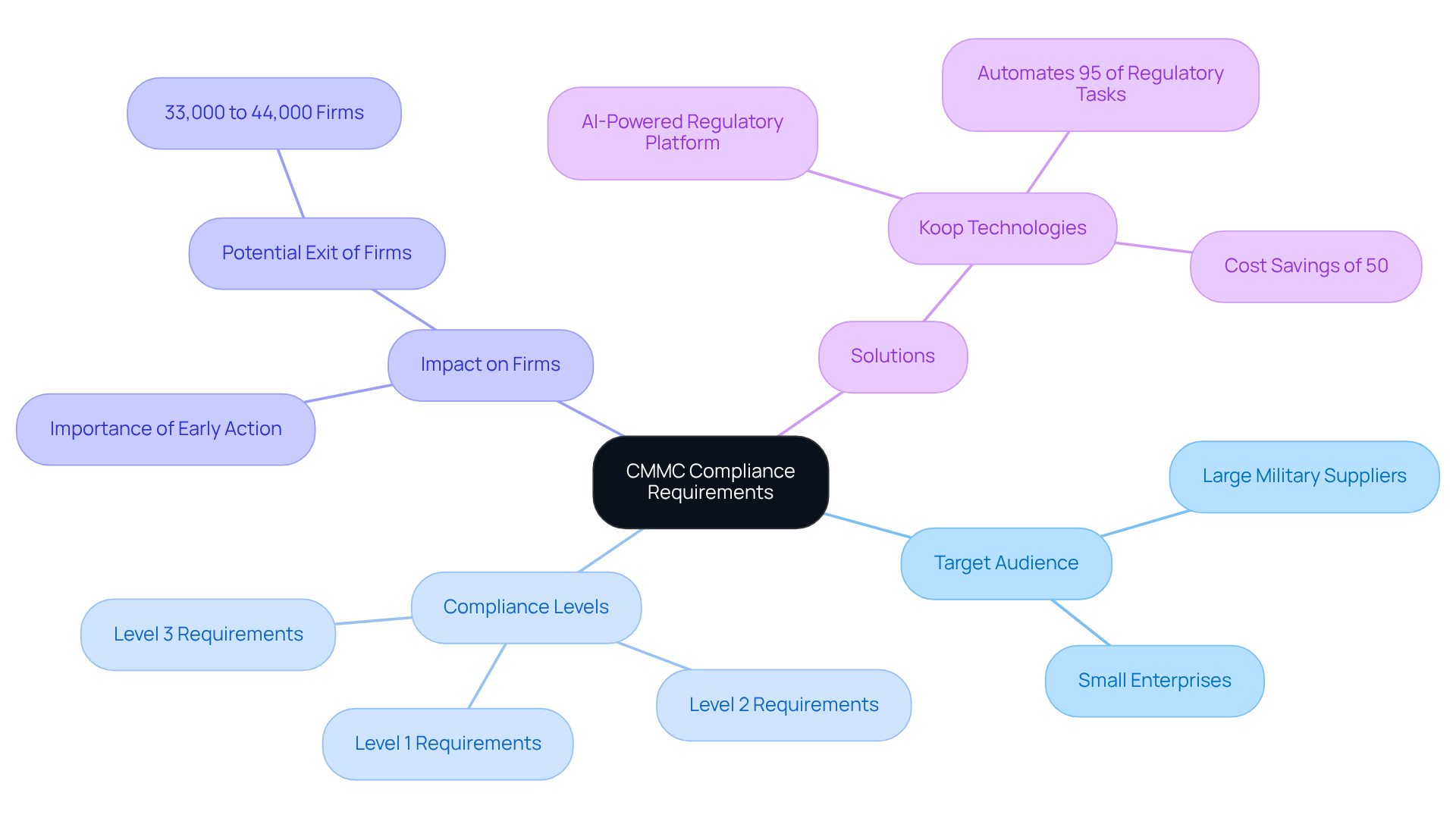
Vendors and subcontractors managing Federal Contract Information (FCI) or Controlled Unclassified Information (CUI) must adhere to stringent security standards when engaging with the Department of Defense (DoD). This requirement encompasses a wide range of organizations, from large military suppliers to small enterprises providing goods or services to the DoD.
To bid on or renew contracts with the DoD, entities must demonstrate compliance with the relevant cybersecurity maturity model level, which varies based on the sensitivity of the information handled. Level 1 emphasizes fundamental cybersecurity practices, while Level 3 necessitates more sophisticated security protocols. Understanding these regulatory requirements is crucial for all defense contractors who need CMMC compliance for defense contractors to maintain their eligibility for government contracts.
Currently, approximately 80,000 firms in the Defense Industrial Base are those who need CMMC compliance for defense contractors, highlighting the need for organizations to adequately prepare. Furthermore, the limited availability of authorized C3PAOs creates a bottleneck for compliance assessments, making early action essential to prevent scheduling delays and achieve compliance by the upcoming deadlines.
Industry experts estimate that between 33,000 and 44,000 firms, approximately 15 to 20 percent of the Defense Industrial Base, who needs CMMC compliance for defense contractors, may exit the military market between 2025 and 2027 if they cannot meet compliance requirements. As Sian Parany stated, "The 2026 CMMC deadline is approaching, and with limited C3PAO availability for hundreds of thousands of defense contractors, early action is no longer optional."
In this context, utilizing Koop Technologies' AI-powered regulatory platform can significantly ease the burden of meeting these requirements. With its capability to automate up to 95% of regulatory tasks, businesses can reduce manual effort and costs, saving up to 50% compared to conventional methods. The onboarding process is streamlined, with professional support readily available, making it an ideal solution for startups and mid-market firms facing compliance challenges.
Moreover, Koop Technologies services a broader industry focus, catering not only to SaaS and AI companies but also to hardware and software startups in sectors such as Aerospace, Healthcare, Manufacturing, Energy, and Supply Chain.
Explore CMMC Levels: Breakdown of Compliance Requirements
The Cybersecurity Maturity Model Certification (CMMC) framework establishes a structured approach to cybersecurity, delineating three levels of increasing complexity and requirements.
- Level 1, known as the Foundational level, mandates contractors to implement basic safeguarding measures for Federal Contract Information (FCI). This level encompasses 17 essential security practices designed to ensure basic cyber hygiene, which can be efficiently managed using Koop Technologies' Regulatory Database to simplify adherence processes.
- Level 2, referred to as the Advanced level, necessitates adherence to 110 security controls aligned with NIST SP 800-171, focusing on the protection of Controlled Unclassified Information (CUI). Here, Koop Technologies' Requirements Management Solutions can assist builders in monitoring compliance and managing documentation effectively.
- Finally, Level 3, the Expert level, demands a comprehensive cybersecurity approach, including advanced practices and a government-led assessment.
Each level is designed to ensure that service providers can adequately protect sensitive information, with the expectation that organizations will advance through these levels as they enhance their cybersecurity capabilities. Understanding these levels is essential for those who need CMMC compliance for defense contractors to effectively prepare for compliance assessments and maintain their eligibility for Department of Defense (DoD) contracts.
Significantly, the staged implementation of CMMC requirements will involve the mandatory inclusion of relevant clauses in contracts concerning federal contract information or controlled unclassified information after November 10, 2028. Contractors who fail to maintain their CMMC certification risk losing access to valuable work and may face penalties under the False Claims Act. Organizations with existing security measures may achieve compliance in as little as 30 to 90 days, indicating a feasible timeline for adherence.
Koop Technologies' Regulatory Database and Requirements Management Solutions provide essential tools for defense firms who need CMMC compliance for defense contractors, helping them enhance compliance efficiency and manage costs effectively. As Razvan Miutescu emphasizes, 'The clause mandates that contractors possess and maintain a CMMC certificate at the required level throughout the contract duration.

Conclusion
As the 2026 compliance deadline approaches, understanding the Cybersecurity Maturity Model Certification (CMMC) becomes imperative for defense contractors. It is essential for securing national interests and qualifying for government contracts.
Throughout the article, we highlighted the importance of CMMC compliance, the specific requirements for different certification levels, and the many defense contractors that are unprepared for the upcoming compliance requirements. With approximately 80,000 firms needing compliance, failure to act could jeopardize their ability to secure government contracts. The structured levels of CMMC - ranging from basic safeguarding measures to advanced cybersecurity practices - underscore the need for organizations to progressively enhance their security capabilities.
In light of the evolving regulatory landscape, defense contractors must prioritize their compliance efforts to avoid losing their competitive edge. Innovative solutions from companies like Koop Technologies can simplify compliance, making it easier and more affordable. As the industry moves forward, embracing these standards will not only protect sensitive information but also foster trust and accountability within the defense supply chain. Organizations that delay their compliance efforts risk not only their contracts but also the integrity of national security.
Frequently Asked Questions
What is CMMC compliance?
CMMC compliance refers to adherence to the Cybersecurity Maturity Model Certification established by the U.S. Department of Defense, aimed at enhancing the cybersecurity posture of defense suppliers and ensuring the protection of sensitive information.
Why is CMMC compliance important for defense contractors?
CMMC compliance is crucial for defense contractors as it ensures they effectively safeguard Controlled Unclassified Information (CUI) and Federal Contract Information (FCI), which is vital for national security and competitiveness in the defense sector.
How many levels of certification are there in the CMMC framework?
The CMMC framework comprises three levels of certification, each with distinct requirements designed to progressively enhance security measures within the defense supply chain.
What is the current status of CMMC compliance among service providers?
Currently, about 80,000 service providers require CMMC compliance, but only around 1,200 have achieved it, indicating a significant preparedness gap.
What is the deadline for achieving CMMC compliance?
The deadline for achieving CMMC compliance is set for November 10, 2026.
How can companies prepare for CMMC compliance?
Companies can prepare for CMMC compliance by utilizing platforms like Koop Technologies, which offers an AI-driven solution to streamline the onboarding process and automate regulatory tasks.
What challenges do firms face in achieving CMMC compliance?
Firms face challenges such as a mismatch between the capacity to conduct assessments and the number of service providers needing compliance, as highlighted by industry experts.
What benefits does Koop Technologies provide for CMMC compliance?
Koop Technologies provides a unified platform that automates up to 95% of regulatory tasks, significantly reducing manual effort and saving businesses up to 50% compared to traditional methods.

