Key takeaways
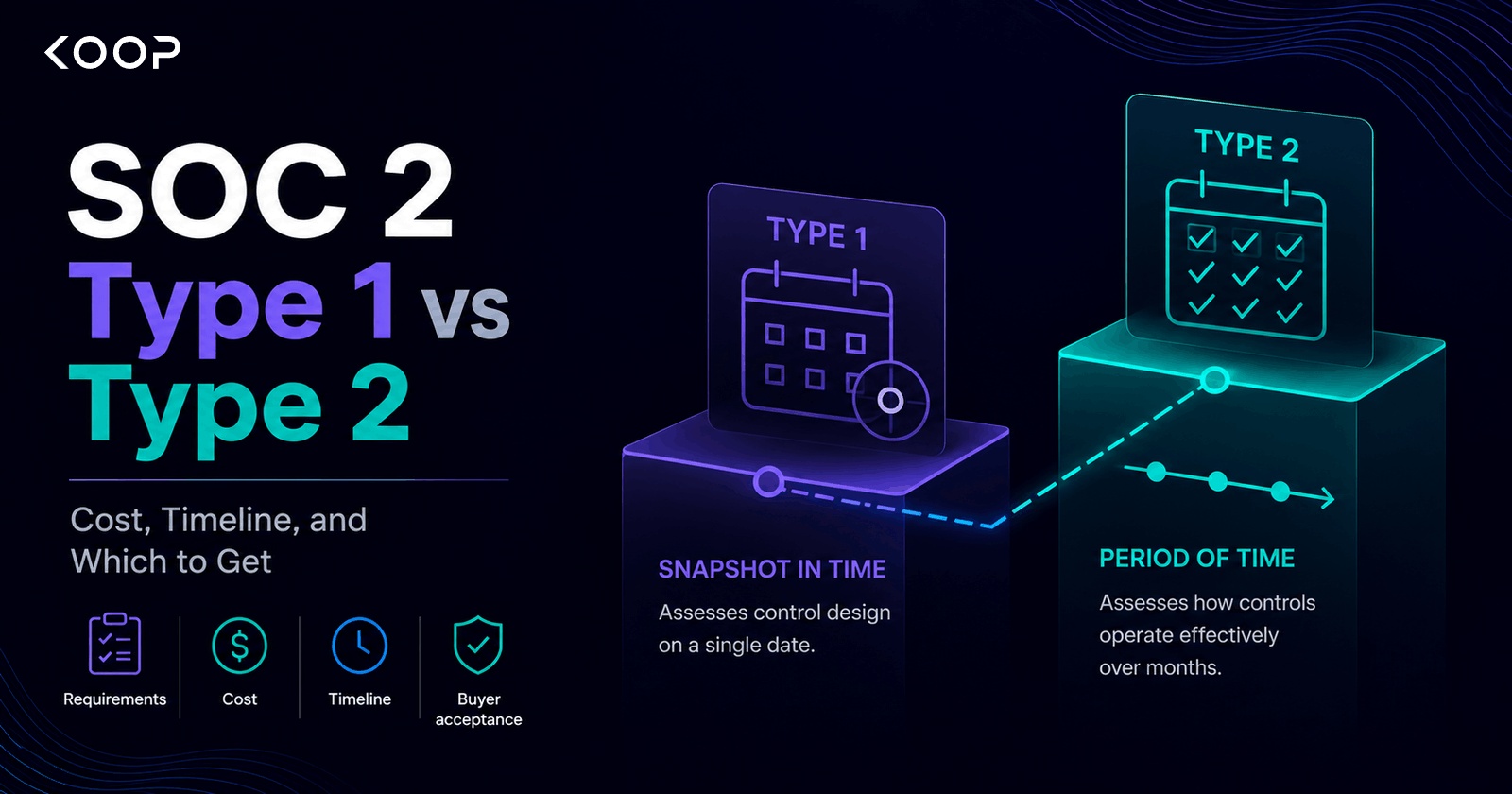
- SOC 2 Type 1 checks control design on a single date. SOC 2 Type 2 checks how those controls operate over months. That difference is what drives the cost, the timeline, and whether a buyer accepts the report.
- The buyer decides which report you need. Enterprises want Type 2 and treat a lone Type 1 as a halfway point, so confirm what procurement accepts before you set the audit's scope.
- Only the Security criterion is required. Every category you add builds more controls, evidence, and testing, so scope to the promises in your contracts and leave the rest until a deal calls for it.
- The audit fee is only part of the cost. Readiness, remediation, and internal hours often add up to more, and an unqualified auditor can produce a report buyers reject, so weigh credibility alongside price.
- A light audit is earned in the months between audits. Keep controls running and evidence accumulating all year, and each renewal avoids a last-minute scramble to rebuild twelve months of proof.
The moment a deal depends on a SOC 2 report, you have to choose between two versions of it. A SOC 2 Type 1 report confirms your security controls are designed correctly on one specific date. A SOC 2 Type 2 report confirms those same controls operated effectively over a period of months. The rest of the comparison, from what you prepare to what you pay, how long you wait, and whether the buyer accepts the result, traces back to that one distinction.
Which one you need usually comes down to what the buyer will accept. Many enterprise buyers expect a Type 2, though starting with Type 1 makes sense when a deal needs a report fast. This guide compares the requirements, cost, and timeline of each report and shows you how to decide which to pursue first.
The Type 1 vs. Type 2 difference that drives everything
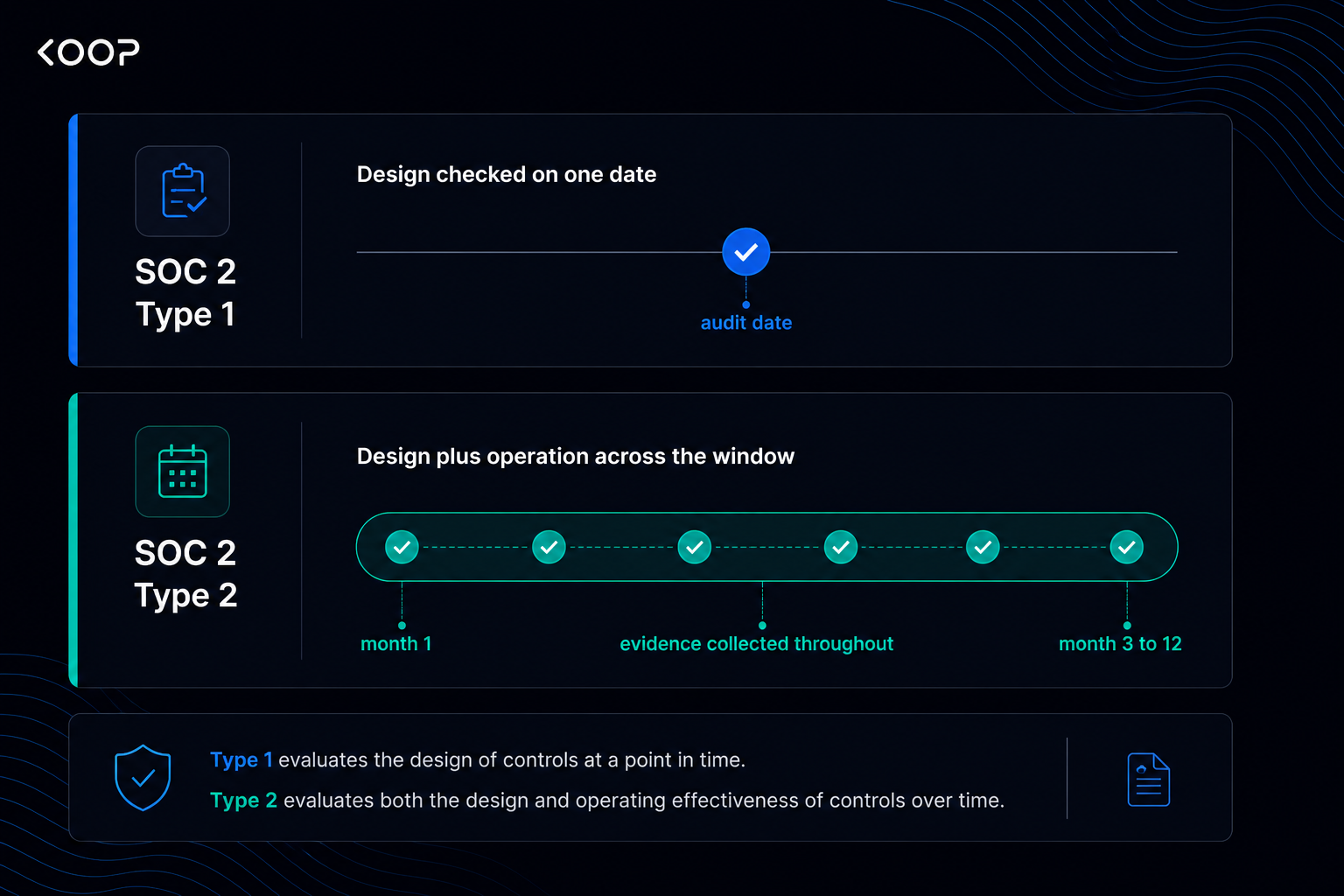
Both reports assess your controls against the same Trust Services Criteria, and both end with a licensed CPA firm issuing a formal opinion. What sets them apart is the test each one applies:
What is a SOC 2 Type 1 report?
A Type 1 audit examines your controls on a date you pick. The auditor confirms they are suitably designed and implemented to meet the criteria as of that day. Say your policy calls for quarterly access reviews. A Type 1 auditor checks that the policy is written, matches the criteria, and is implemented on that date.
What is a SOC 2 Type 2 report?
A Type 2 audit examines those same controls across an observation window that usually runs three to twelve months. The auditor tests whether each control operated the way your policy claims for the full window. With that same access review, the auditor pulls the reviews you actually ran during the period, checks who signed off on them, and confirms you revoked access on schedule every time. Skipped reviews and late approvals surface as exceptions in the report.
The two reports even share the same core parts. Both contain the auditor's opinion, management's assertion, a description of your system, and a listing of your controls. A Type 2 adds the auditor's tests and results. A security or procurement team reads that testing section closely, because it shows the controls operated across the entire period.
Relative cost and timeline follow from the observation period described above. Exact figures, with sources, land in the cost and timeline sections.
What each audit requires of you
Both report types are measured against the AICPA Trust Services Criteria, and both start with the same scoping decision. There are five categories:
- Security (Required)
- Availability
- Processing Integrity
- Confidentiality
- Privacy
Chasing all five on a first audit feels thorough, but each category you add brings its own controls to build, evidence to collect, and testing to sit through. Add Privacy or Processing Integrity when no customer has asked for them, and you lengthen the audit and raise the bill for assurance nobody wanted.
The smart move is to scope what your buyers actually need. Availability fits products sold on an uptime commitment. Confidentiality fits teams handling sensitive, non-public customer data. Privacy applies when you process personal information. Start from the promises in your contracts, choose the categories that back them, and add the others only when a customer actually asks.
How long each one takes
SOC 2 Type 1 and Type 2 timelines differ mostly because of the observation period. Type 1 skips it, so once your controls are in place, a report can land in a month. Type 2 has to watch those controls run, so a first report usually takes three to twelve months from start to finish, often longer once remediation is factored in.
The observation window sets the pace for Type 2. The shortest window most auditors accept is three months, and they typically want six before they will vouch for how your controls have operated. A shorter window leaves a buyer less evidence to trust, so racing to the three-month floor can cost you the assurance you paid for.
Most of the timeline is spent before the auditor ever starts. Writing policies, closing gaps, and standing up logging and access reviews are what eat the calendar, and first-timers lose months here they did not plan for. Lock in your auditor early too, since their schedules fill and a late start pushes everything back.
What each one costs
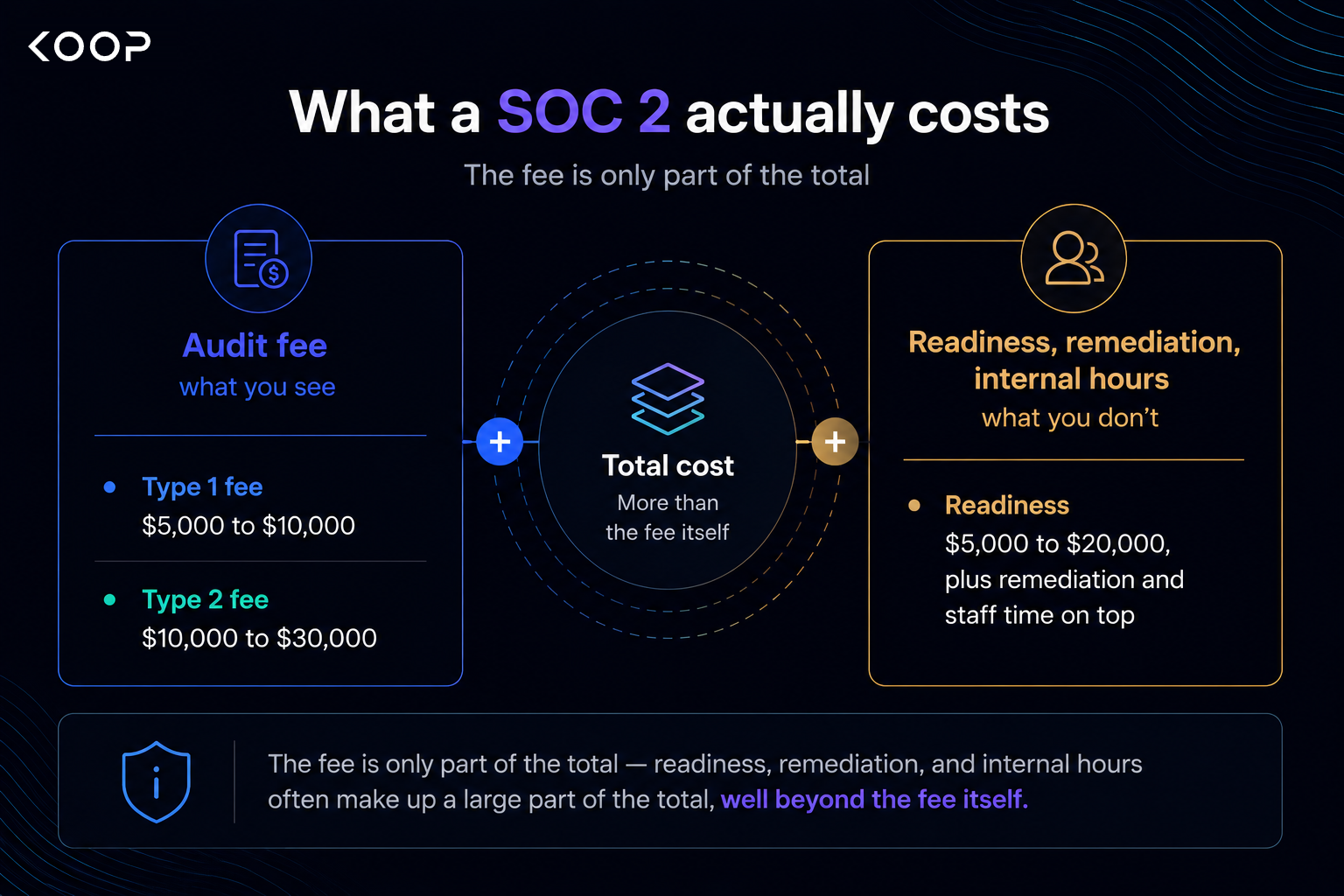
A SOC 2 Type 1 audit fee generally runs $5,000 to $10,000. A Type 2 runs $10,000 to $30,000, since it tests your controls across the entire observation window and demands far more evidence.
Those figures cover only the audit fee. A readiness assessment to catch your gaps beforehand adds $5,000 to $20,000, remediation adds more depending on what it finds, and your team pours dozens to hundreds of internal hours into policies and evidence. Together, these supporting costs often make up a large part of the total, well beyond the fee itself.
A report is only as useful as a buyer's willingness to accept it. Because security teams weigh who signed it, a bargain auditor can undercut the very report you are paying for, which is why the firm you pick to sign it matters as much as what they charge.
Which one to pursue first
This choice belongs to the buyer more than to you. Many buyers prefer a Type 2, and some will not accept a Type 1 at all, which leaves a lone Type 1 as a stepping stone. Go straight for Type 2 without weighing it, and you can spend the three-to-twelve-month wait with nothing to hand procurement, while a competitor who ran a Type 1 first is already in the same deal with a report in hand.
Whichever path fits, one habit saves the most pain. Ask your target buyers what they require before you scope, so you are building toward the exact report that will clear their review.
Keeping your report current after the audit
A Type 2 report is not a one-time purchase. Your clients will expect a fresh one every 12 months, and a report that has gone stale shuts you out of deals just like having none. Renewing every year is simply part of the cost of selling to enterprises.
What makes each renewal light or heavy is how you operate in the months before it. The controls behind the report have to keep operating all year, and the evidence that proves it has to keep piling up. A live trust center keeps your current report in front of buyers without a back-and-forth every time one asks.
Compressing the timeline without cutting corners
On most first audits, the weeks before fieldwork disappear into reconstructing evidence nobody saved while the work was happening. That scramble is an avoidable source of delay, and it comes from treating evidence as something to gather for the auditor instead of a byproduct of running your controls day to day.
Policies raise the stakes. State in writing that every code change gets a documented review, and you have committed to producing a dated approval for each one across the entire window. When those records were never kept, the shortfall shows up as an exception the auditor has to document.
An AI-native platform closes that gap. Koop's Housekeeper AI Agent performs compliance tasks and updates audit evidence automatically while your controls operate, so readiness builds in the background. Koop says the agent handles up to 95% of compliance tasks, part of how the platform helps teams reach compliance 36% faster.
Kept this way, prep stops being the thing that drags every SOC 2 out. The auditor sets the pace of the examination. Your job is to be ready the day it begins.
Ready to make your next SOC 2 the easy one?
Koop runs compliance, evidence, and renewals in one place, so you walk into the audit prepared.