

Introduction
Organizations often struggle to navigate the complexities of Cybersecurity Maturity Model Certification (CMMC) compliance. Given the variety of software vendors and their unique solutions, organizations must understand how to evaluate these tools for effective compliance management. What criteria should organizations focus on to select software that meets regulatory requirements and improves operational efficiency?
Understanding CMMC Requirements and Their Importance
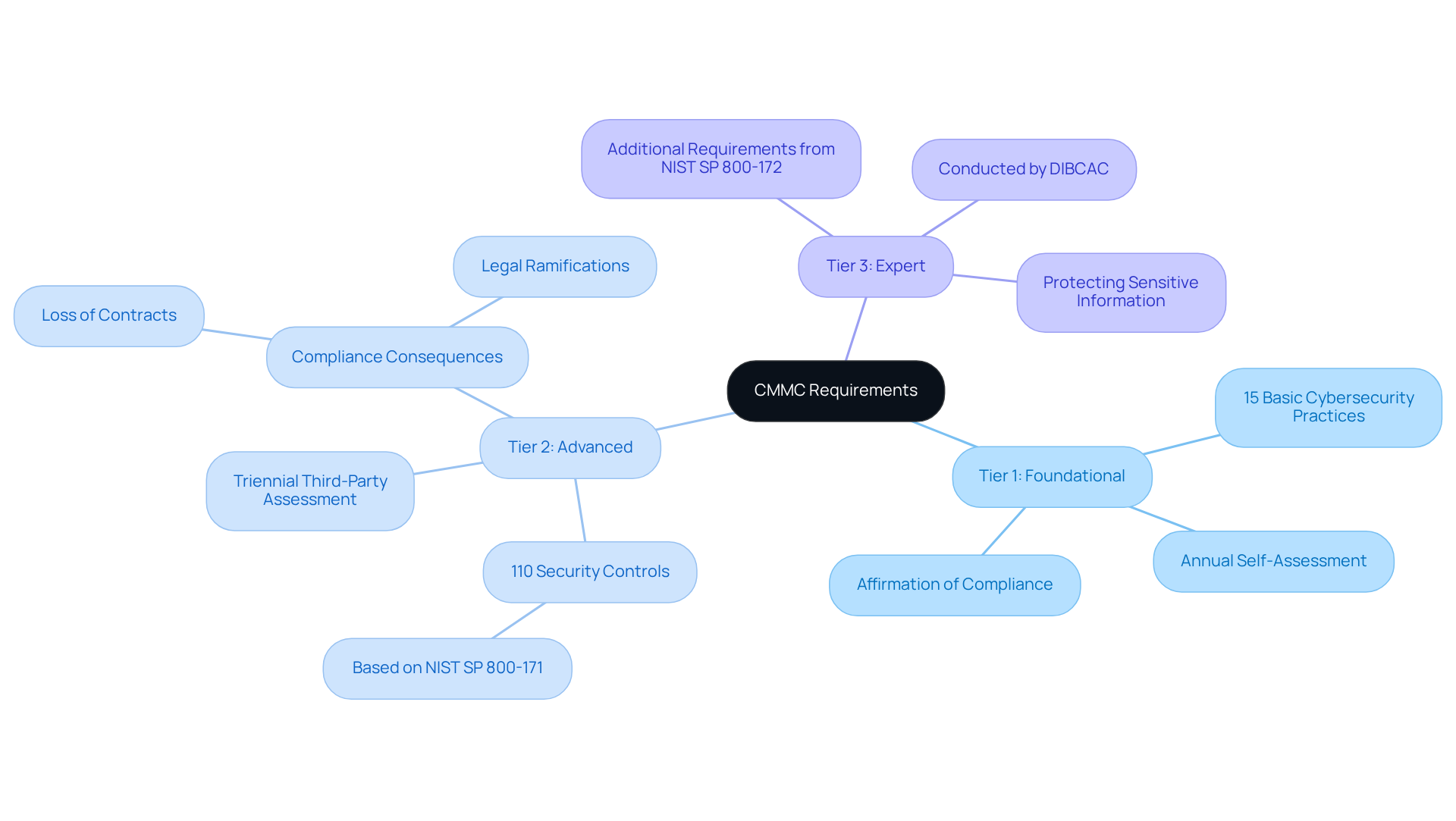
The Cybersecurity Maturity Model Certification (CMMC) is essential for entities handling Federal Contract Information and Controlled Unclassified Information, as it establishes a robust framework for cybersecurity. The framework consists of three tiers. Each tier has unique criteria designed to safeguard sensitive information effectively. Compliance with the CMMC is crucial, as it extends beyond mere regulatory adherence; it plays a vital role in protecting national security and enhancing the credibility of contractors within the defense supply chain. Non-compliance can lead to severe consequences, including the loss of contracts and potential legal ramifications.
As of 2026, only about 25% of contractors are sufficiently prepared for evaluations, underscoring the urgency for entities to understand and implement the necessary controls. Furthermore, the GAO has indicated that the success of CMMC implementation hinges on the preparedness of the entire ecosystem, emphasizing the need for proactive measures.
Case studies demonstrate that entities prioritizing adherence not only mitigate risks but also position themselves favorably in a competitive market, illustrating how robust cybersecurity frameworks can enhance operational integrity and build trust with stakeholders.
With Koop Technologies' AI-driven regulatory automation, companies can simplify their compliance processes, significantly reducing manual effort and costs. This capability is essential as Level 2 certification evaluations become mandatory for relevant contracts starting November 10, 2026, highlighting the urgency for compliance and the potential for improved business growth through effective management of regulations.
Companies interested in Koop can easily schedule a call with a representative to discuss their needs and navigate the onboarding process, ensuring expert assistance throughout their regulatory journey.
Overview of Leading CMMC Compliance Software Vendors
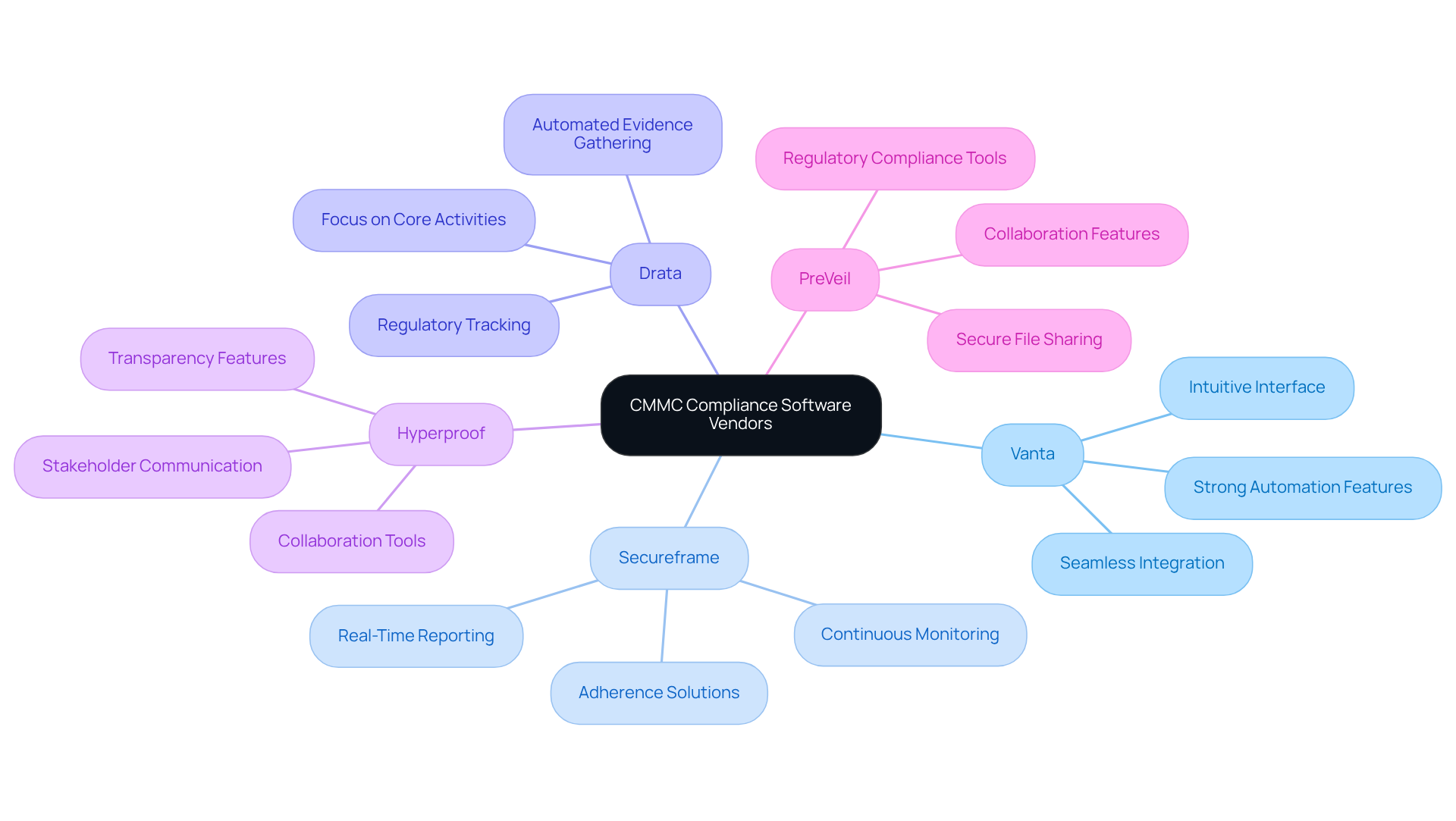
Organizations face increasing challenges in achieving CMMC compliance, necessitating tailored solutions from CMMC requirements software vendors to meet diverse needs. The CMMC compliance software market features several leading vendors, each offering distinct capabilities tailored to diverse organizational requirements:
- Vanta: Renowned for its intuitive interface and strong automation features, Vanta enhances compliance management by seamlessly integrating with existing systems to facilitate efficient evidence collection.
- Secureframe: This platform provides extensive adherence solutions, emphasizing continuous monitoring and real-time reporting, making it an excellent choice for entities aiming to maintain ongoing adherence.
- Drata: Drata excels in automated evidence gathering and regulatory tracking, allowing businesses to focus on their primary activities while ensuring adherence to relevant standards.
- Hyperproof: With an emphasis on collaboration and transparency, Hyperproof offers tools that improve communication among stakeholders throughout the regulatory process.
- PreVeil: Focusing on secure file sharing and collaboration, PreVeil includes regulatory features that help entities in efficiently handling their obligations.
These vendors provide a spectrum of solutions tailored to various organizational sizes and regulatory needs. Selecting the right CMMC requirements software vendors can significantly impact an organization's ability to navigate compliance complexities effectively.
Comparison Criteria for Evaluating CMMC Software Solutions
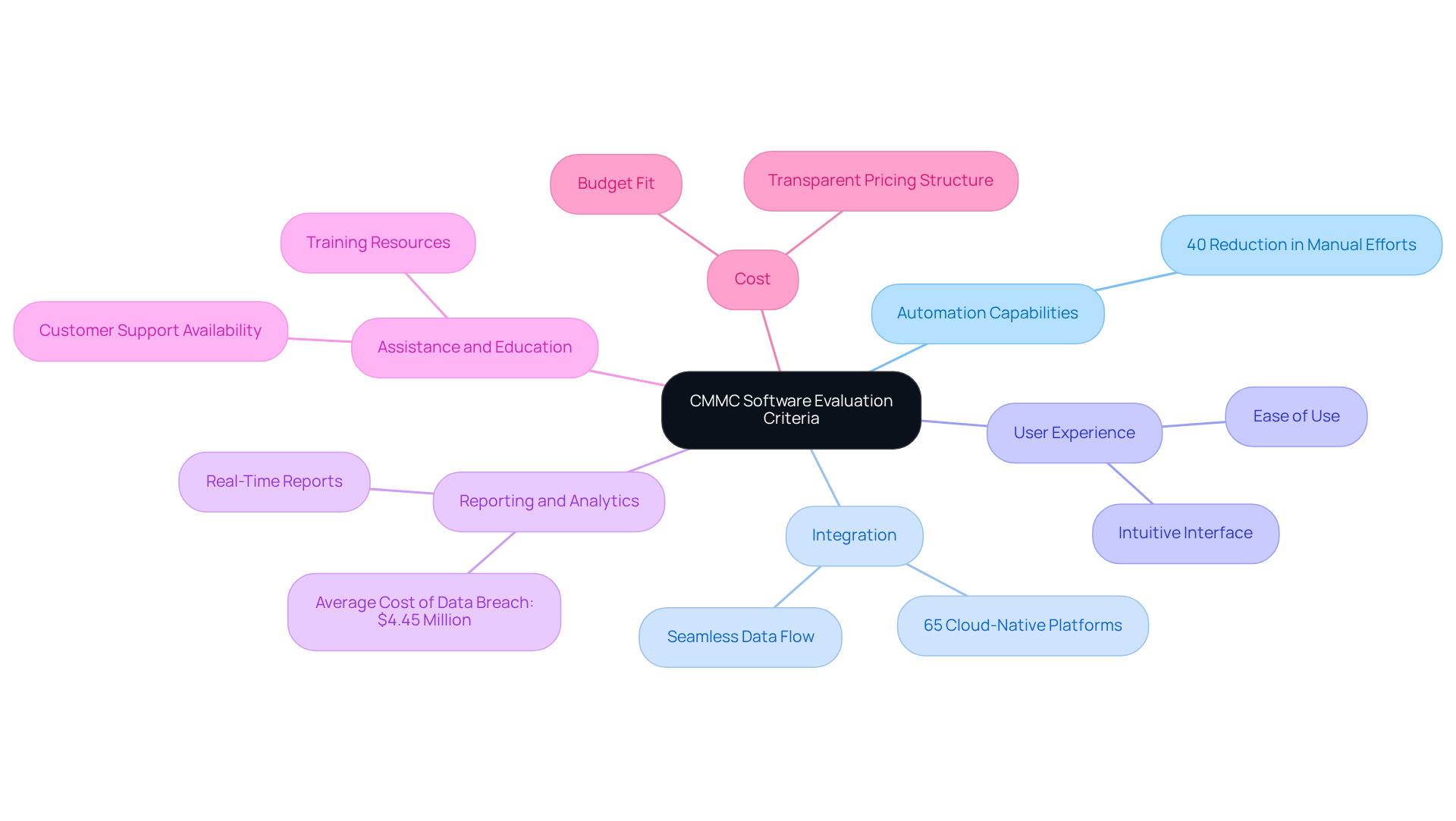
When assessing software solutions from CMMC requirements software vendors, organizations face critical decisions that can significantly impact their regulatory adherence.
- Automation Capabilities: Organizations that automate compliance tasks see a 40% reduction in manual efforts, highlighting significant efficiency gains.
- Integration: Compatibility with existing systems and tools is crucial for ensuring seamless data flow and reducing implementation time. With 65% of regulatory platforms being cloud-native, organizations can benefit from user-friendly, integrated solutions that enhance operational efficiency.
- User Experience: The intuitiveness of the interface and ease of use for regulatory teams can significantly impact adoption rates. A user-friendly design ensures that regulatory teams can easily navigate and utilize the application.
- Reporting and Analytics: The ability to generate real-time reports and analytics provides insights into compliance status and areas for improvement. Without effective reporting and analytics, organizations risk incurring substantial financial losses due to data breaches, which reached an average cost of $4.45 million in 2023.
- Assistance and Education: Availability of customer support and training resources is vital for helping entities maximize the application's potential. Having strong support helps teams tackle challenges during implementation and ensures they’re ready to use the system effectively.
- Cost: The overall pricing structure, including any hidden fees, must be transparent to ensure that the solution fits within the entity's budget while delivering the necessary features and support.
These standards will assist entities in systematically evaluating their choices and choosing the most appropriate compliance program. Organizations must act swiftly to ensure compliance before the impending deadline of November 10, 2026. Making informed choices now can safeguard organizations against future compliance challenges and financial repercussions.
Side-by-Side Comparison of Top CMMC Compliance Solutions
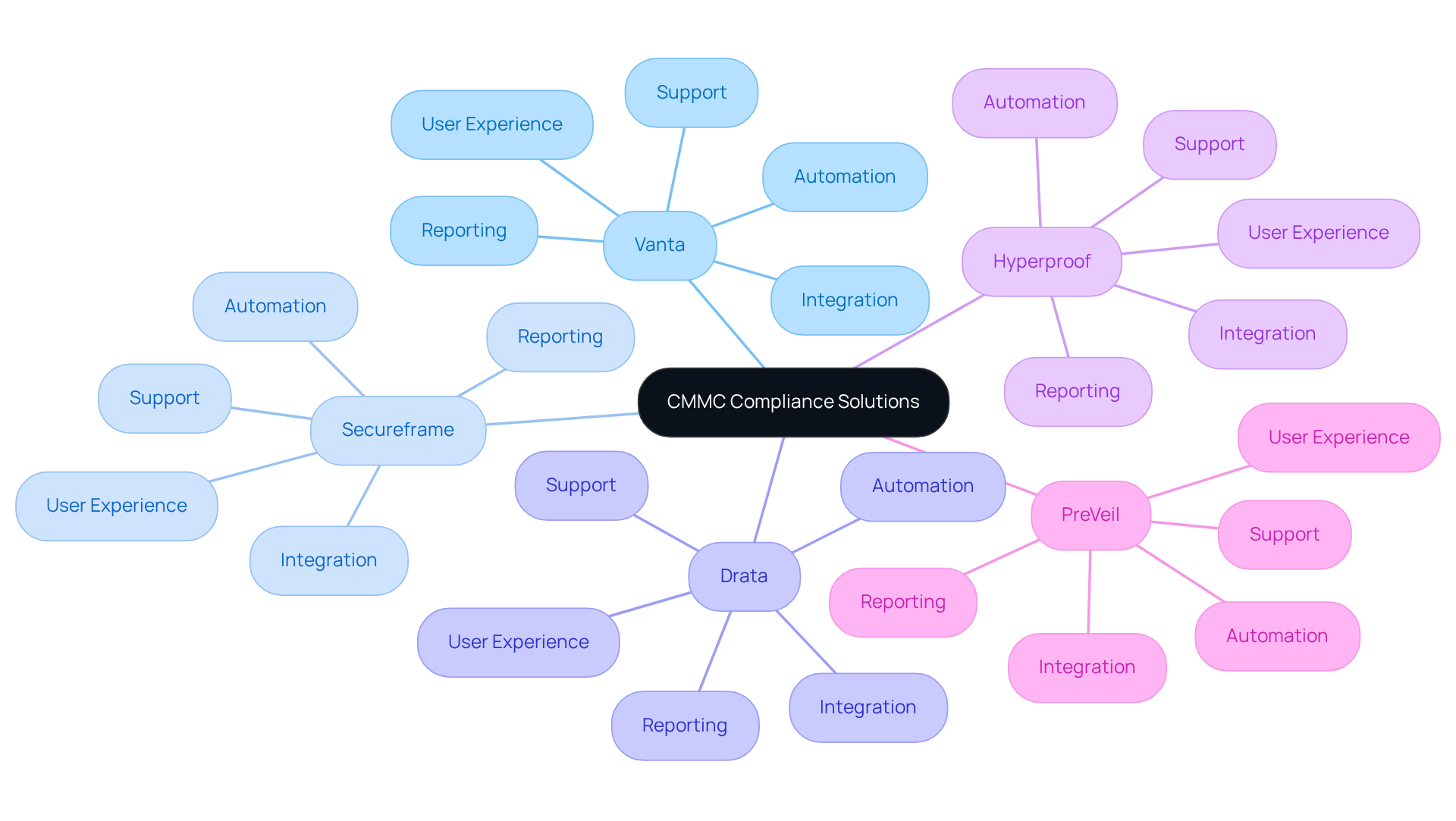
This comparison highlights the varying strengths of compliance vendors, which can significantly impact an organization's decision-making process.
Vanta offers high automation capabilities and excellent integration, making it user-friendly with real-time insights. Its comprehensive support ensures that users can navigate the platform effectively.
Secureframe also provides high automation and good integration, with an intuitive user experience and detailed reporting. Strong support further enhances its usability for organizations.
Drata stands out with very high automation capabilities and excellent integration. Its easy-to-navigate interface and automated reports simplify compliance management, while good training options support users effectively.
Hyperproof presents moderate automation capabilities and good integration, fostering a collaborative user experience. Customizable reports and excellent support make it a viable option, though it comes at a higher cost.
PreVeil, with moderate automation and good integration, offers a secure interface but only basic reporting features. Limited support may pose challenges for users, and its lower cost reflects these trade-offs.
Understanding these differences is crucial for organizations aiming to enhance their compliance strategies effectively.
Benefits of Compliance Automation in CMMC Readiness
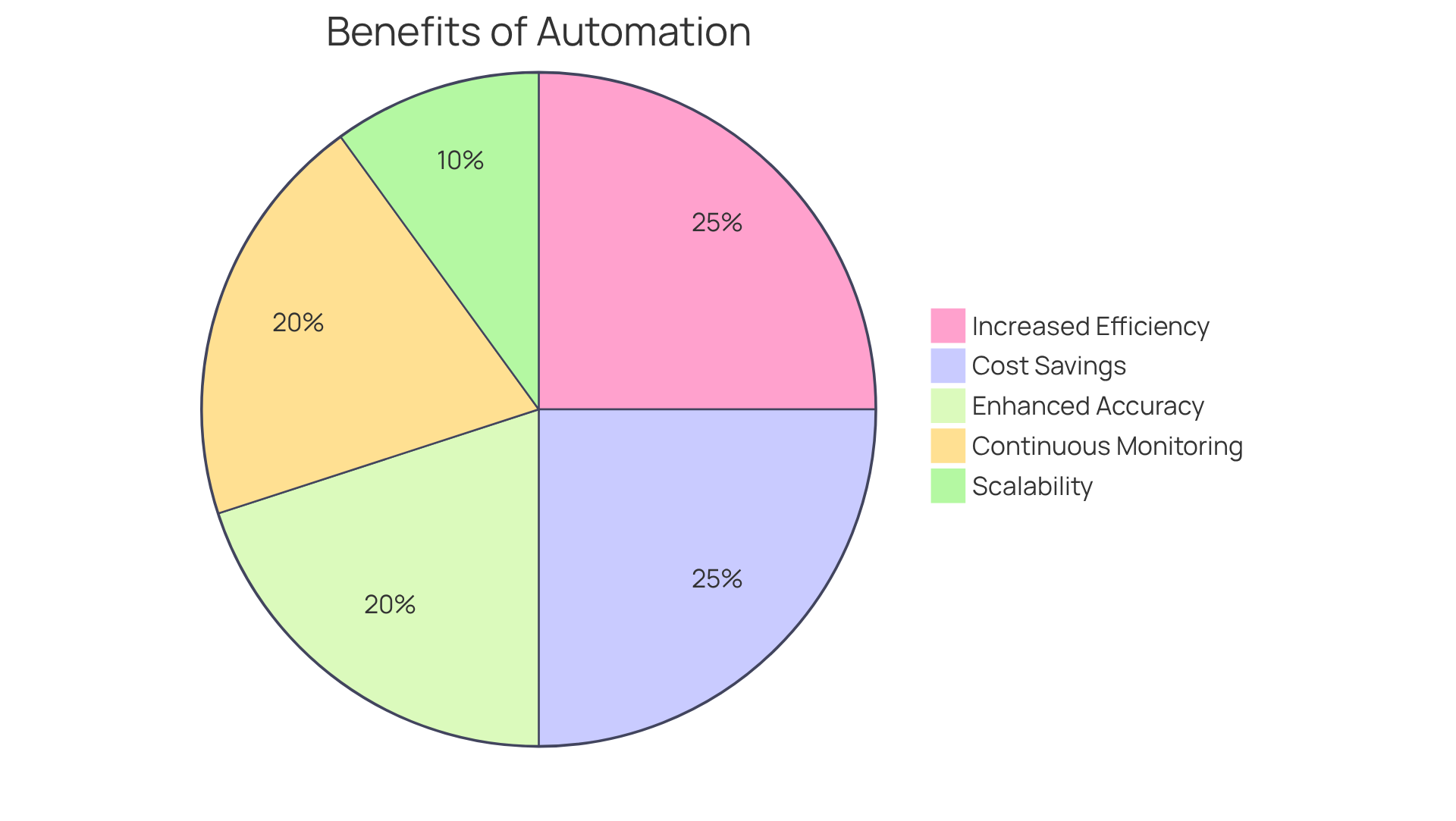
Organizations face significant challenges in achieving CMMC compliance, making the adoption of automation tools essential for success. Investing in compliance automation tools offers several advantages:
- Increased Efficiency: Automation cuts down the time spent on manual compliance tasks, allowing teams to focus on strategic initiatives that foster business growth.
- Enhanced Accuracy: Automated systems effectively minimize human error, ensuring that regulatory documentation remains precise and current, which is crucial for passing assessments.
- Continuous Monitoring: Automation enables real-time observation of adherence status, empowering entities to proactively identify and resolve issues before they escalate.
- Cost Savings: Streamlining regulatory processes through automation leads to reduced labor costs and mitigates the risk of incurring penalties associated with non-adherence, which can average over $4.55 million per data breach.
- Scalability: Automated solutions are crafted to adjust effortlessly to changing regulatory demands, enabling entities to expand operations without jeopardizing their adherence stance.
These benefits underscore the importance of adopting compliance automation tools. Without these tools, organizations risk falling behind in their compliance efforts, potentially jeopardizing their cybersecurity posture.
Conclusion
Achieving compliance with the Cybersecurity Maturity Model Certification (CMMC) is not just a regulatory hurdle; it is essential for operational integrity for organizations handling sensitive federal information. The CMMC framework, with its structured tiers, provides a comprehensive approach to safeguarding data and enhancing the credibility of contractors within the defense supply chain. As the deadline for compliance approaches, understanding the importance of selecting the right CMMC compliance software vendor becomes paramount for organizations aiming to navigate the complexities of regulatory adherence effectively.
The article highlights several key aspects of CMMC compliance, including the urgency for organizations to prepare for evaluations and the benefits of automation in compliance processes. Navigating the complexities of regulatory adherence can be daunting for many organizations. By evaluating criteria such as:
- Automation capabilities
- Integration
- User experience
- Support
organizations can make informed decisions that align with their specific needs. By comparing top vendors such as Vanta, Secureframe, Drata, Hyperproof, and PreVeil, organizations can see the different strengths and features that each offers, empowering them to choose solutions that best fit their operational requirements.
In light of the impending compliance deadline, organizations are encouraged to take proactive steps toward CMMC readiness. Embracing compliance automation tools not only streamlines processes but also enhances accuracy and reduces costs associated with non-compliance. Automation can transform compliance from a daunting task into a streamlined process. By prioritizing CMMC compliance, organizations can protect sensitive information, mitigate risks, and position themselves favorably in a competitive landscape. The time to act is now; investing in the right tools and strategies will pave the way for a secure and compliant future.
Frequently Asked Questions
What is the Cybersecurity Maturity Model Certification (CMMC)?
The CMMC is a framework established for entities handling Federal Contract Information and Controlled Unclassified Information, aimed at enhancing cybersecurity measures.
How many tiers are in the CMMC framework, and what is their purpose?
The CMMC framework consists of three tiers, each with unique criteria designed to effectively safeguard sensitive information.
Why is compliance with CMMC important?
Compliance with CMMC is crucial for protecting national security, enhancing the credibility of contractors in the defense supply chain, and avoiding severe consequences such as loss of contracts and legal ramifications.
What is the current state of contractor preparedness for CMMC evaluations?
As of 2026, only about 25% of contractors are sufficiently prepared for evaluations, highlighting the urgency for entities to understand and implement necessary controls.
What role does the Government Accountability Office (GAO) play in CMMC implementation?
The GAO indicates that the success of CMMC implementation depends on the preparedness of the entire ecosystem, emphasizing the need for proactive measures.
How can companies benefit from prioritizing CMMC adherence?
Companies that prioritize adherence can mitigate risks and position themselves favorably in a competitive market, enhancing operational integrity and building trust with stakeholders.
What is the significance of Koop Technologies in relation to CMMC compliance?
Koop Technologies offers AI-driven regulatory automation that simplifies compliance processes, reducing manual effort and costs, which is essential as Level 2 certification evaluations become mandatory starting November 10, 2026.
How can companies interested in Koop Technologies get assistance?
Companies can schedule a call with a representative from Koop Technologies to discuss their needs and navigate the onboarding process for expert assistance.
What challenges do organizations face in achieving CMMC compliance?
Organizations face increasing challenges in achieving CMMC compliance, necessitating tailored solutions from software vendors to meet diverse needs.
What are some leading CMMC compliance software vendors and their features?
- Vanta: Known for its intuitive interface and strong automation features for efficient evidence collection.
- Secureframe: Offers extensive adherence solutions with continuous monitoring and real-time reporting.
- Drata: Excels in automated evidence gathering and regulatory tracking.
- Hyperproof: Focuses on collaboration and transparency among stakeholders.
- PreVeil: Specializes in secure file sharing and collaboration with regulatory features.
How can selecting the right CMMC compliance software vendor impact an organization?
Choosing the right vendor can significantly enhance an organization's ability to navigate compliance complexities effectively.

