

Introduction
Understanding the complexities of Department of Defense (DoD) contracts is essential for contractors aiming to succeed in a competitive landscape. It requires strict adherence to the Cybersecurity Maturity Model Certification (CMMC) standards. For contractors, recognizing who must comply with these regulations is crucial, as failure to do so can lead to significant risks, jeopardizing lucrative contract opportunities and overall business viability.
This article delves into the essential insights surrounding CMMC compliance, exploring its necessity for various contractor types and the implications of failing to meet these standards. Effective preparation is vital for contractors to thrive in the defense sector.
Koop Technologies: Automate CMMC Compliance for DoD Contractors
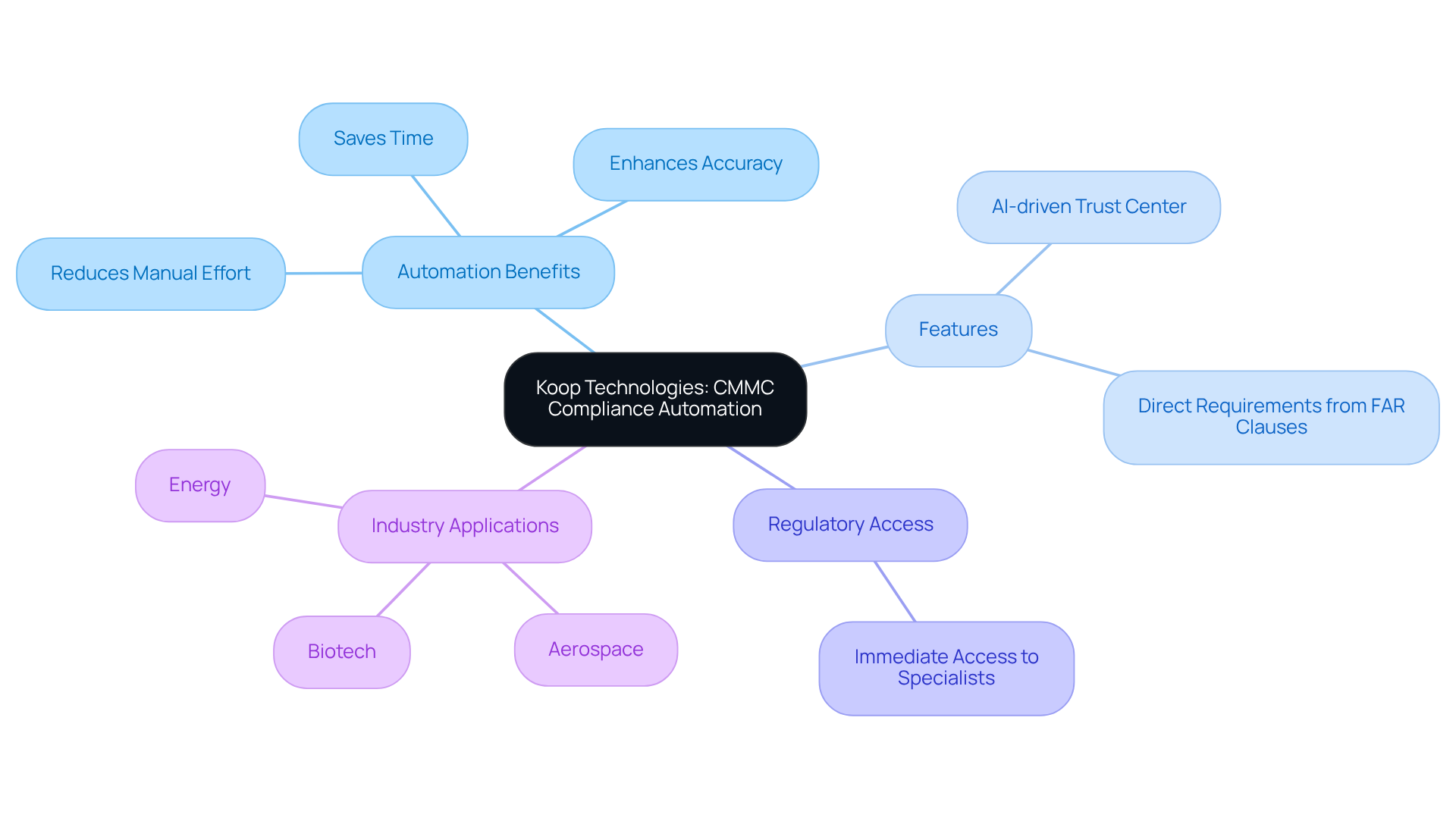
This company provides a robust automation platform designed specifically for those who need CMMC compliance for DoD contractors to meet compliance standards efficiently. By automating up to 80% of compliance-related tasks, the platform minimizes the extensive manual effort often associated with compliance tasks, enabling organizations to focus on their primary objectives. It offers immediate access to regulatory specialists and produces requirements directly from FAR clauses, facilitating navigation through the complex CMMC regulations.
Furthermore, the AI-driven Trust Center consolidates regulatory adherence and trust management, allowing corporate and governmental clients to effectively display their trust assets. This automation saves time and enhances accuracy, significantly lowering the risk of non-compliance and its penalties.
With adaptable adherence strategies customized for varied business requirements, including extensive safeguarding across multiple industries like aerospace, biotech, and energy, Koop Technologies enhances regulatory efficiency for businesses who need CMMC compliance for DoD contractors, enabling subcontractors to simplify audit readiness and manage third-party risks effectively.
Identify Who Must Comply with CMMC Regulations
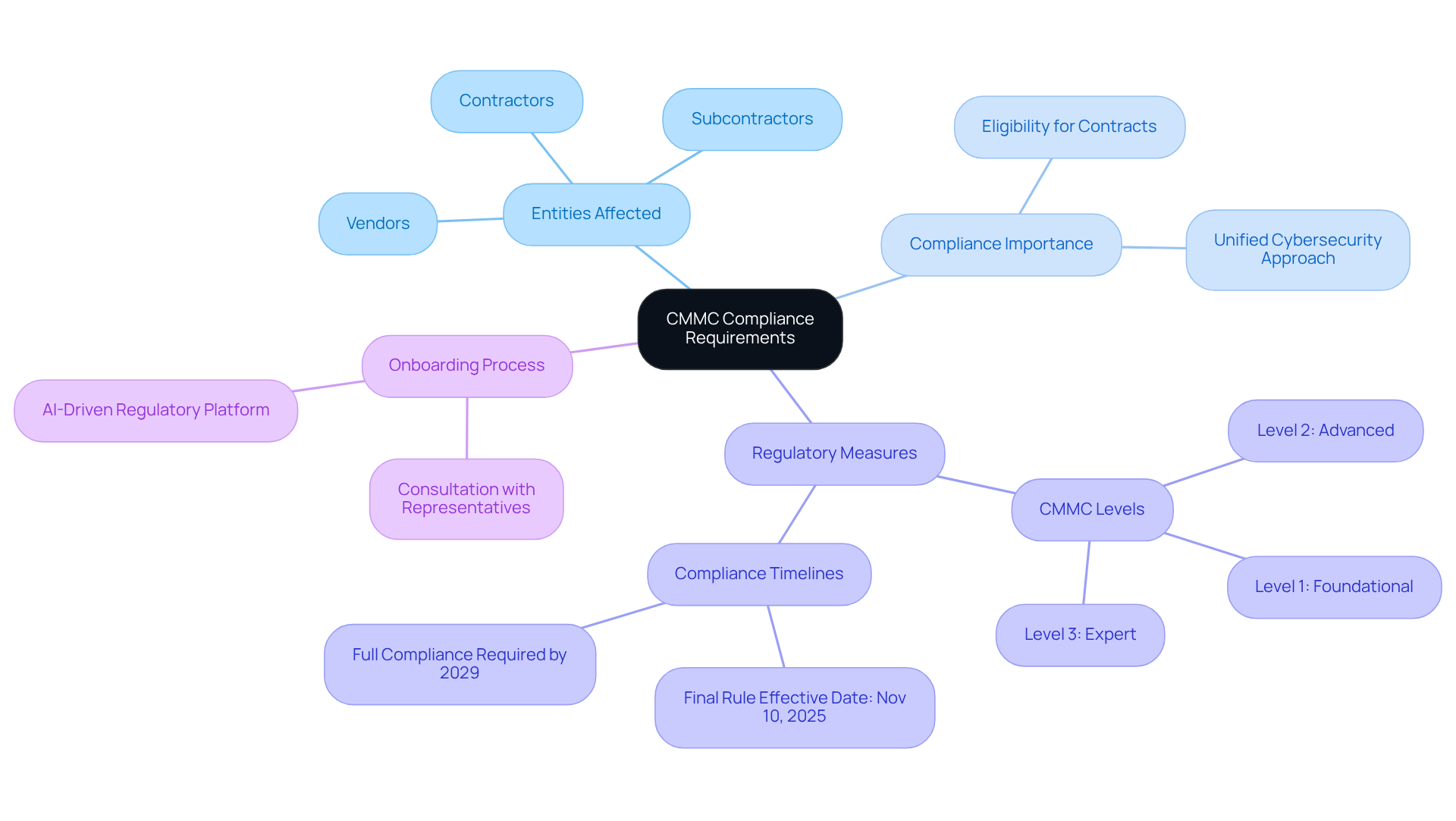
For vendors and subcontractors in the Department of Defense (DoD) supply chain, who needs CMMC compliance for DoD contractors, meeting compliance standards is not just important; it is essential for continued eligibility in a competitive landscape. This requirement applies to any organization, including those who need CMMC compliance for DoD contractors, that processes, stores, or transmits Federal Contract Information (FCI) or Controlled Unclassified Information (CUI).
Companies who need CMMC compliance for DoD contractors and handle sensitive information related to defense contracts must comply with established standards; otherwise, they risk disqualification from lucrative contract awards. Significantly, adherence applies to all levels of builders; subcontractors must achieve the same cybersecurity maturity model level as their primary builders. This ensures a unified cybersecurity approach across the supply chain, highlighting the importance of robust regulatory measures.
Currently, around 337,968 distinct entities, including prime contractors and subcontractors, who needs CMMC compliance for DoD contractors, will be affected by the final rule, which mandates that by 2029, full adherence to CMMC will be required. Without proactive strategies, organizations risk losing out on critical contract opportunities.
To streamline this process, the company provides a comprehensive onboarding experience that includes a call with a representative to discuss specific needs and options. Their integrated, AI-driven regulatory platform automates up to 95% of regulatory tasks, significantly decreasing manual effort and expenses, which can save businesses up to 50% compared to conventional methods.
Furthermore, Koop's Trust Center enables organizations to demonstrate adherence to standards of excellence to potential and current clients, simplifying the navigation of the intricacies of FAR, NIST, and related frameworks in government procurement. Engaging in a consultation can be the first step toward ensuring your organization remains competitive and compliant in a rapidly evolving regulatory environment.
Understand the Different Levels of CMMC Compliance
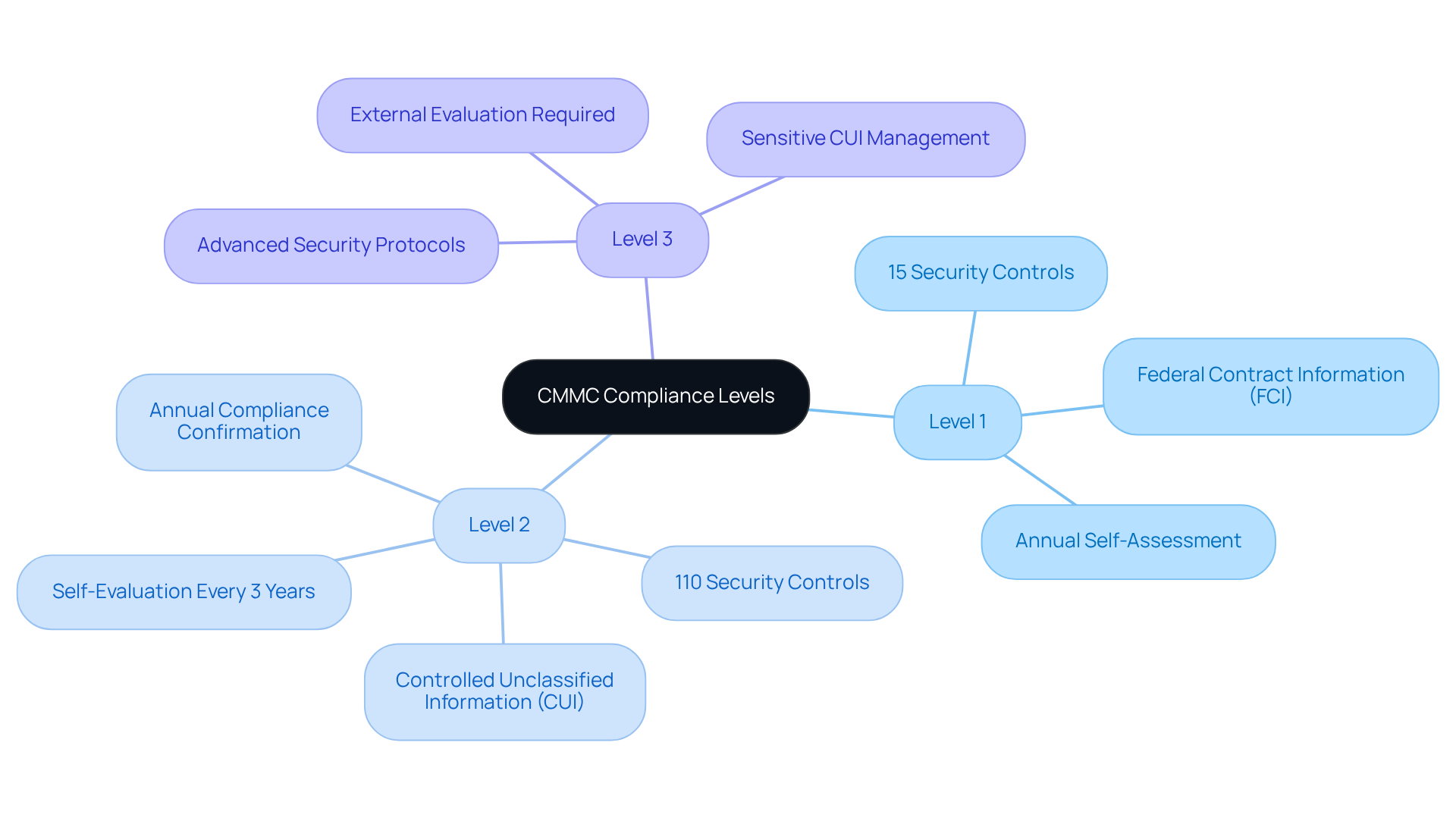
Understanding the distinct levels of CMMC is crucial for contractors navigating the complexities of cybersecurity compliance. CMMC consists of three distinct levels, each designed to address varying requirements based on the sensitivity of the information managed.
- Level 1 focuses on fundamental cyber hygiene, requiring vendors to implement 15 specific security controls outlined in FAR clause 52.204-21. This foundational level is essential for builders processing only Federal Contract Information (FCI).
- Level 2 expands on this foundation, requiring compliance with 110 controls in accordance with NIST SP 800-171, specifically for vendors handling Controlled Unclassified Information (CUI). This level mandates a self-evaluation every three years and annual confirmation of adherence.
- Level 3 represents the highest standard, demanding advanced security protocols and an external evaluation to ensure compliance, particularly for those managing sensitive CUI.
Contractors must understand these levels to identify their responsibilities and prepare effectively for audits, especially as compliance becomes mandatory by November 2026. Non-compliance with these levels could jeopardize contracts and lead to severe repercussions for contractors.
Explore the Impact of CMMC Compliance on Contract Eligibility
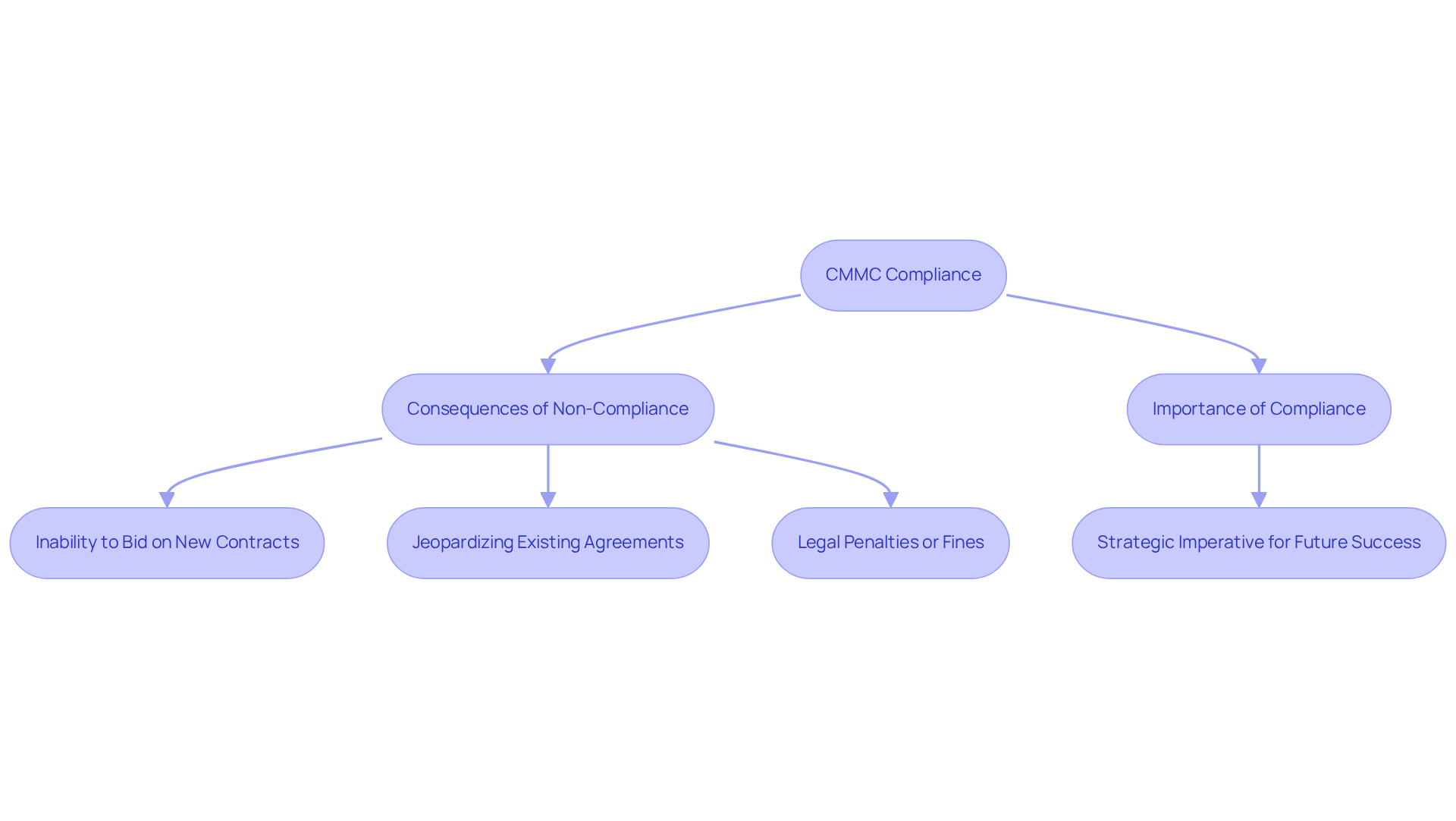
Adherence to cybersecurity standards is not just a regulatory requirement; it is a critical factor that can determine the success or failure of Department of Defense contracts. Complete execution of these standards is required by November 9, 2028. Contractors risk losing eligibility for contract awards if they fail to achieve the required cybersecurity maturity model certification level. Non-compliance can lead to severe consequences, such as:
- The inability to bid on new contracts
- Jeopardizing existing agreements
- Incurring legal penalties or fines
With the DoD tightening its enforcement of cybersecurity standards, contractors must prioritize compliance to protect their business interests and stay competitive in the defense sector.
Startups and mid-market firms frequently face increased regulatory expenses due to limited professional resources, which can range from thousands to millions of dollars based on the complexity of their operations. This makes it crucial for them to adopt efficient solutions. Koop Technologies' AI-driven platform aims to revolutionize regulatory management by lowering expenses and speeding up procedures, allowing these firms to handle compliance standards more effectively. Failing to achieve adherence can damage an organization's reputation, affecting its ability to win new contracts and maintain existing business relationships. Understanding and achieving CMMC compliance is not merely a checkbox; it is a strategic imperative that can define a contractor's future in the defense industry. Contractors are advised to conduct a readiness assessment and consider engaging with compliance specialists, such as those offered by Koop Technologies, to ensure they meet the necessary standards.
Conclusion
The stakes of CMMC compliance are high for contractors in the Department of Defense supply chain, where failure to comply can jeopardize lucrative contracts. Organizations that handle Federal Contract Information (FCI) or Controlled Unclassified Information (CUI) must adhere to these standards, as failing to comply with these standards jeopardizes eligibility for lucrative contracts.
Key insights reveal that approximately 337,968 entities will be impacted by the CMMC regulations, which mandate full compliance by 2029. Understanding the different levels of CMMC compliance - ranging from basic cyber hygiene to advanced security protocols - is crucial for contractors to prepare for audits and avoid the severe repercussions of non-compliance. The automation solutions provided by Koop Technologies significantly streamline this process, reducing manual effort and costs while enhancing regulatory adherence.
In a landscape where compliance is increasingly scrutinized, the ability to adapt and secure contracts hinges on proactive engagement with regulatory standards. As the DoD tightens enforcement, non-compliance could lead to lost contracts and diminished market position. Engaging with compliance specialists and leveraging automation tools can empower contractors to navigate these challenges effectively, securing their future in a rapidly evolving regulatory landscape.
Frequently Asked Questions
What is Koop Technologies?
Koop Technologies is a company that provides an automation platform specifically designed to help DoD contractors achieve CMMC compliance efficiently.
How does the platform assist with CMMC compliance?
The platform automates up to 80% of compliance-related tasks, reducing the manual effort required and allowing organizations to focus on their primary objectives.
What features does the platform offer to help with compliance?
It offers immediate access to regulatory specialists and generates requirements directly from FAR clauses, aiding users in navigating complex CMMC regulations.
What is the AI-driven Trust Center?
The AI-driven Trust Center consolidates regulatory adherence and trust management, enabling corporate and governmental clients to effectively display their trust assets.
How does automation benefit organizations using Koop Technologies?
Automation saves time, enhances accuracy, and significantly lowers the risk of non-compliance and its associated penalties.
Can the platform be customized for different business needs?
Yes, it offers adaptable adherence strategies tailored to various business requirements across multiple industries, including aerospace, biotech, and energy.
How does Koop Technologies help subcontractors?
It simplifies audit readiness and helps manage third-party risks effectively for subcontractors needing CMMC compliance.

