

Introduction
The Cybersecurity Maturity Model Certification (CMMC) serves as a vital standard for technology companies aiming to partner with the Department of Defense (DoD). As cybersecurity regulations evolve, understanding and implementing CMMC compliance is not merely a regulatory obligation; it is a strategic necessity that can create pathways for new contracts and partnerships.
However, many organizations struggle to interpret the complex requirements of CMMC compliance. How can technology firms effectively prepare for CMMC certification and ensure they meet the stringent standards necessary to thrive in a competitive market?
Without effective preparation, technology firms risk not only compliance failure but also significant setbacks in their market positioning.
Understand CMMC Compliance: Importance and Overview
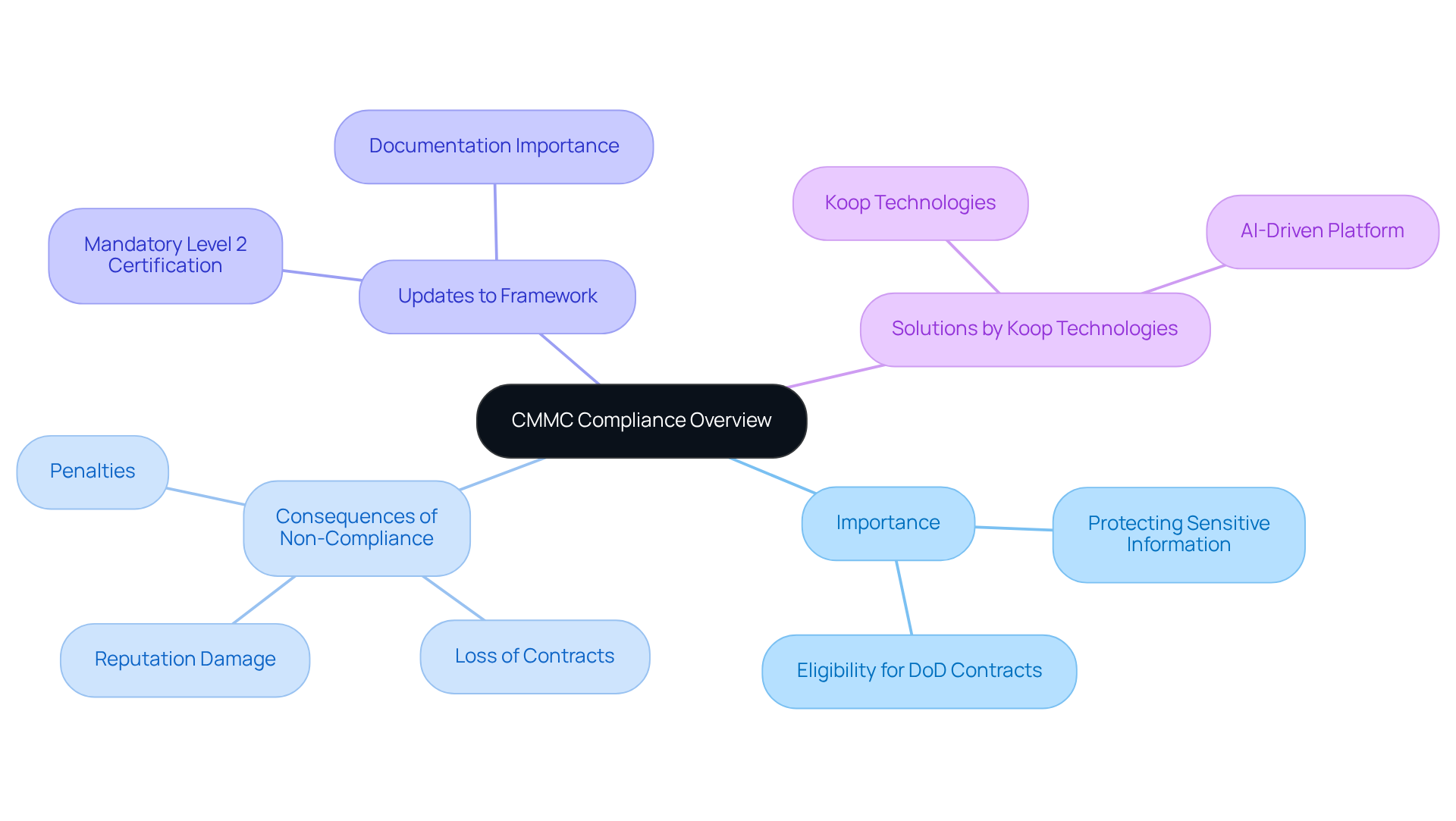
The Cybersecurity Maturity Model Certification (CMMC) is essential for organizations handling sensitive government information, as it establishes a robust cybersecurity framework. By incorporating best practices from established cybersecurity standards, the framework ensures that contractors are equipped to protect Controlled Unclassified Information (CUI) and Federal Contract Information (FCI) effectively.
For technology firms, understanding the relevant regulations is crucial for CMMC compliance for technology companies, as it directly affects eligibility for DoD contracts and enhances overall security measures. Non-compliance can result in significant penalties, loss of contracts, and damage to reputation. Therefore, understanding the framework's requirements is a crucial first step to achieving compliance and unlocking business opportunities in the defense sector.
Recent updates to the CMMC framework emphasize the importance of thorough documentation and proactive preparation. The upcoming mandatory Level 2 certification by a third-party assessor will be required for any new DoD contracts involving CUI starting November 10, 2026. Companies must begin their compliance journey immediately to prevent disqualification from critical contracts and position themselves for future growth.
Organizations interested in Koop Technologies should reach out to a representative to discuss their specific needs and explore tailored options. Koop provides an easy onboarding procedure, followed by an expert-in-the-loop model to assist throughout the regulatory journey. By utilizing Koop's AI-driven platform, which automates up to 95% of regulatory tasks, companies can significantly reduce manual effort and expenses, making it an ideal solution for startups and mid-market firms facing regulatory challenges. This proactive strategy not only improves adherence readiness but also fosters trust in regulated markets, ensuring organizations fulfill the strict standards of the framework.
Navigate CMMC Levels: Requirements and Expectations
Understanding the three levels of CMMC is crucial for organizations aiming to protect sensitive information effectively.
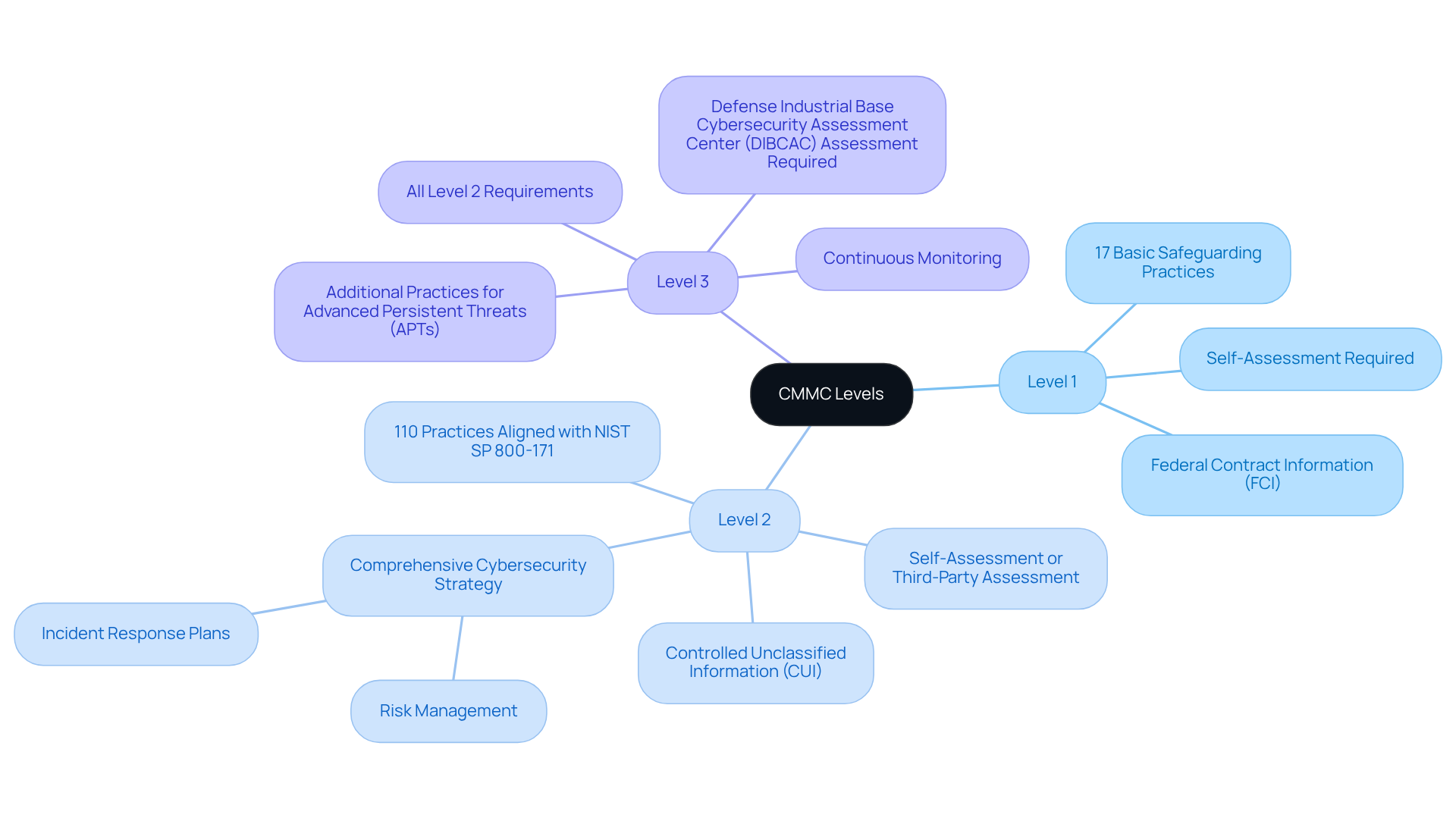
CMMC comprises three distinct levels, each with escalating requirements based on the sensitivity of the information handled:
- Level 1: This foundational level mandates the implementation of 17 basic safeguarding practices for Federal Contract Information (FCI), as outlined in FAR 52.204-21. Organizations must establish essential security measures to protect sensitive data effectively.
- Level 2: Designed to secure Controlled Unclassified Information (CUI), Level 2 requires adherence to 110 practices aligned with NIST SP 800-171. This level necessitates a comprehensive cybersecurity strategy, incorporating risk management and incident response plans to address potential threats.
- Level 3: The most rigorous level, Level 3, requires adherence to all Level 2 requirements, along with additional practices aimed at defending against advanced persistent threats (APTs). Organizations must create a strong cybersecurity framework and implement continuous monitoring to ensure ongoing adherence.
Small businesses may struggle with the 6 to 12 month timeline for Level 2, while larger enterprises face an even longer 18 to 36 month timeline for Level 3 adherence. This highlights the critical need for early preparation and proactive measures to ensure compliance.
Implement Effective Strategies: Best Practices for CMMC Readiness
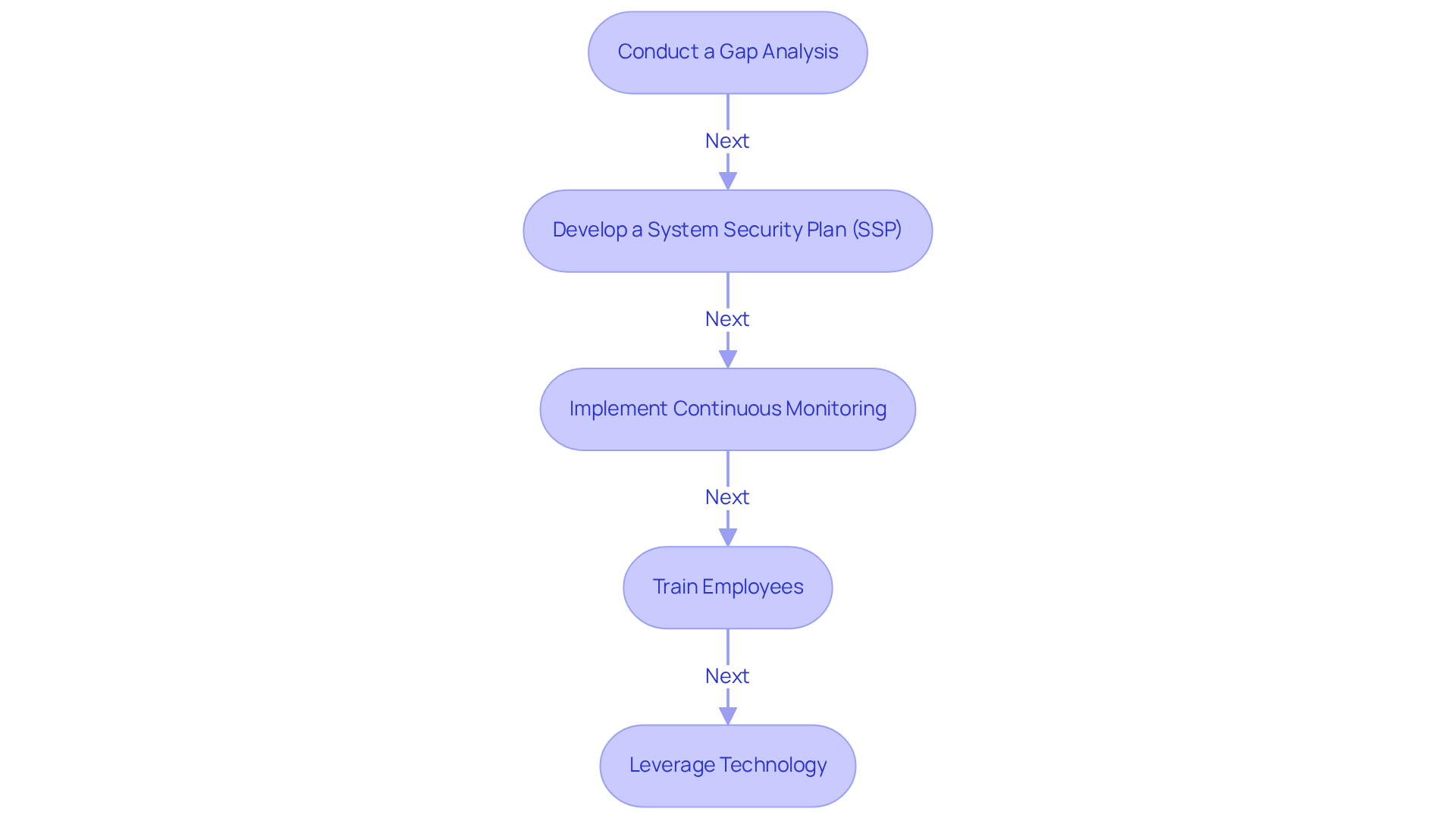
To achieve CMMC compliance, organizations must adopt a strategic approach that encompasses several critical best practices:
- Conduct a Gap Analysis: Evaluate existing cybersecurity practices against compliance standards to identify areas needing enhancement. The analysis must review existing policies, procedures, and technical controls. Organizations that delay preparation risk significant setbacks, including lost contracts and missed opportunities, which are crucial for achieving CMMC compliance for technology companies.
- Develop a System Security Plan (SSP): Create a comprehensive SSP that outlines how your organization meets compliance requirements. This document should detail security controls, risk management strategies, and incident response plans. Accurate and detailed SSPs are essential for validating controls and ensuring successful assessments. Without a robust SSP, organizations risk failing compliance assessments, which is critical for achieving CMMC compliance for technology companies, jeopardizing their operational capabilities.
- Implement Continuous Monitoring: Establish a system for ongoing monitoring of security controls to ensure they remain effective and compliant. Regular audits and assessments can help identify vulnerabilities and areas for improvement. The CMMC compliance for technology companies encourages a shift from static assessments to continuous assurance, which demonstrates measurable security maturity and strengthens supply chain resilience.
- Train Employees: Conduct regular training sessions to ensure all employees understand their roles in upholding regulations. This includes training on security protocols, incident reporting, and data protection practices. Engaging employees in these efforts fosters a culture of security awareness.
- Leverage Technology: Utilize automation tools for regulations, such as Koop Technologies' AI-powered Trust Center, to streamline processes and reduce manual efforts. This platform consolidates evidence gathering, monitors adherence status, and produces reports for evaluations, improving efficiency and preparedness for assessments. By automating documentation and regulatory tasks, companies can sustain a competitive advantage in the contracting environment under the relevant standards.
By implementing these strategies and leveraging Koop's innovative solutions, organizations can enhance their preparedness for assessments. This proactive approach ensures they meet the evolving requirements of federal contracting.
Overcome Compliance Challenges: Solutions and Insights
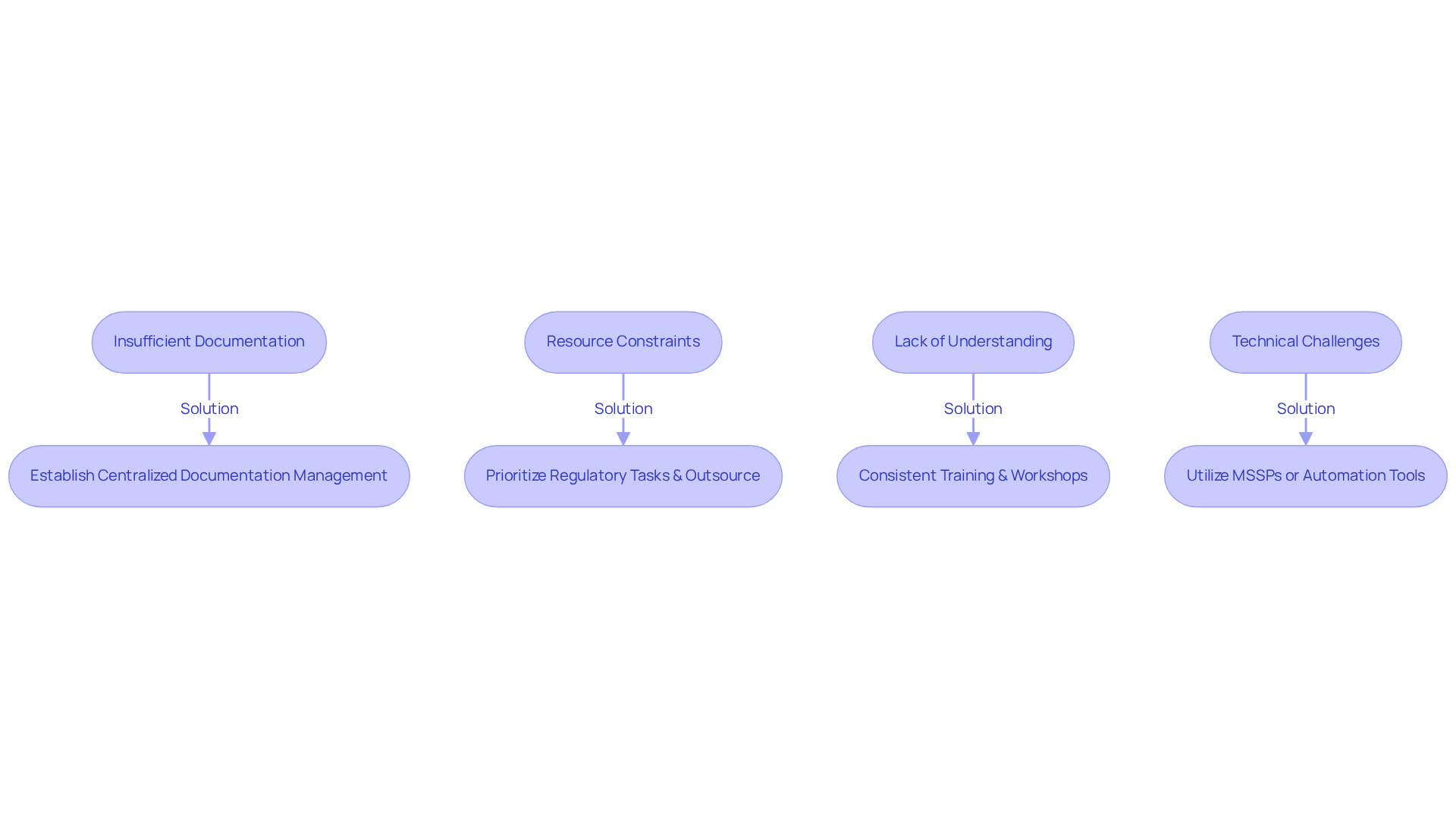
Organizations often encounter several challenges when pursuing CMMC compliance, including:
- Insufficient Documentation: Numerous organizations find it challenging to keep adequate records to show adherence. Establishing a centralized documentation management system can efficiently monitor policies, procedures, and proof of adherence, ensuring that all necessary documentation is easily accessible for evaluations. As mentioned by Safayat Moahamad, "Establish a CMMC readiness roadmap by creating a documented adherence strategy with clear ownership, priorities, and timelines." Koop Technologies offers AI-powered solutions that enhance the efficiency of documentation management, reducing resource demands.
- Resource Constraints: Limited budgets and personnel can significantly hinder adherence efforts. Organizations often struggle to allocate sufficient resources for compliance, which can stall progress. They should prioritize regulatory tasks based on risk evaluations and consider outsourcing certain functions to regulatory specialists or consultants. This method enables a more effective utilization of internal resources while ensuring that regulatory standards are fulfilled. Without addressing these limitations, organizations risk falling behind in compliance efforts. Koop Technologies provides customized regulatory and insurance solutions that can assist startups and mid-market firms in navigating these challenges effectively.
- Lack of Understanding: Misinterpreting the requirements can lead to non-compliance. Consistent training and workshops are crucial to clarify expectations and ensure that all team members are aligned on regulatory objectives. Organizations that treat CMMC compliance for technology companies as a core business function are better positioned to secure defense contracts and enhance their competitive edge. As highlighted by Moahamad, "Organizations that proactively invest in cybersecurity readiness gain a competitive advantage by strengthening their ability to bid on Department of Defense contracts." Koop Technologies' platform offers resources and insights that enable entities to improve their grasp of regulatory requirements.
- Technical Challenges: Implementing the necessary technical controls can be daunting. To simplify the implementation process, organizations can turn to managed security service providers (MSSPs) or automation tools. By isolating CMMC-regulated information in controlled environments, entities can attain adherence more quickly and lower expenses without overhauling their entire IT ecosystem. Koop Technologies' AI-driven platform is designed to tackle these technical challenges, allowing entities to implement effective controls efficiently.
By proactively tackling these challenges, entities can improve their likelihood of attaining CMMC compliance for technology companies and securing valuable DoD contracts. Additionally, case studies illustrate that organizations facing these challenges can benefit from tailored compliance strategies that integrate documentation management and proactive risk assessments, showcasing the transformative impact of Koop Technologies' solutions.
Conclusion
CMMC compliance is not just a regulatory requirement; it’s a strategic necessity that opens up significant business opportunities in the defense sector. By understanding the CMMC framework and its levels, organizations can better protect sensitive information and enhance their cybersecurity posture. The journey toward compliance is essential; without it, organizations risk losing eligibility for DoD contracts and facing penalties that could damage their reputation.
Throughout the article, we’ve highlighted key strategies for CMMC readiness, including:
- Conducting gap analyses
- Developing comprehensive system security plans
- Implementing continuous monitoring
- Leveraging technology to streamline compliance efforts
These practices are crucial for helping organizations meet requirements and build a culture of security awareness among their teams. Additionally, addressing common challenges such as insufficient documentation and resource constraints is vital for maintaining compliance and achieving long-term success.
Ultimately, CMMC compliance goes beyond regulations; it signifies a commitment to cybersecurity excellence that enhances competitive advantage in technology. Organizations are encouraged to take proactive steps in their compliance journey, utilizing innovative solutions like those offered by Koop Technologies to navigate the complexities of CMMC. By prioritizing compliance and investing in robust cybersecurity measures, technology firms can secure their future in a rapidly evolving landscape and position themselves as trusted partners in the defense sector.
Frequently Asked Questions
What is the Cybersecurity Maturity Model Certification (CMMC)?
The CMMC is a certification framework essential for organizations handling sensitive government information, designed to establish a robust cybersecurity framework that protects Controlled Unclassified Information (CUI) and Federal Contract Information (FCI).
Why is CMMC compliance important for technology firms?
CMMC compliance is crucial for technology firms as it directly affects their eligibility for Department of Defense (DoD) contracts and enhances their overall security measures. Non-compliance can lead to penalties, loss of contracts, and reputational damage.
What are the consequences of non-compliance with CMMC?
Non-compliance can result in significant penalties, loss of contracts, and damage to an organization's reputation.
What recent updates have been made to the CMMC framework?
Recent updates emphasize the importance of thorough documentation and proactive preparation, with a mandatory Level 2 certification by a third-party assessor required for new DoD contracts involving CUI starting November 10, 2026.
When should companies begin their compliance journey for CMMC?
Companies should begin their compliance journey immediately to avoid disqualification from critical contracts and to position themselves for future growth.
How can organizations get assistance with CMMC compliance?
Organizations interested in CMMC compliance can reach out to Koop Technologies to discuss their specific needs and explore tailored options, including an easy onboarding procedure and expert assistance throughout the regulatory journey.
What advantages does Koop Technologies offer for CMMC compliance?
Koop Technologies provides an AI-driven platform that automates up to 95% of regulatory tasks, significantly reducing manual effort and expenses, making it an ideal solution for startups and mid-market firms facing regulatory challenges.

